


Seventy years after establishing diplomatic relations, Spain and India are experiencing one of the closest periods in their recent history. The Spain-India Bilateral Year 2026—focused on culture, tourism and artificial intelligence—and the free trade agreement between India and the European Union, negotiations for which concluded on January 27, 2026, are opening up genuine opportunities for Spanish companies.
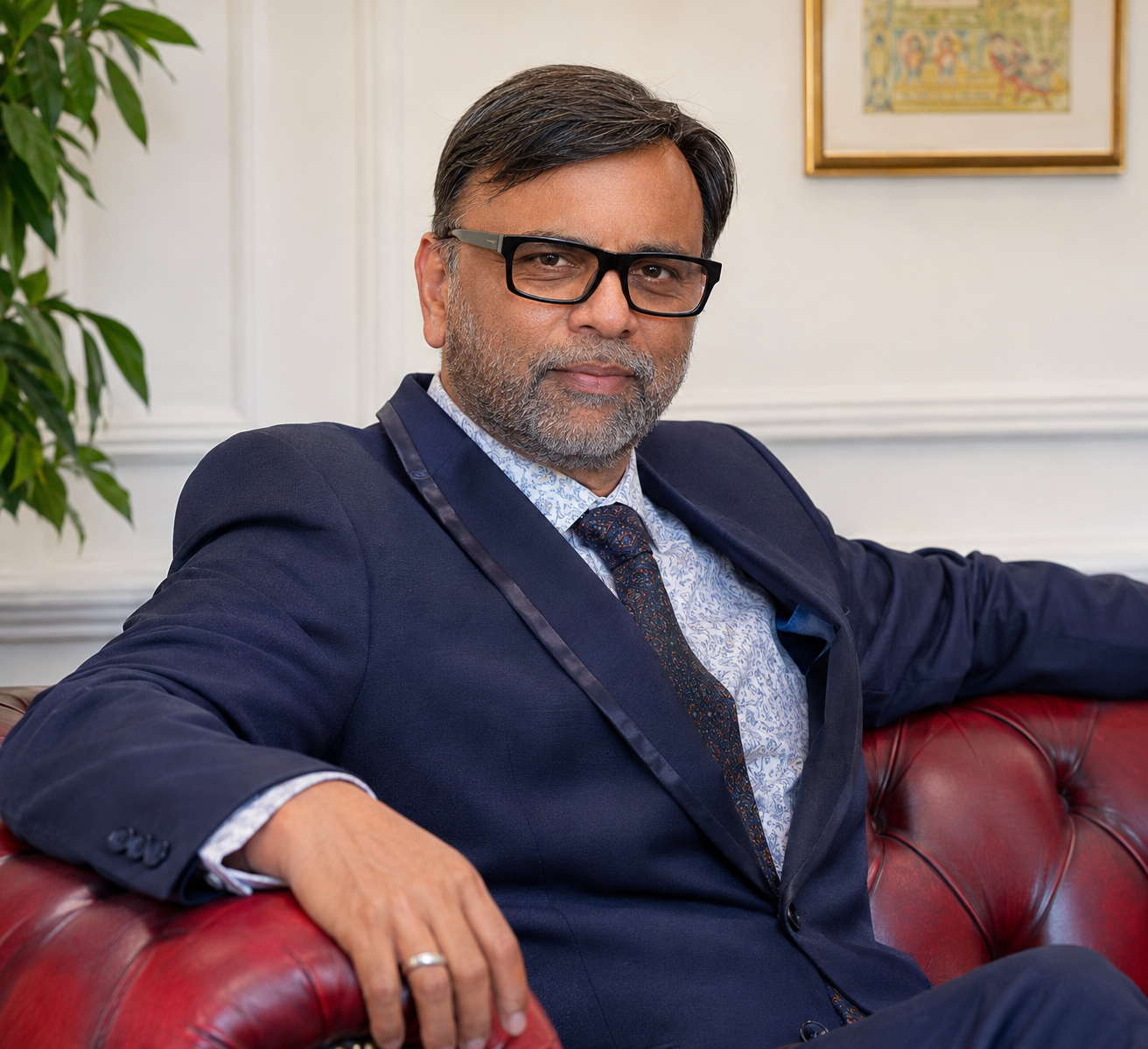
In a conversation with GoAragón, India’s ambassador to Spain, Jayant Khobragade, encourages companies in Aragon to look toward a market of nearly 1.5 billion people. He speaks candidly about the economy, culture and his own personal experience in the country.
Jayant, a career diplomat from the 1995 intake, arrived in Madrid in September 2025. This is not his first posting in Spain: he previously served here from 2008 to 2011. Returning 15 years later, the first thing he highlights is the transformation. “Trade, investment and political relations between India and Spain have reached a substantially higher level. The historic visit by the Indian prime minister in 2017 began to change the dynamics, and President Pedro Sánchez’s visit in October 2024 has given them even greater momentum,” he says.
A trade agreement that changes the rules of the game
The ambassador identifies several drivers behind the growth in bilateral relations: closer political engagement, Spain’s growing focus on the Indo-Pacific region, defense cooperation and expanding economic ties. However, the central pillar of this new phase is undoubtedly the Free Trade Agreement between India and the EU.
India is now the world’s fourth-largest economy and traded €118 billion in goods with the European Union in 2025. According to the European Commission, the agreement provides for the elimination or reduction of tariffs on the vast majority of European goods exports, potentially saving up to €4 billion a year in customs duties.
Jayant highlights examples of particular relevance to the Spanish economy: wine, olive oil and machinery. For wine, current tariffs of 150% would be reduced to between 20% and 30%. For olive oil, whose tariffs can reach 45%, elimination is expected. Machinery and electrical equipment would also benefit significantly from trade liberalization.
“The free trade agreement with the European Union will help deepen our strategic partnership. India and Europe share common values: we believe in democracy, in strengthening multilateral institutions and in common global frameworks. This makes it much easier for us to work together,” he explains.
The Free Trade Agreement has not yet entered into force. It is expected to take effect in early 2027. For the ambassador, it also reflects a broader strategic imperative: the need to diversify markets amid growing international uncertainty.
Aragon already has companies that know how to do it
When the conversation turns to Aragon, Jayant points to machinery and manufacturing capabilities as two of the region’s main strengths.
He believes Aragon’s industrial expertise is an excellent fit for the modernization needs of the Indian economy and encourages companies to explore specific opportunities rather than dismissing the market because of its size or complexity.
He recalls the “Business Opportunities in India” event organized by GoAragón in Zaragoza, where the Aragon-based company Kalfrisa shared its experience.
Founded in 1965 and specializing in industrial solutions for energy recovery, emissions control and waste-to-energy applications, Kalfrisa established Kalfrisa India Ltd. in 2022. The company has three factories in Zaragoza, employs around 150 people, generates revenue of nearly €30 million and exports about 70% of its output.
The ambassador also refers to the experience of Spanish companies, including those in the Basque Country, such as the Mondragon industrial ecosystem, where several companies, including CIE Automotives, have expanded their operations after establishing themselves in India.
He expresses his willingness to continue collaborating on business events in Zaragoza: “These initiatives enable companies to learn from real-world experiences, address questions and connect Spanish businesses with Indian institutions and potential partners.”
His recommendation is clear: study the market carefully, seek advice and visit the country. India’s scale, regional differences and administrative procedures make working with local partners particularly valuable.
Dual Year 2026: Culture, Tourism and Artificial Intelligence
The diplomatic anniversary provides the framework for many of the initiatives currently underway.
The Spain-India Dual Year 2026 was agreed by President Pedro Sánchez and Prime Minister Narendra Modi during Mr. Sánchez’s visit to India in October 2024.
Its program revolves around three main pillars: culture, tourism and artificial intelligence, while also including scientific, academic and business activities.
Khobragade places particular emphasis on audiovisual cooperation. He speaks of film co-productions, the participation of Indian films in Spanish festivals and screenwriting workshops.
He cites the Indian film Zindagi Na Milegi Dobara, which was partly filmed in Spain and helped raise the country’s profile among Indian audiences.
He also highlights opportunities in animation and in the use of artificial intelligence in film production.
In artificial intelligence, he sees concrete opportunities in industrial applications, services and agriculture, including soil analysis, crop selection, pest detection, crop monitoring and agricultural insurance.
These are areas in which Aragon has companies and technological capabilities.
Talent and mobility: a major challenge
Technological development raises another fundamental issue: the mobility of highly skilled professionals.
Engineers, IT specialists, researchers and highly qualified technical professionals are increasingly part of an international labor market.
The ambassador notes that India has a broad pool of talent trained in science, technology, engineering and mathematics (STEM) disciplines, while many European countries, including Spain, struggle to fill such positions.
Jayant also highlights an aspect that is especially valued in the business environment: work ethic.
In his view, Indian professionals are generally characterized by a strong work ethic, adaptability and a collaborative approach, which makes it easier for them to integrate into international teams.
However, he clearly distinguishes between business opportunities and the mechanisms needed to facilitate professional mobility.
A free trade agreement does not automatically entail recognition of qualifications or the removal of immigration requirements.
Highlighting the ease of professional mobility, the ambassador cites Germany as an example, where the arrival of Indian professionals—not only nurses and caregivers, but also technical specialists—is already well advanced and better organized.
Demographic differences are among his main arguments: India has a considerably younger population with a strong educational foundation in engineering and technology, while many European countries face a shortage of this type of talent.
Spain is like a place of worship for me
The most personal part of the conversation emerges when the ambassador is asked about his experience in Spain.
Khobragade does not hesitate: “On a personal level, Spain is like the Vatican to me, like a place of worship. That is because I have a deep interest in painting, and here art is part of everyday life. You have fascinating museums and galleries. Wherever I go, I visit museums. I am now discovering the galleries as well.”
He also speaks about quality of life, heritage and gastronomy: “The food is excellent, the restaurants are magnificent. I greatly enjoy Spanish cuisine.”
He notes that Spain receives more than 100 million tourists a year, allowing him to combine some sightseeing with his official trips.
Flamenco and the historical ties between Indian and Spanish musical traditions also feature in the conversation, alongside his interest in Aragon’s cultural heritage.