



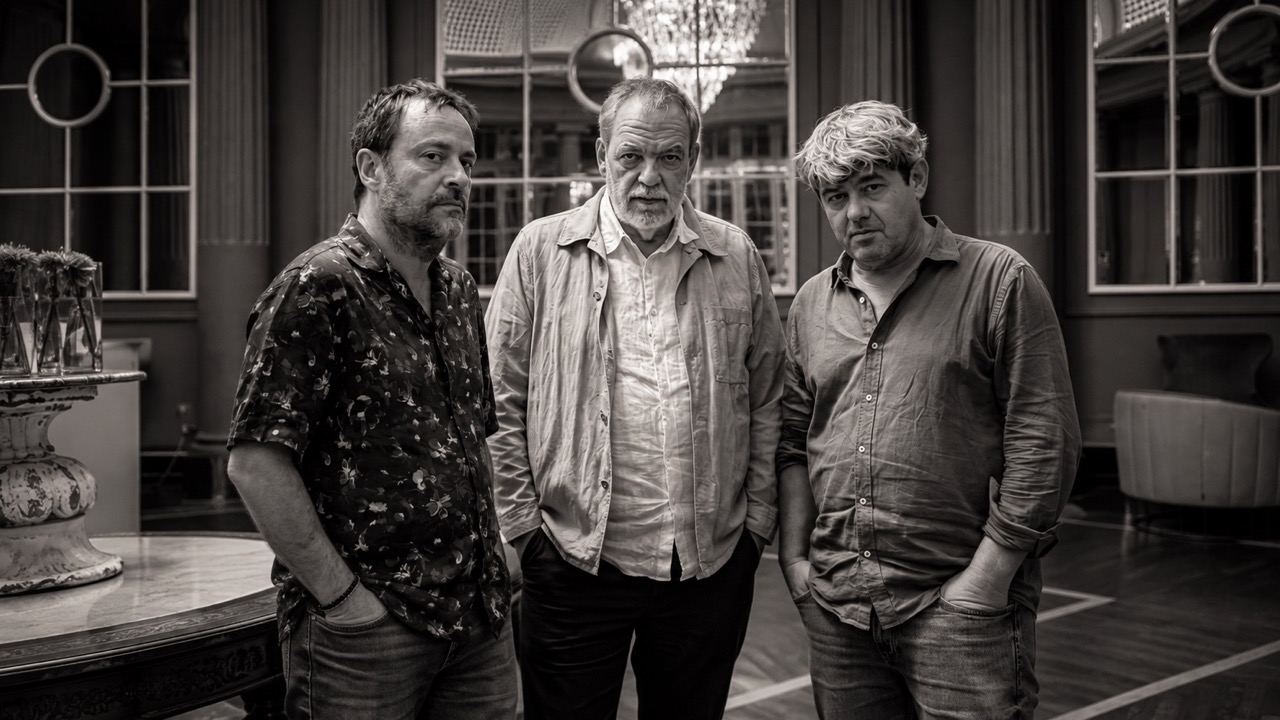
The title of the novel you are presenting is Los huérfanos, but in reality it is a novel shaped by different kinds of family: blood family, the family we choose, the one formed by those three young men, and even the criminal organizations themselves, which function as families. Can one also be an orphan within a family?
Antonio Mercero. You can certainly feel orphaned within a family. For many people, family is a source of conflict and great unhappiness. For others, it is not: it is refuge, love, home, comfort and whatever else you might want. But family can turn against you, and in many situations the best thing is to distance yourself from it.
In this case, the title refers to real orphans. There is no doubt about that; we like the title, it sounds very good. Almost the first image in this novel is the freezing Belfast orphanage. And these three Irishmen, companions in hardship at that orphanage and in the years that follow, decide to move to Marbella to make a better life for themselves. From Chapter One, we want to pose the first question to the reader: what will these three orphans, so full of rage toward society, be capable of?
Family is a source of conflict and great unhappiness for many people
Antonio Mercero. Does it caress us or nibble at us? [laughter]
Agustín Martínez. It was the publisher’s proposal. The publisher’s design department put this idea to us and, honestly, we fell in love with it from the start. At other times, it is harder to make covers fit the novel, but we liked this one enormously. On the one hand, because it marked a change of direction. We had come from doing the entire Elena Blanco series, which already has very distinctive covers, with geometric figures and all that. This is a new beginning for Carmen Mola, a change of direction, and we wanted that to be reflected on the cover as well.
The colors are very striking—blue and pink. It stands out in a bookstore, which is very difficult given everything that is out there: getting a cover to catch people’s attention. And then there is the rat. That was a decision by the design department. We have the feeling it will become an iconic element in the novel, because the first thing people mention about this novel is the rat scene, so it is good for readers to be warned.
Antonio Mercero. It has to be related to our research process. When you decide to set the story in Marbella, all your antennae become highly alert and active, picking up any comment about organized crime in Marbella. It is true that every week there are at least a couple of stories in the newspapers that you can draw from. Not everything can be in the novel, but suddenly something can… you take in a lot. I think this is the novel of all ours that draws most heavily on reality, on newspapers. Then we add documentation: talking to the Guardia Civil to see the other side, to see how they work and how they confront this major problem they have in Marbella. And then the author adds that touch, that element of imagination and personal sensibility, to create a credible world, a credible universe, where all this family drama and this whole story unfolds.
What we want is for the reader to reach a point where they think: Would I do that if what happened to him had happened to me?
Jorge Díaz. The Elena Blanco novels were, to put it very simply, cops-and-robbers novels. The police on one side, the killers on the other, and one had to catch the other. Then we said: we have already done five novels like that, and there are many novels like that. Within crime fiction, there are very good writers, a lot of people writing crime fiction, and every time you do something, you have to look for a new angle.
And so we looked for this approach: we have no police officers, all our…