



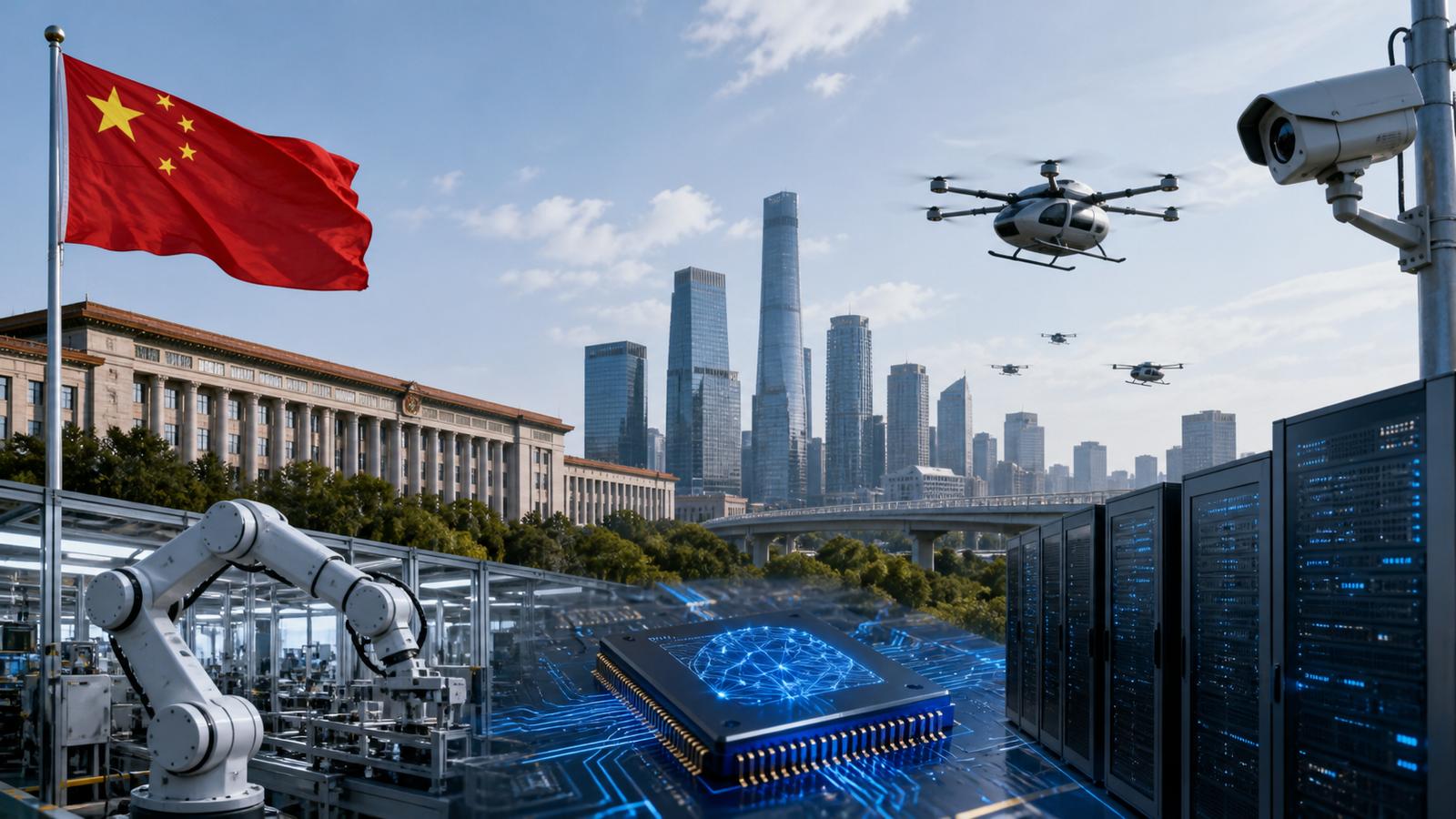
China will strengthen oversight of its technology development strategy to curb potential investment bubbles and keep artificial intelligence subject to standards of safety, reliability, and control. The measures are set out in guidelines published by the Communist Party and the Chinese government, according to information released by state news agency Xinhua and reported by Reuters.
The document warns against investment without sufficient planning, excessive expansion in emerging sectors, and the concentration of resources in initiatives disconnected from the real economy. It also states that officials responsible for significant losses caused by investments deemed indiscriminate will be held accountable. These are policy guidelines that have been announced, although the information available does not yet detail specific actions stemming from them.
Artificial intelligence development
The guidelines call for advances in the theory and core technologies of artificial intelligence, as well as greater availability of computing capacity, algorithms, and data. China also plans to establish national pilot bases to deploy the technology in industry.
Alongside the technology push, the document calls for monitoring systems, risk alerts, and emergency response measures to ensure that artificial intelligence remains, in the authorities’ words, «safe, reliable, and controllable». It also envisages implementing the AI Plus initiative to modernize traditional industries and accelerate the rollout of connected new-energy vehicles, AI-enabled phones and computers, and humanoid robots.
Innovation without indiscriminate expansion
Chinese authorities aim to promote innovations described as «original and disruptive» in critical technologies and use the state coordination system to accelerate the development of products considered strategic. This approach forms part of the drive behind the so-called «new productive forces,» a concept introduced by President Xi Jinping in 2023 and linked to scientific research, technological advances, and industrial modernization.
At the same time, the guidelines prohibit the illegal or improper use of public policies under that concept and call for avoiding collective rushes into high-tech sectors. The text also calls for the orderly development of the low-altitude economy, encompassing activities involving civilian drones, air taxis, small aircraft, and related services, with safety as a prerequisite.