



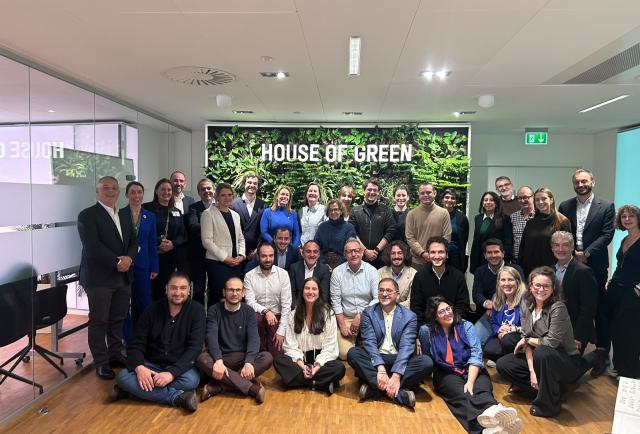
Aragón has examined Danish models in Copenhagen to reduce the energy impact of data centers and harness the heat generated by these facilities. Mar Paños, director general for Industry, Competitiveness, Innovation and Business Digital Transformation, Mar Paños, took part in the Sustainable Data Centers for a Resilient Europe program alongside delegations from Spain, France, and Italy.
Aragón examines data center energy efficiency in Denmark
Over two days, the mission brought together institutional, academic, and business representatives to explore solutions deployed in Denmark for sustainable data centers. The meeting, held in Copenhagen, enabled the Aragón delegation to explore contacts and potential partnerships related to innovation, energy, and sustainability.
The sessions addressed the integration of data centers into local energy systems, reduced resource consumption, the use of waste heat, and power-grid flexibility. These areas are gaining importance amid the sector’s growth in Aragón and the need to link new digital infrastructure with the region’s industrial and energy ecosystem.
Mar Paños argued for examining initiatives already in operation to determine which solutions could be transferred to the region. As she noted, the goal is to improve facility efficiency, strengthen their ties to the local economy, and increase the local return on investment.
Data center waste heat supplies urban heating networks in Copenhagen
The delegation visited Høje Taastrup Fjernvarme, where large industrial heat pumps recover surplus heat for integration into the district-heating network. The model treats heat generated by infrastructure and industrial activity as a resource that can be used within the local energy system.
It also visited Penta Infra CPH01, a facility where 100% of waste heat is fed into the local heating network. The system can supply approximately 1,500 homes, according to information presented during the visit.
The agenda also included sessions at Digital Hub Denmark and State of Green, focused on cooperation among public authorities, data center operators, energy networks, universities, and technology providers. Heat reuse, advanced cooling, energy efficiency, and power-grid stabilization accounted for much of the discussion.
The mission opens European contacts on innovation and the power grid
The program presented the Net Zero Innovation Hub for Data Centers, focused on pilot projects across different industries to develop technologies related to heat reuse and power-grid balancing. The sessions also examined ways to integrate new digital infrastructure without displacing other electrification and industrial-growth needs.
The delegation included participants from Spain, Italy, and France, including representatives of the Italian Ministry of Environment and Energy Security (MASE), Regione Lombardia, MIMIT, Techbau, Digital Realty, and A2A.
Paños highlighted Aragón’s strengths in energy, industry, and innovation, stressing that the mission makes it possible to build relationships with institutions, regions, and companies facing similar challenges. These contacts open avenues for collaboration on European projects and for assessing solutions applicable to the development of data centers in the region.