



The province of Zaragoza is home to numerous villages that merit more than a brief stop. Some are surrounded by forests and mountains, others retain medieval walls and buildings, while still others stand out for the presence of water in landscapes where dryness appears to prevail.
Discovering them does not require an elaborate trip. A weekend can be enough to explore a district and enjoy its towns, although it is best to plan visits carefully and avoid covering too many miles in a single day.
Anento, a small oasis in the Campo de Daroca
Anento lies in a valley surrounded by rock formations and farmland. Its stone houses, narrow streets, and natural setting have made this small town one of the most recognizable destinations in Zaragoza’s rural tourism scene.
Its main scenic attraction is the Aguallueve, an area where water filters through rock walls, encouraging the growth of mosses and vegetation. The result is a surprisingly green corner that contrasts with the ocher tones of the surrounding landscape.
A visit can begin in the town center and continue toward the Aguallueve along designated trails. It is also worth visiting the remains of the castle and the parish church, which houses a valuable artistic heritage.
Anento is particularly appealing in spring and fall, although the appearance of the Aguallueve depends on water conditions. To round out the trip, Daroca is relatively close by and offers one of the province’s most notable monumental complexes.
Biel, between forests and medieval architecture
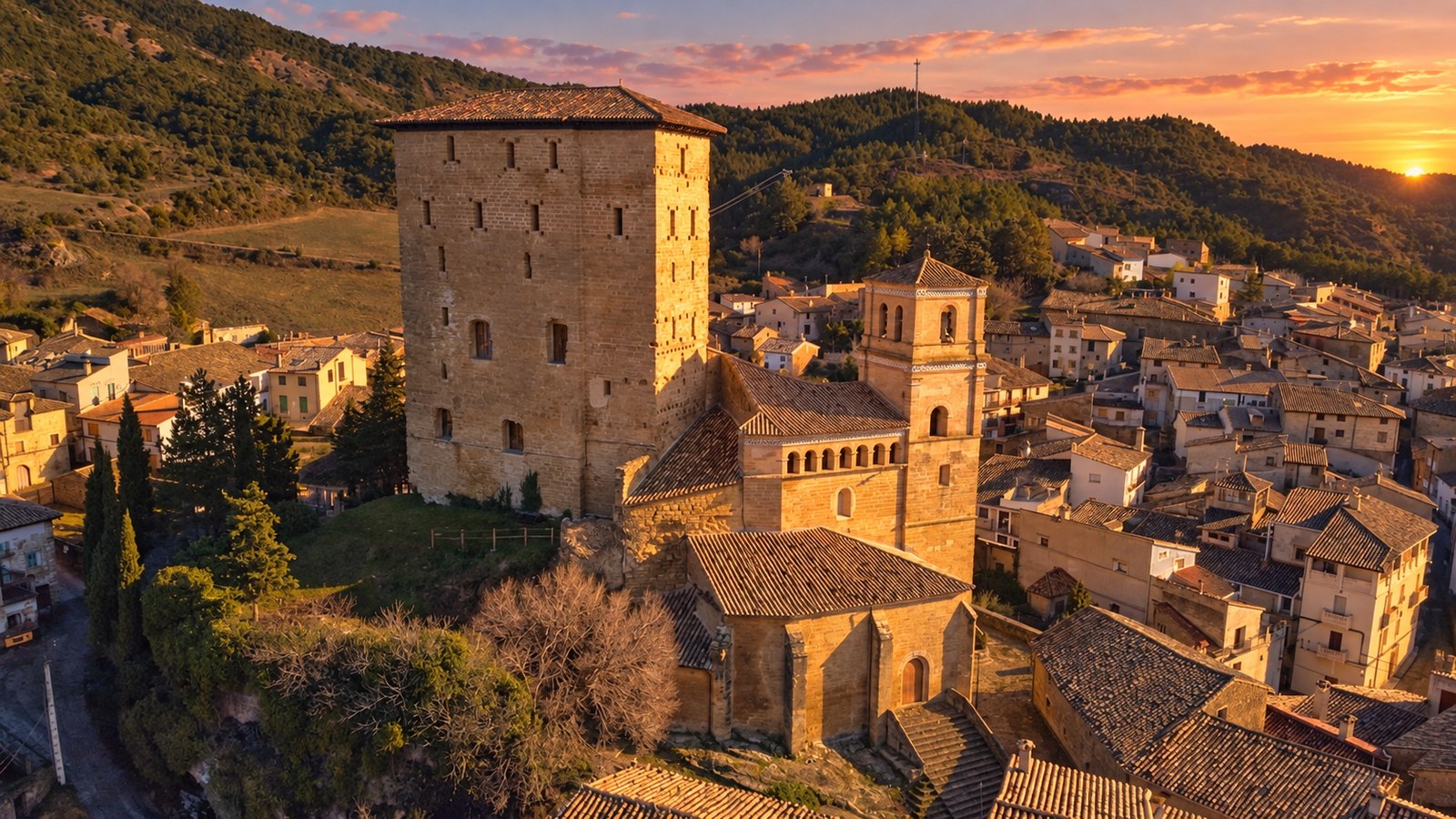
Biel is located in the north of the province, in an area where farmland gradually gives way to forested and mountainous landscapes. The town retains a medieval historic center, with streets climbing between traditional buildings and a castle overlooking the whole settlement.
One of its attractions is precisely this relationship between architecture and nature. Visitors can take walks in the surrounding area and venture into the landscapes of the Sierra de Santo Domingo, always tailoring the route to their experience and level of preparation.
Biel also preserves traces of its Jewish past, part of the history of the Cinco Villas region. Walking its streets reveals a town far from the main tourist routes, where the appeal lies as much in its monuments as in the atmosphere of the village itself.
Luesia, a gateway to the Sierra de Santo Domingo landscape
A short distance from Biel lies Luesia, another of the villages that makes a getaway to the Cinco Villas worthwhile. Its silhouette is defined by the castle and the Church of San Salvador, which stands beside the former fortress.
The town preserves an interesting Romanesque heritage and an urban layout that invites visitors to wander up and down its streets. From the higher areas, there are views of the landscape surrounding the village, a succession of hills and farmland that signals the proximity of the Pre-Pyrenees.
Luesia is also a good starting point for exploring the natural areas nearby, including the Pígalo area, associated with the Arba de Luesia River. In the warmer months, the area draws visitors interested in hiking and river landscapes, although access and swimming conditions should be checked before setting out.
Biel and Luesia can easily be combined into a single getaway, allowing time for their historic centers and an outdoor activity.
Sos del Rey Católico, a walk through the Middle Ages
Sos del Rey Católico is one of the major monumental ensembles in the Cinco Villas region. Its historic center preserves cobblestone streets, passageways, manor houses, and churches that illustrate the importance the town held during the Middle Ages.
The town is linked to the birth of Ferdinand II of Aragon in 1452. Its heritage includes the Sada Palace, the Church of San Esteban, and an urban fabric that retains much of its historic character.
One of the best ways to discover Sos is on foot, without limiting the visit to its main monuments. Its squares, arches, and views of the surrounding landscape are all part of an experience that is especially enjoyable when visitor numbers decline.
The village can also serve as a base for visiting Uncastillo and Sádaba. This allows travelers to devote a weekend to discovering some of the most important medieval sites in northern Zaragoza province.
Daroca, a medieval town surrounded by walls
Daroca offers a different experience. Its historical importance is reflected in the scale of its walls, gateways, and religious buildings, which recall the role the town played over the centuries.
The Puerta Baja and Puerta Alta are two of its most recognizable landmarks. Between them lies an urban center where churches, palaces, and streets coexist while preserving the layout of the historic town.
It is worth setting aside time for the Collegiate Church of Santa María and the remains of the fortifications surrounding the town. Those who enjoy scenic walks can seek out the designated viewpoints around the walls.
Daroca is also a good base for exploring the Campo de Daroca and organizing excursions to Anento or the Gallocanta Lagoon, particularly during the crane migration season.
Five villages, several possible getaways
These five destinations do not form a single linear route, so it is best to organize them by area. Biel, Luesia, and Sos del Rey Católico offer an itinerary through the Cinco Villas, while Anento and Daroca can be visited on another trip to the south of the province.
The advantage of this selection is its diversity. In just a few trips, visitors can move from the lush landscapes of the Aguallueve to the forests of the Sierra de Santo Domingo, and from small medieval villages to a historic town surrounded by walls.