



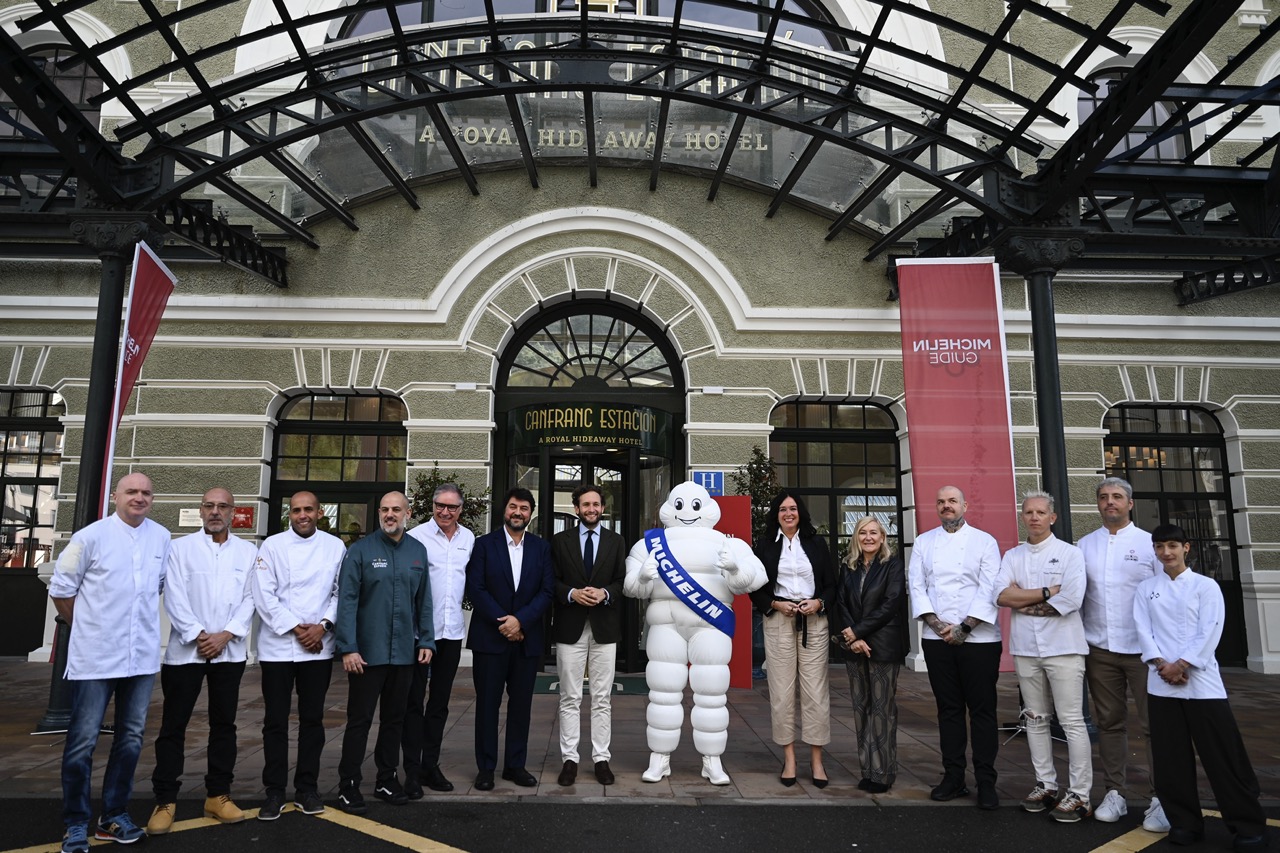
In Huesca, gastronomy is no longer just an addition to the journey. Increasingly, it is a reason to make the trip. Visitors may come to the province drawn by the Pyrenees, its heritage, outdoor adventure or its villages, but their first real encounter with the area often takes place around a table. A bar, restaurant, café or hotel is the gateway, the welcome and, in many cases, the first face a visitor sees. That is also where the tourism experience begins.
On December 1, that reality will have an exceptional showcase. Huesca will host the 2027 MICHELIN Guide Spain Gala at the Conference Center, the annual event at which the renowned stars will be announced. The selection of the provincial capital recognizes the remarkable moment being enjoyed by the cuisine of Alto Aragón, as well as a track record built on talent, hard work, local products and a distinctive approach to hospitality.
The province has 18 restaurants listed in the MICHELIN Guide 2026, including eight with a Star. Lillas Pastia and Tatau, in the capital, sit alongside ventures that have put Aínsa, Canfranc, Anciles, Villanova, Sardas and Tella on the culinary map. Callizo, Canfranc Express, Ansils, Casa Arcas, La Era de los Nogales and Casa Rubén show that excellence knows no ZIP codes and does not need to be born in a major city.
That is one of the most distinctive features of Huesca’s culinary scene. Six of its eight Michelin-starred restaurants are outside the capital, and several shine from communities with only a few dozen residents. These ventures have emerged as destinations capable of attracting diners from across Spain and abroad. They create jobs, buy local products, generate economic activity, raise the profile of their towns and turn a meal into reason enough to travel miles. Fine dining thus becomes a powerful tool for rural development.
Yet reducing Huesca’s culinary strength to its stars would mean focusing only on its most visible side. Behind them lies a much broader chain: farmers and livestock producers, wineries, cheesemakers, artisans, bakeries and pastry shops, front-of-house professionals, chefs, hotels, bars and restaurants across the province. Huesca’s cuisine begins with the land, with products that speak of landscape, tradition and craftsmanship. It is a value chain that often starts in the fields and ends at the table, while creating wealth and opportunities every step of the way.
That is why gastronomy holds a central place in the tourism strategy of the Provincial Council of Huesca. Under the Tu Provincia Huesca la Magia brand, it is one of four key areas of focus, alongside adventure tourism, cycling tourism and Rural MICE. The goal is not simply to promote individual establishments, but to strengthen a gastronomic destination capable of attracting visitors year-round, spreading tourism flows across the territory and generating new opportunities in rural areas.
This commitment also extends to training and professional development. The “Huesca, la Magia de la Gastronomía” workshops have now held 22 editions and have welcomed some 6,500 participants, work that has also been recognized with the National Hospitality Award for training initiatives. These efforts are complemented by initiatives promoting local products, traditional pastries, wine and truffles. A strong culinary sector also needs a well-stocked pantry and professionals equipped to transform it and tell its story.
The MICHELIN Gala will make Huesca the center of Spanish gastronomy for a few hours. But its true value lies in what happens before—and will continue to happen afterward: in every dining room, at every bar, in every workshop and in every small village where someone decides to start a business and innovate.
Because in Huesca, stars are not only seen in the sky. Some can be found at the end of a mountain road, behind the door of a stone house or at a table overlooking the Pyrenees. And they all tell the same story: that of a province that has understood its gastronomy to be one of its finest calling cards to the world.