


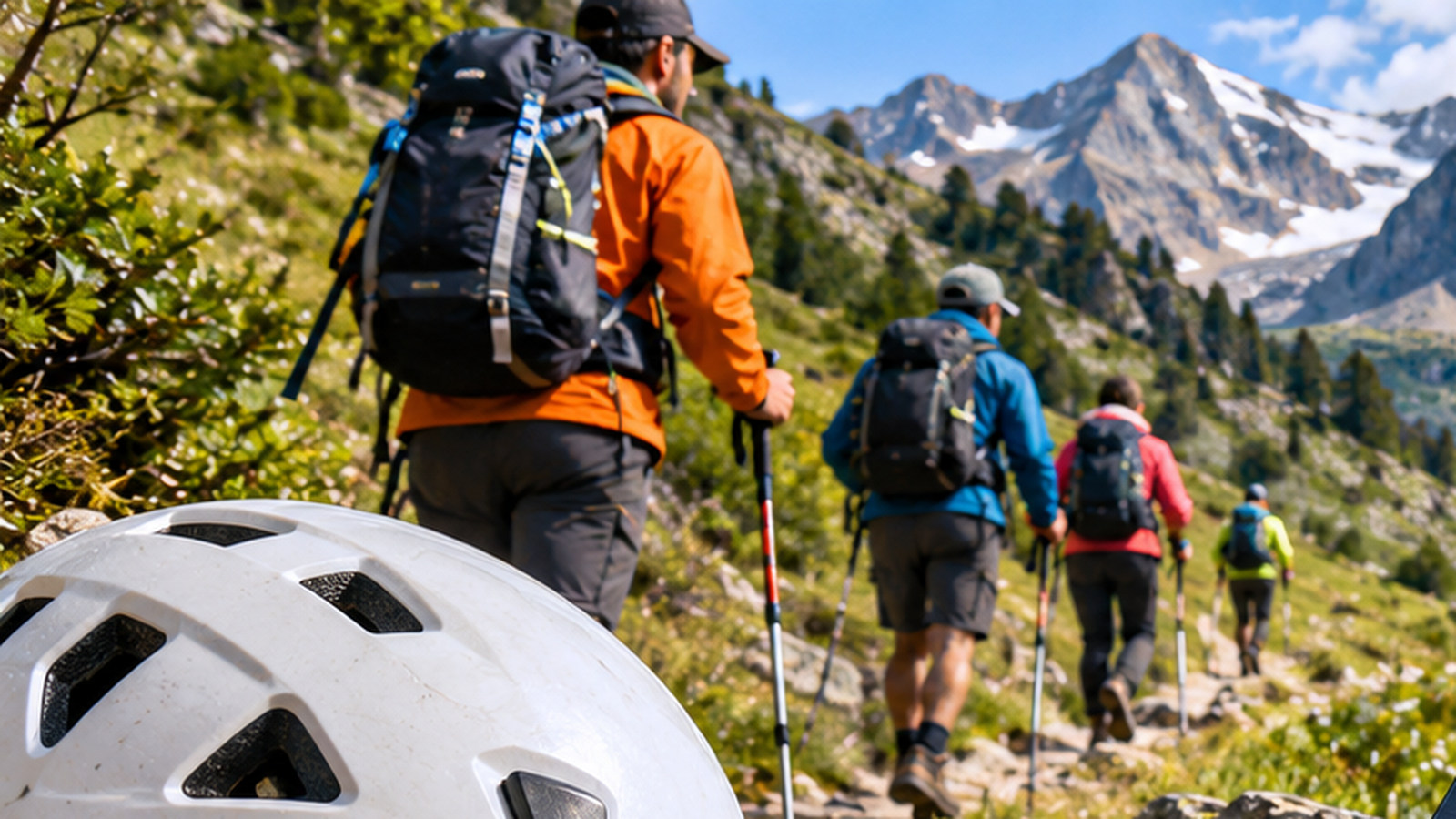
The Pyrenees and the mountain ranges of Teruel have become one of the main drivers of tourism in Aragon. Valleys such as Ordesa, Tena and Benasque draw thousands of visitors each season in search of outdoor activities, and behind every canyon descent or guided excursion is a small business, often family-run and with just a handful of employees.
It is a sector with one defining characteristic: risk is its raw material. A sprained ankle in a canyon, a blow during a rafting run or a fall on a via ferrata are part of the normal statistics of the business. That is why active-tourism regulations require companies in the sector to carry liability and accident insurance for their customers, and registration in the tourism registry depends on proving that they do.
Beyond the legal minimum
Meeting that requirement is only the starting point. The minimum limits required may fall short in the event of a serious accident with lasting consequences, while certain forms of coverage are not included by default: helicopter rescue and transport costs, coverage for self-employed guides who occasionally work with the company, or damage to rented equipment. More and more operators are also offering customers cancellation insurance, which can be a selling point for activities that depend heavily on the weather.
Rural accommodations have their own vulnerabilities. A stone house in a village in Sobrarbe is not insured in the same way as an apartment in Zaragoza: snowfall, slate roofs, heavily used fireplaces and liability toward guests all require a detailed review of the comprehensive policy. And when the same owner combines lodging with activities, it is advisable to ensure that both are covered and that there are neither overlaps nor gaps.
A sector dependent on the season
Seasonality adds another factor. A hailstorm at the height of the summer season or a snowless winter can jeopardize the cash flow of a small business. Business-interruption coverage, still not widely used among tourism microenterprises, can help cushion the blow.
Duet Seguros, a brokerage based on Zaragoza’s Paseo de la Gran Vía with clients across the region, recommends reviewing policies before each peak season, when the type of activity or the number of guides changes. In a sector that relies on visitors’ trust, solid coverage is also a way to protect the destination’s reputation.