



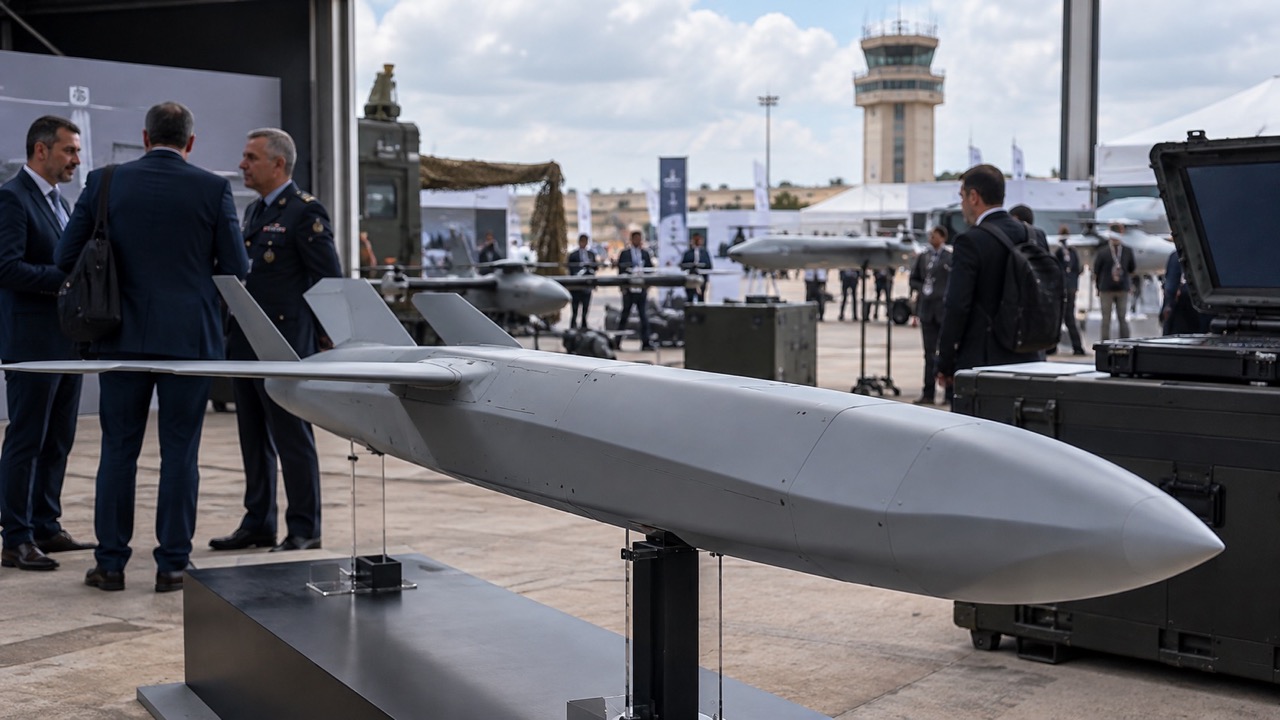
Indra has unveiled a new family of interceptor drones designed to neutralize other unmanned aircraft and respond to attacks involving large numbers of drones simultaneously. The system, called Drizzle, was presented at UNVEX 2026, the unmanned systems trade fair held on Sept. 16 and 17 in San Javier, Murcia.
The new interceptors can exceed 400 kilometers per hour and have an approximate range of 80 kilometers, according to specifications released during the presentation. Indra has also developed a mothership drone capable of carrying several of these devices and extending their combined operational range to about 130 kilometers.
The development addresses one of the changes reshaping armed conflicts: the growing use of low-cost unmanned aircraft in large numbers. This shift is forcing the defense industry to seek interception systems whose cost is proportionate to that of the threats they are intended to neutralize.
An interceptor designed for integration into counter-drone systems
Drizzle can be integrated into counter-drone defense systems as a physical destruction effector —known in military terminology as hard-kill— and is also intended as a self-protection system for ground vehicles or helicopters.
The interceptor uses electro-optical and infrared sensors to gather information during the final phase of its approach to the target. According to Indra, its processing system can analyze that data in real time, distinguish threats and select the target. The company is also working to incorporate radar in future development phases to expand its detection capabilities.
Indra positions the system as an expendable device, meaning it is designed for single use during an interception. The approach is intended to reduce the cost of each engagement and enable production at a larger scale, an issue that has become especially relevant amid the proliferation of relatively inexpensive drones in current conflicts.
The company has not disclosed, in the information available on its presentation, either the unit price of the interceptors or a specific timetable for their entry into service.
A mothership drone with a range of up to 130 kilometers
One of the concept’s new features is the use of a larger unmanned vehicle that acts as a mothership. This system can carry several Drizzle interceptors and transport them during the first part of the mission.
According to data presented at UNVEX, the mothership drone can travel about 80 kilometers at an altitude of up to 30,000 feet before releasing the interceptors. The interceptors would then have the capacity to cover roughly another 50 kilometers, bringing their combined range to approximately 130 kilometers.
Indra also envisages operating several of these mothership drones in swarms, carrying and releasing multiple interceptors. UNVEX also featured a Drizzle variant designed to be launched from an adapted rifle.
The presentation is part of Indra’s broader push into unmanned systems and counter-drone defense technologies. At the same edition of UNVEX, the company presented the Squall cruise missile and showcased new capabilities in its Tarsis family of drones.
Indra also leads the SANTAM program for the Spanish Armed Forces, which includes the delivery of 147 Class I unmanned aircraft in different configurations. The company is therefore strengthening its activity in a field that brings together tactical drones, detection and command systems, and solutions designed to neutralize unmanned aircraft.
Drizzle joins the latter category at a time when counter-drone defense has taken on an increasingly prominent role in military programs. Its final performance specifications and integration into operational systems will now depend on the progress of development, testing and any contracts the company may secure.