


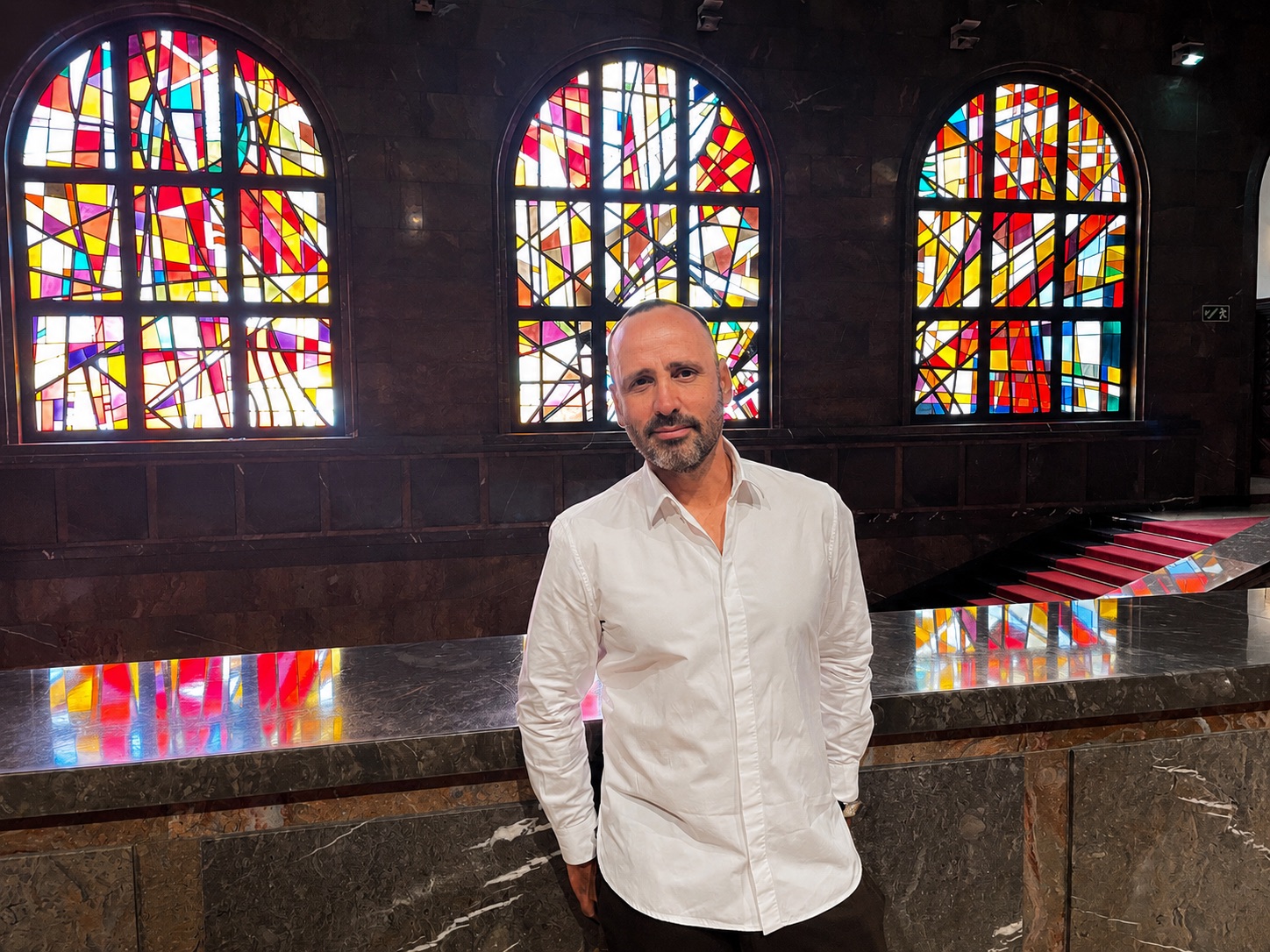
From Santiago, Chile, to Barcelona, and through projects for some of the most recognized wineries in Ibero-America, Jerónimo Pérez has transformed design into a storytelling tool that identifies territories. As co-founder of the studio Otros Pérez and an international authority in wine branding, he participates in the Excellence and Inspiration Meetings of Zaragoza, the World Capital of Garnacha, to reflect on how visual identity contributes to building reputation, differentiating destinations, and transforming local products into globally recognizable symbols.
For those who may not know him yet, who is Jerónimo Pérez and how does he arrive in Zaragoza?
I am a graphic designer, born in Chile, and I have been living between Barcelona and Prague for the past two years, though I still travel frequently to Santiago, Chile, where my creative studio is located.
From there, we develop brand identity projects, packaging, visual campaigns, and various strategic communication tools. My work has allowed me to collaborate with companies, institutions, and organizations from different countries, always from a perspective focused on building brands with personality and purpose.
Many cities today compete to position themselves internationally by linking to emblematic products, as seen in Zaragoza with garnacha. What has more long-term value: the product or the construction of a coherent narrative between the city and that product?
I believe the key lies in coherence and the ability to work collaboratively. I have collaborated with various cities and organizations on territorial marketing projects, and one of the main problems arises when public and private actors work in isolation.
When each institution follows its own agenda and develops actions without coordination, efforts end up diluting. Therefore, it is essential to build a shared vision and think long-term. It’s not just about what happens next month or the next semester, but about defining what we want that city to represent in ten years.
The visual identity of cities has gained increasing importance. Why do you think it receives so much attention today?
Because identity is how we present ourselves to the world. Just as a person chooses how to dress for a wedding, a meeting, or a special occasion, a city also needs to decide how it wants to present itself.
There is what we truly are and how we communicate who we are. That difference is built by visual identity.
For many years, graphic identities were mainly associated with products or companies. Today, that same concept applies to cities, regions, and countries. They are fundamental tools for explaining to the world who we are, what we offer, and what we want to represent.
Should public administrations view visual identity as a strategic investment and not merely as an aesthetic element?
Without a doubt. It is part of the overall experience that a city offers.
A coherent, clear, and well-built identity helps to communicate better, generate recognition, and reinforce the perception held by both visitors and the residents themselves. It is not just a visual issue; it is a communication and positioning tool.
If in ten years we were in Santiago, Chile, and someone mentioned Zaragoza, what would you like that name to evoke?
From my perspective, I would like Zaragoza to convey a sense of invitation.
That anyone who hears about the city thinks of a welcoming, open place full of possibilities. I believe it is important for the city to show all its potential and awaken the curiosity of those who do not yet know it.
If a city can remain in people’s minds as an attractive destination full of opportunities, it has already made significant strides.
You often work with wineries developing visual identities. Is it very different to approach the image of a winery compared to that of an institution or a city?
The work approach is exactly the same. The fundamental thing is to understand what the client wants to communicate and help them find the right tools to convey that message.
“The important thing is to see it as a whole and to view it in the long term. It’s not just about what happens next month or the next semester but what we do over the next ten years.”
It could be a wine label, an advertising campaign, an audiovisual piece, or an institutional identity. The tools change, but the essence remains.
Before designing any visual element, we need to build a coherent, powerful, and interesting message. Once that message exists, design becomes the vehicle for delivering it to the audience.
In summary, what is the most important aspect of any branding project?
Coherence.
When there is a clear idea, a solid message, and a shared vision, design has the capacity to amplify it and make it memorable. But no visual tool can replace a well-constructed strategy.
“Design is about tools. Before that, we need a coherent, powerful, and interesting message.”
What can events like this contribute to the business and creative fabric of Aragón?
I believe they help to share experiences and understand how other professionals work. Often, seeing real cases allows for discovering opportunities that one had not considered. Additionally, they serve to highlight design and communication as strategic tools for businesses.
What advice would you give to a company or institution that still views design merely as an aesthetic concern?
Design is not aesthetics; it is communication. Before discussing colors or logos, we must define what we want to say. When the message is solid, design helps to make it visible and relevant.
For Jerónimo Pérez, visual identity is not just an aesthetic exercise, but a strategic tool capable of connecting territories, products, and people. A vision that places coherence, collaboration, and the construction of lasting narratives at the center of brand and city development for the future.