



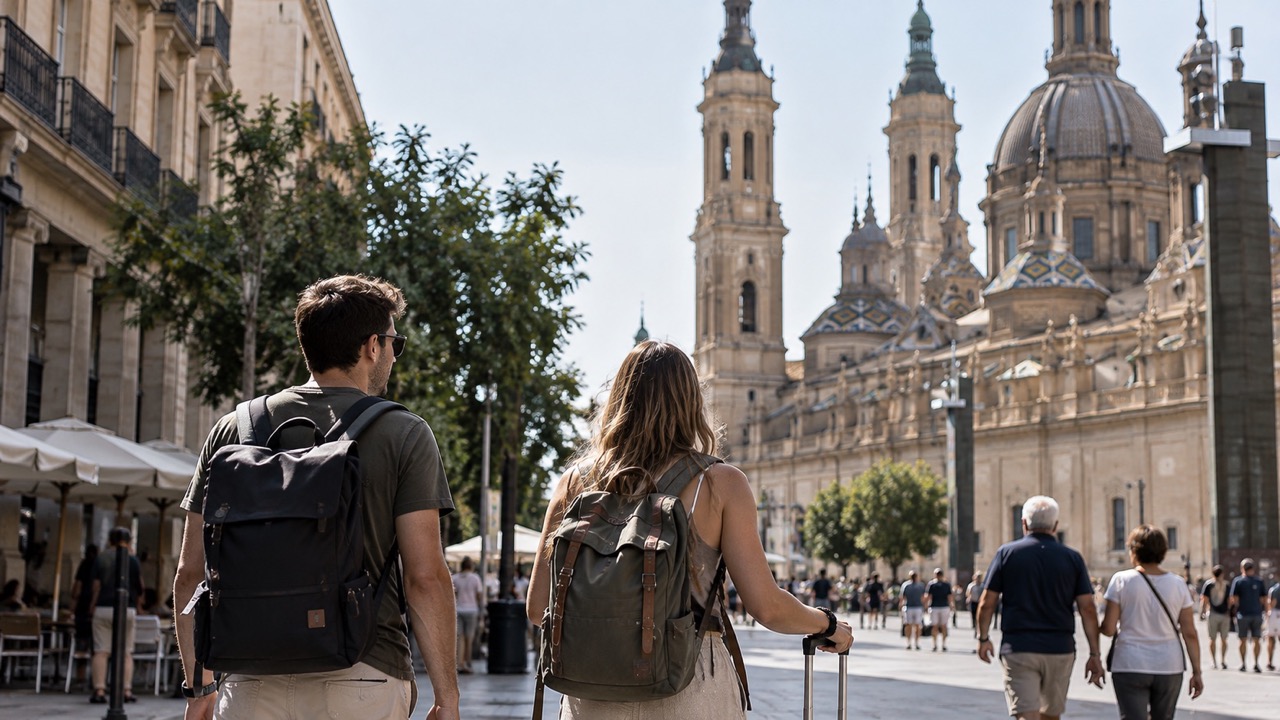
The regional government is seeking to boost competitiveness and better distribute tourism flows, while the opposition calls for action to address the pressure facing certain areas
The Government of Aragon is not considering introducing a tourism tax in the region. María Nogueras, director general for Tourism and Hospitality, told the regional parliament on Tuesday that such a levy would raise travel costs, could reduce visitor arrivals, and would place a greater tax burden on the sector.
Nogueras outlined the government’s position during an appearance before the Environment and Tourism Committee, where she presented the Directorate General’s main priorities for the legislative term. The debate also raised issues including the concentration of visitors at certain destinations, pressure on public services, and the regulation of tourist accommodation.
The director general framed the rejection of the tax as part of a strategy aimed at preserving the destination’s competitiveness. According to figures presented during her appearance, tourism generated an economic impact of €4.107 billion in Aragon in 2025, attracting around 7.3 million visitors and supporting more than 67,000 direct and indirect jobs.
More data to understand tourism flows
Among the government’s priorities is greater use of available visitor data. The tourism department is working on a new version of Sitar, called Sitar 2.0, which will incorporate artificial intelligence tools and digital models to analyze issues such as tourists’ places of origin, spending, and the geographic distribution of visitor flows.
Heritage will be another area of focus. The government plans to develop tourism products linked to Aragon’s cultural assets and concentrate part of its international promotion in European markets, particularly countries with direct connections to Aragon.
Nogueras also announced plans to update tourism regulations to reflect the sector’s evolution. Among upcoming events, she mentioned the Michelin Gala to be held in Huesca in November and preparations for Fitur 2027, where Aragon’s towns and villages will be the centerpiece of the region’s proposal.
Debate over tourism pressure reaches the regional parliament
The appearance, however, highlighted differing views on how tourism success in Aragon should be measured. Carlos Ros of the PSOE warned of the pressure that high visitor numbers can place on municipal public services and called for tourism to be assessed from the perspective of its social returns and territorial balance as well.
Jorge Pueyo of CHA raised the need to determine what volume and model of tourism each area can accommodate. He called for regulation of tourist accommodation, as well as greater coordination with local councils to address issues such as pressure on parking and natural areas.
Tomás Guitarte of Aragón-Teruel Existe identified territorial imbalance as one of the main challenges. As he noted during the committee meeting, 63% of Aragon’s tourist accommodation capacity is concentrated in five counties, while other areas are not making the most of their potential.
The PP, represented by lawmaker Javier Domingo, defended the sector’s progress and its ability to generate economic activity, while Vox emphasized the role of self-employed workers, hospitality operators, and business owners in the tourism economy.
The regional government maintains that its strategy must combine competitiveness, sustainability, and local rootedness. Nogueras also linked tourism development to the fight against depopulation, an issue of particular relevance in rural counties. Beyond the tourism tax rejected by the government, the parliamentary debate leaves open the question of how to better distribute visitors and tourism’s economic benefits across Aragon.