



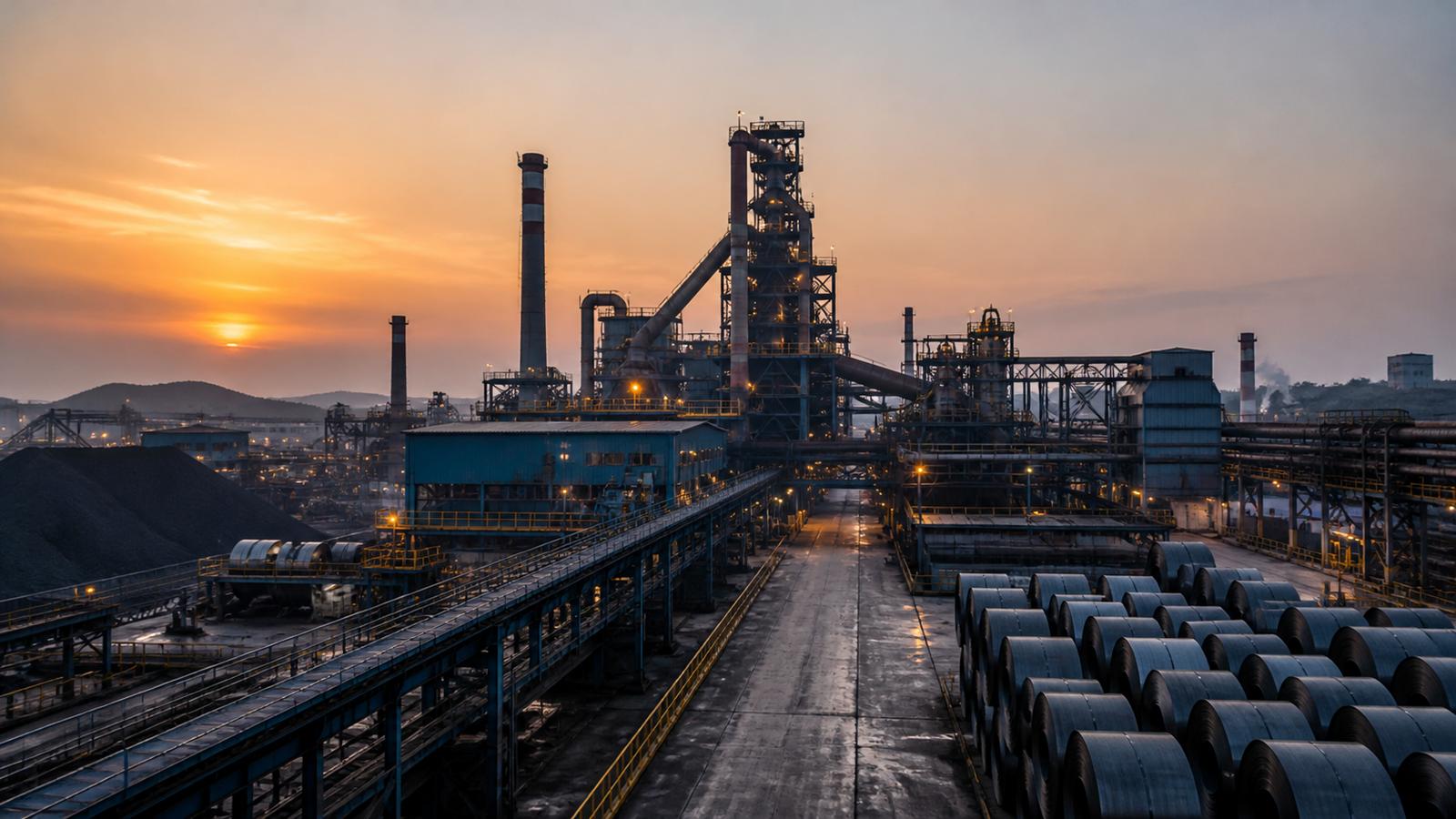
Shyam Metalics & Energy has signed a memorandum of understanding with the Government of Maharashtra to develop an integrated steel complex in Chandrapur. The proposed facility would have an annual capacity of 9 million metric tons and would require a proposed investment of ₹50,000 crore, the company said in a stock exchange filing cited by Business Standard.
The agreement was signed in Mumbai by P. Anbalagan, principal secretary for Industries, Investment and Services of the state government, and Brij Bhushan Agarwal, chairman and managing director of Shyam Metalics. Signing the memorandum does not mean the investment has been made: the project remains at the proposal stage, and the company expects to begin securing the required permits, registrations, approvals and authorizations during fiscal year 2026-27.
Two-phase development
The greenfield complex is planned in two stages. The first would include capacity for 3.75 million metric tons of finished steel a year, while the second would add a further 5.25 million metric tons. According to the company, the plant would cover the entire production chain, from pelletization, sintering and coke making to iron production, steelmaking, casting, rolling and finishing.
Shyam Metalics attributes its choice of Chandrapur to its proximity to the iron ore reserves of Gadchiroli, coal deposits in the Chandrapur mining belt, and supplies of limestone and dolomite. The company has also cited rail and road links and energy availability as relevant factors.
Employment and capacity projections
The company estimates that the project could generate about 10,000 direct jobs and 20,000 indirect jobs. It also says it could boost demand for local small and medium-sized enterprises, manufacturing and engineering units, and transportation and logistics providers. These figures are corporate projections tied to an initiative that must still clear the authorization process.
According to information released by Shyam Metalics, the group currently has aggregate installed capacity of 16.93 million metric tons a year across the steel value chain and 467 megawatts of captive power generation. The future complex would be aimed at supplying value-added steel to sectors including infrastructure, construction, automotive, railways, renewable energy, oil and gas, and heavy engineering.