



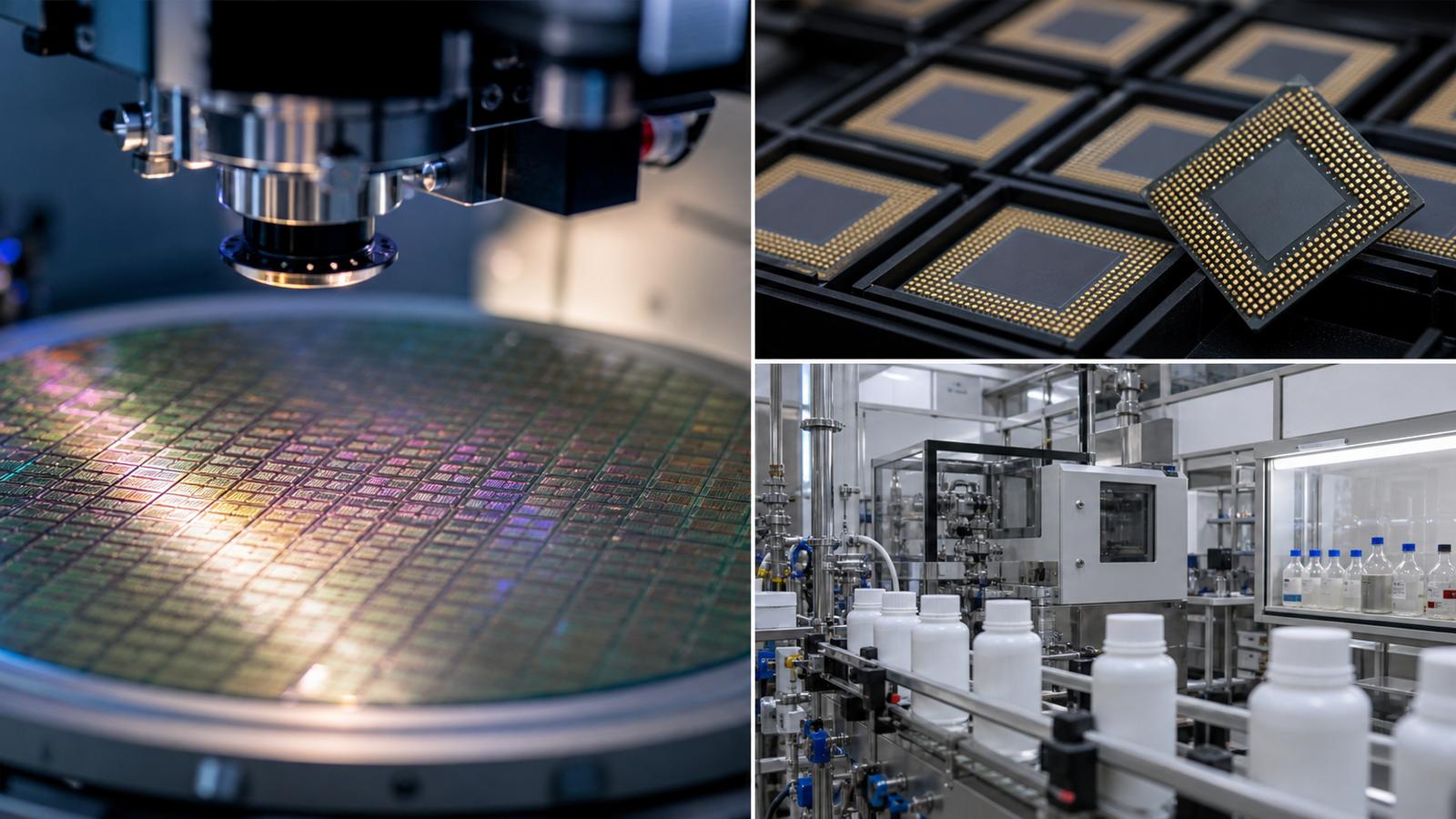
Companies had committed 1.64 trillion rupees to developing India’s semiconductor ecosystem as of October 24, 2026, according to data compiled by Financial Express. Investments cover chip design, packaging and testing, power semiconductors, and the production of electronic-grade chemicals.
The rollout is part of the Indian strategy to expand capacity across different links in the supply chain through the India Semiconductor Mission and the production-linked incentive program. Some projects remain under construction, in technological development or in validation, meaning that investment commitments do not yet translate into fully operational production capacity.
Design and power semiconductors
Cyient operates in this field through Cyient Semiconductors, which focuses on custom integrated circuit design, proprietary power-management chips, and engineering services. The subsidiary generated revenue of 1.847 billion rupees in the second quarter of fiscal 2027, up 8.8% from the previous quarter, but posted a net loss of 452 million rupees.
Management attributed the results to investment in research and development for new high-voltage chips intended, among other applications, for artificial intelligence data centers and electric vehicles. The company expects to break even in fiscal 2028, although that date is a corporate target and may be affected by factors such as wafer costs. Its custom integrated-circuit order book reached 9.55 billion rupees.
Packaging and testing
CG Power and Industrial Solutions operates its semiconductor business through several subsidiaries. CG Semi is building a chip assembly, packaging and testing facility, known by the acronym OSAT. The total cost of the semiconductor project amounts to 76 billion rupees, of which 20 billion rupees had been invested, including 10 billion rupees contributed by the government.
The first, smaller facility already provides assembly, packaging and testing services and has a maximum capacity of five million chips a day. The main plant is scheduled for completion by the end of 2026, while qualification testing is expected to begin in mid-2027. Given the time required for customers to validate processes, the company expects to begin commercial production in late 2028 or in 2029. The planned combined capacity is 14.5 million chips a day.
The group also operates Axiro Semiconductor, a fabless design company that absorbed the radio-frequency components business acquired from Renesas. Axiro bought Tosil Systems in August 2026 and invested in THINSIC on October 29 to strengthen its silicon-carbide power semiconductor business.
Chemicals for chip manufacturing
Acutaas Chemicals manufactures high-purity chemicals used in photolithography, packaging, etching and wafer cleaning. Its Noida-based subsidiary, Baba Fine Chemicals, is described by the company as India’s only domestic manufacturer of electronic-grade chemicals for photoresists. The unit generated revenue of 157 million rupees in fiscal 2026.
Acutaas has also commissioned a plant in South Korea and is validating samples with customers in that country, Japan and Taiwan. Management expects to increase commercial sales during fiscal 2028. In addition, it plans to invest 1 billion rupees in capacity for up to 81,000 tons of electronic chemicals and ultrapure solvents, with commercial production targeted for the first half of fiscal 2029.