


The collaboration between the Teruel Provincial Council and the Bishopric of the Diocese of Teruel and Albarracín has expanded the Teruel Museum of Sacred Art‘s program for 2026, with five initiatives linking religious heritage, medieval iconography, and contemporary creation.
Teruel Provincial Council contributes €20,000 to the Museum of Sacred Art
The provincial institution has allocated €20,000 to the preservation, restoration, and promotion of the province’s artistic heritage through an agreement signed with the Bishopric for the third consecutive year.
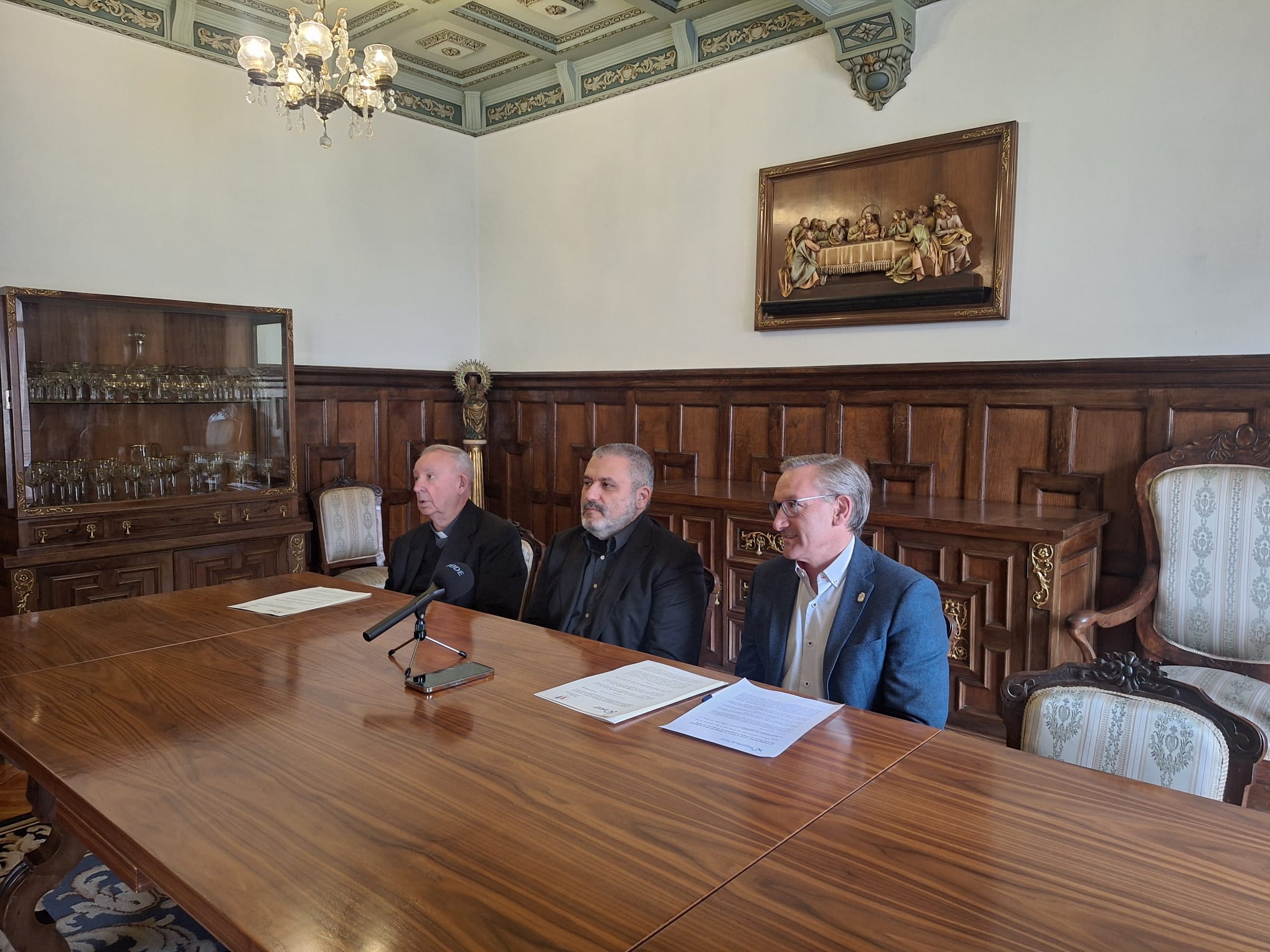
The agreement was presented on November 6, 2026, at the Bishopric of Teruel, attended by the president of the Provincial Council, Joaquín Juste; the diocesan administrator, Alfonso Belenguer; and the museum’s director, Pedro Luis Hernando.
Representatives of both institutions said at the event that the collaboration makes it possible to promote activities that could not otherwise be carried out. This year’s program has brought together initiatives focused on celestial bodies, liturgical objects, contemporary artistic creation, and dialogue between works from different periods.
Five exhibitions link sacred art, celestial bodies, and contemporary creation in Teruel
The program began in March with La Peana, an artistic-creation workshop led by Ernesto Artillo as part of the Second Spiritu Creative Residency. The activity created a space for reflection and experimentation on the creative process and the project developed by the artist during his residency at the Masía Santa Ana de El Pobo.
April brought Firmament: The Iconography of Celestial Bodies in Art, part of the Between Earth and Sky series. The exhibition, open through May 29, explored the religious symbolism of the sun, moon, stars, and other celestial elements, as well as their theological and spiritual significance.
The program continued in May with Ethereal Bodies, by Estela Ferrer Peraire. Her contemporary alabaster sculptures were displayed alongside the museum’s medieval iconography, creating a dialogue between works separated by five centuries and united by references to the sacred, the symbolic, and the human.
In June, Beauty and Devotion in Every Detail focused on the materials used in Christian artworks and the value of liturgical objects. From June through September, Essence: The Mysticism of the Contemporary, organized jointly with the Vicente Aguilera Cerni Museum of Contemporary Art of Vilafamés, brought together works from the MACVAC collection and pieces from the diocesan heritage, featuring artists including Picasso, Miró, Renau, and Cartier-Bresson.
Museum champions religious heritage as a shared legacy
Alfonso Belenguer emphasized that the Church’s heritage has been created throughout history by the faithful and belongs to everyone. In this context, he described the Museum of Sacred Art’s role as exhibiting works inspired, created, and funded by parishes and Christian worshippers.
The 2026 program thus reinforces the museum’s role as a space for preserving and promoting the diocese’s artistic heritage, while incorporating contemporary interpretations of its collections and symbols.