



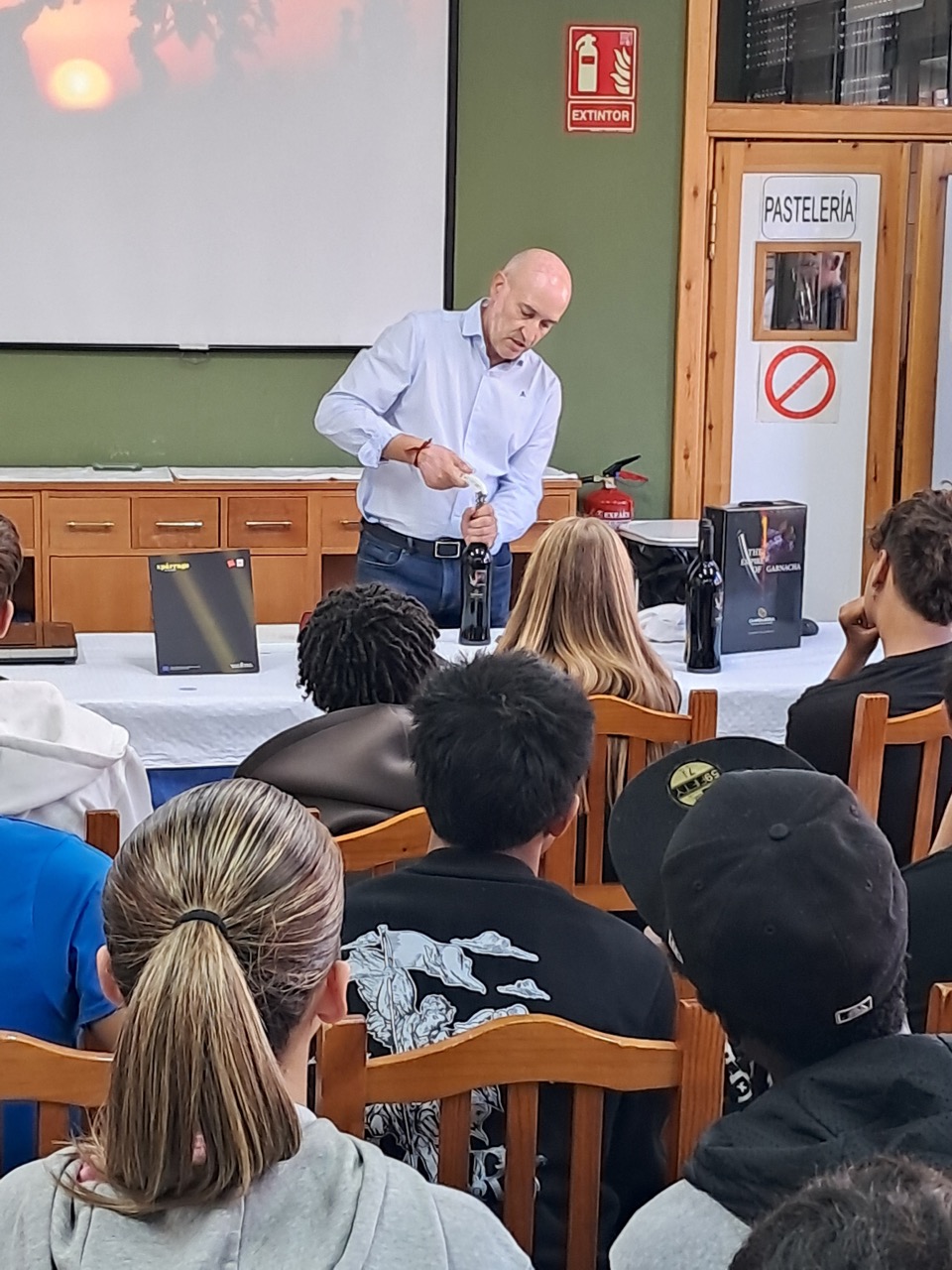
About 40 students from the Hospitality School at IES Juan de Lanuza de Borja took part in a new edition of Gastronomy with Sierra del Moncayo Origin, an event focused on quality-certified foods tied to the region. The program combined technical training, tastings and a final preparation featuring products from Aragon and Navarre.
Borja’s Hospitality School brings Moncayo oil and products into the classroom
The Regulatory Council of the Sierra del Moncayo Olive Oil Designation of Origin organized the event to introduce future kitchen and front-of-house professionals to the characteristics of several quality-certified products. Sierra del Moncayo PDO olive oil, Navarre PGI asparagus, black truffles, Moncayo mushrooms, Ternasco de Aragón PGI lamb, organic foods and Campo de Borja wines were featured in the sessions.
César Cólliga, technical director of the Sierra del Moncayo Olive Oil PDO Regulatory Council Aceite Sierra del Moncayo, explained that this olive-growing area is shaped by the cierzo wind, the influence of Moncayo and the multivarietal nature of its oils. He also introduced the five operators and four olive mills included in the designation of origin.
The technical director explained that certified oil must preserve the olive’s chemical and organoleptic qualities through controls throughout the process and cold extraction. Students also received a practical introduction to tasting, identifying the aromas, flavors and sensory characteristics of different varieties.
Asparagus, truffles and mushrooms: training to identify products and their origins
Aitziber Isturiz, of the Navarre Asparagus PGI, addressed the factors that distinguish this product: its territory and climate, underground cultivation and nighttime harvesting. For preserved asparagus, she highlighted hand peeling and the use of few additives as defining features of its production.
Tabuenca truffle producer and TRUZARFA vice president Raúl Deoiz explained that truffle cultivation takes years to begin producing, is seasonal and requires trained dogs for harvesting. He also stressed the need for future chefs to distinguish the Tuber melanosporum species from other truffles and chemical additives.
For his part, Jesús Lamata, of the San Martín del Moncayo Mycological Association, presented the area’s fungal biodiversity. The session reviewed the parts of mushrooms, their life cycle and identification methods, as well as the importance of training and knowledge of regulations before using these products in a professional kitchen.
Campo de Borja and Ternasco de Aragón conclude the event with a dish rooted in origin
José Ignacio Gracia, secretary of the Campo de Borja PDO, explained how the cierzo wind and Moncayo influence the area’s vineyards, particularly the garnacha variety. He also described the diversity of soils and elevations that makes it possible to produce different wine styles, alongside a bottle-opening and tasting demonstration.
The event concluded with a live preparation of Sierra del Moncayo Origin, a dish created by chef Hugo López. The dish combined seasonal vegetables from Aragón Ecológico, Navarre PGI asparagus broth sauce, Sierra del Moncayo PDO olive oil foam, garnacha salt, a cut of Ternasco de Aragón PGI lamb, organic lettuce and chicory, and a Campo de Borja PDO garnacha reduction.








