



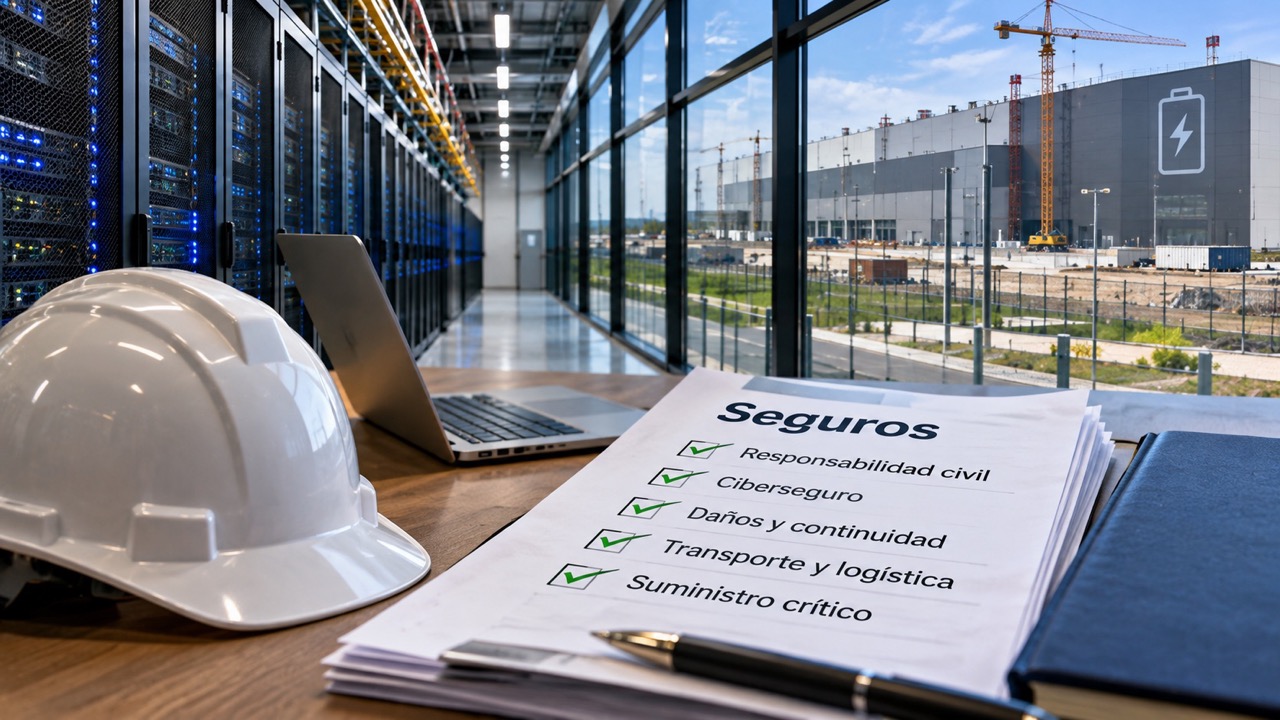
Aragón is experiencing an unprecedented investment cycle. Announced data center projects in the region now total around €70 billion, with Amazon Web Services and Microsoft among the developers. Added to that is the Stellantis and CATL battery gigafactory in Figueruelas, involving €4.1 billion in investment and up to 4,000 jobs. The Basilio Paraíso Foundation estimates that annual investment will double in 2026 from 2025 levels, rising from €3.5 billion to nearly €7 billion.
The question for Aragón’s business community is how much of that spending will remain in the region. According to the same analysis, Aragón’s economy could capture 54.5% of spending during construction of the campuses, although that share falls to 33% during the operating phase. Even so, maintenance could generate as much as €174 million a year for Aragón’s small and medium-sized businesses.
Vendor qualification starts with insurance
Becoming a supplier to a hyperscaler or a battery plant requires more than technical capabilities. Before signing a contract, these multinationals’ procurement departments require insurance certificates with specific coverage limits. Typically, they demand general liability and employers’ liability coverage with insured amounts far exceeding the standard policies held by small and medium-sized businesses, which generally range from €300,000 to €600,000 per claim. An electrical contractor or HVAC company working inside a server room can cause damage to equipment worth millions of euros, and the client wants to know who is liable.
Beyond liability coverage, other requirements also arise: product liability for component manufacturers, builders risk insurance for construction contractors, collective-agreement accident coverage for deployed personnel and, increasingly, cyber insurance for companies that access the client’s systems. Many small and medium-sized businesses discover these requirements only after they have won the tender, turning the policy into a bottleneck that delays the first order.
Review coverage before bidding
Insurance brokers recommend getting ahead of the process: reviewing existing policies against these clients’ standard tender specifications, increasing limits where necessary and checking exclusions that often go unnoticed, such as work at height, work at third-party facilities or damage to property in the company’s care, custody or control.
“An SME seeking to work for a major industrial client has to speak the same language as its risk management department,” explains Duet Seguros, a Zaragoza-based insurance brokerage that has advised self-employed professionals, SMEs and large companies in Aragón since 1997. The advantage of working with an independent broker is that it can compare terms across several insurers and negotiate high limits at a cost that remains affordable for a mid-sized company.
Being ready in time can make the difference between watching major projects from the sidelines and becoming part of them.