


The documentary directed by Alejandra Cardona arrives at Mexico City’s Cineteca Nacional this November 9. The Aragonese screenwriter and Zaragoza-based producer have been two key figures in an investigation filmed over three years across eight countries.
The documentary Influjo psíquico arrives in Mexico today, November 9, with a special screening scheduled for 7:00 p.m. at Mexico City’s Cineteca Nacional. The film, directed by Colombian-Swiss filmmaker Alejandra Cardona, features significant participation from Aragon through the work of screenwriter Ana María Pinar and producer Idoya Barrabés, head of Zaragoza-based audiovisual company Milyuna Historias.
The Mexican presentation marks a new stage in the international journey of a project that premiered in Spain on October 1 at Madrid’s Palacio de la Prensa. The film examines the legal proceedings against former Ecuadorian President Rafael Correa and reflects on the relationship between justice and political power, drawing on a phrase used in the rationale for his conviction: «psychic influence.»
Behind this feature-length film is an investigation that lasted more than three years and took its creators to Ecuador, Spain, Belgium, Mexico, Canada, Colombia, Israel, and Venezuela. The team gathered testimony from politicians, experts, and people connected to the case, including Correa himself, former Ecuadorian Vice President Verónica Abad, and Verónica Sarauz, the wife of murdered politician Fernando Villavicencio.
Two Aragonese women behind an international investigation
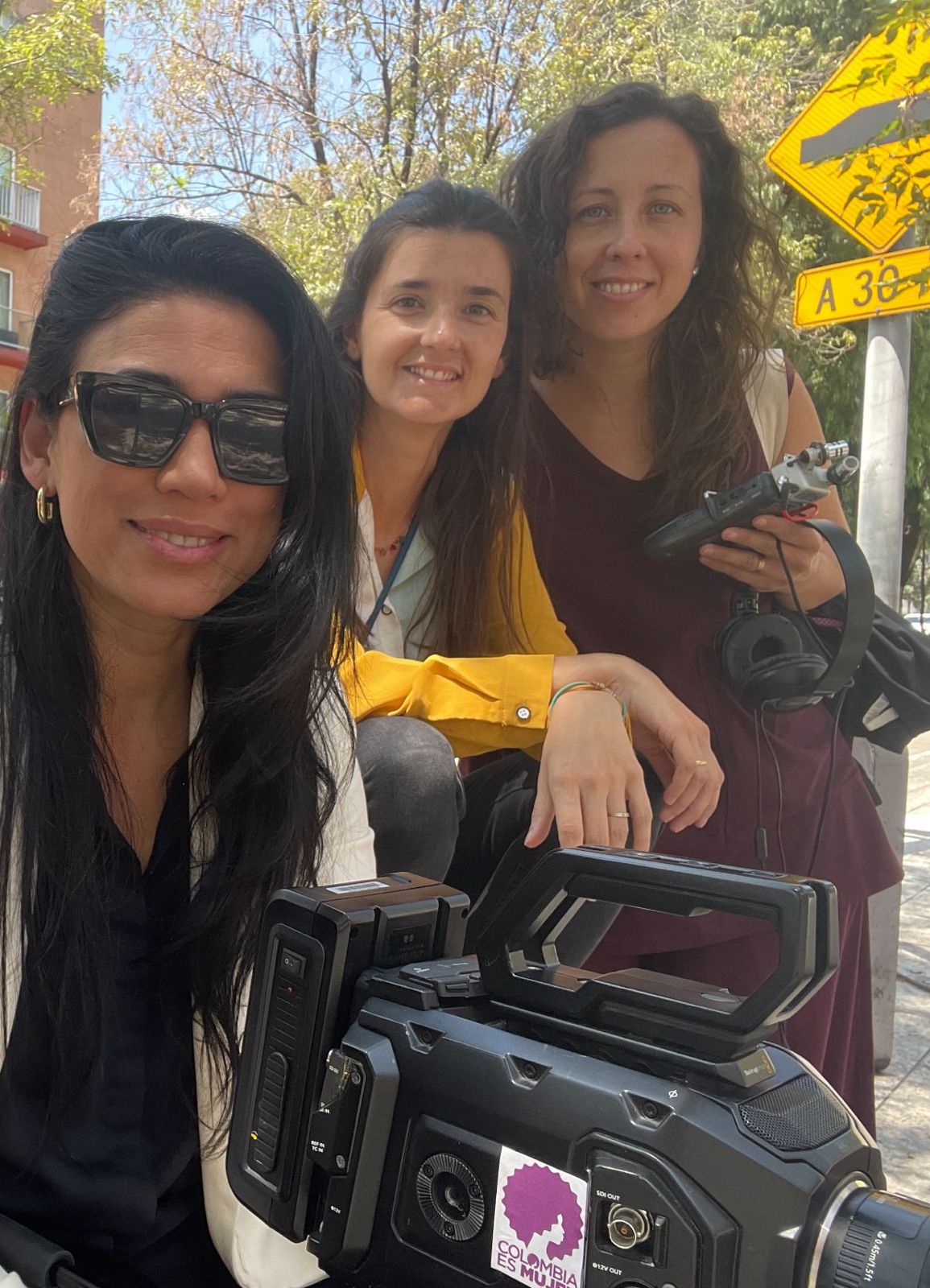
Ana María Pinar and Idoya Barrabés played complementary roles in the development of the film. Pinar, a Hispanic philologist and screenwriter with an advertising background, took charge of the writing and much of the research, while Barrabés oversaw an independent production that grew increasingly complex as filming progressed.
In an interview with GoAragón last July, Ana María Pinar explained that the project arose almost by chance after they became aware of the Ecuadorian legal case while working in Latin American political documentary film. What initially appeared to be a six-month investigation ultimately became a multiyear international undertaking, shaped by events that required the script to be continually revised.
The screenwriter stressed that the film’s aim was to examine the safeguards of the judicial process and encourage reflection on the phenomenon of lawfare, understood as the use of the courts for political purposes. “We are not judging former President Correa; we are questioning whether the judicial process had safeguards,” she said in that interview, explaining the approach they sought to bring to the documentary.
For her part, Idoya Barrabés detailed in September, also in an interview with this publication, the challenges of coordinating from Zaragoza a production filmed in eight countries. Locations, travel, financing, and the search for testimony were all part of a process in which some interviewees feared appearing publicly because of the potential consequences of their statements.
Barrabés, who is affiliated with the Association of Women Filmmakers and Audiovisual Media and the Zaragoza Film Festival, defended the intention of offering a perspective not shaped by a particular partisan position. “We wanted to talk about lawfare, but without tying it to any flag or ideology,” the producer said of a project developed by a core team of three women.
From Zaragoza to Mexico’s screens
Before arriving in Mexico, Influjo psíquico had been featured at various film industry events and venues. These included the Zaragoza Film Festival, which honored Alejandra Cardona with the Augusto Latino award in 2025, as well as professional activities linked to the Málaga Film Festival and other international festivals.
Today’s screening is of particular interest to its creators, as Mexico was one of the countries where the research was conducted. The film now returns to that setting as a completed feature, following its presentation in Madrid and several years of work between Europe and Latin America.
For Milyuna Historias, the event also represents a new opportunity for the international distribution of a production driven from Zaragoza. The Mexican premiere continues the journey of a documentary in which Ana María Pinar and Idoya Barrabés have brought their experience in screenwriting, research, and audiovisual production to a story tied to one of the most controversial political and judicial debates in recent Latin American history.