


Aragón presented its strategy at the 1st European EducaIA Forum for bringing artificial intelligence into classrooms through ethical standards, teacher training, and evidence-based assessment. The model includes a 140-hour program that nearly 3,000 teachers in the region have already completed.
Aragón advocates educational AI that strengthens learning and equity
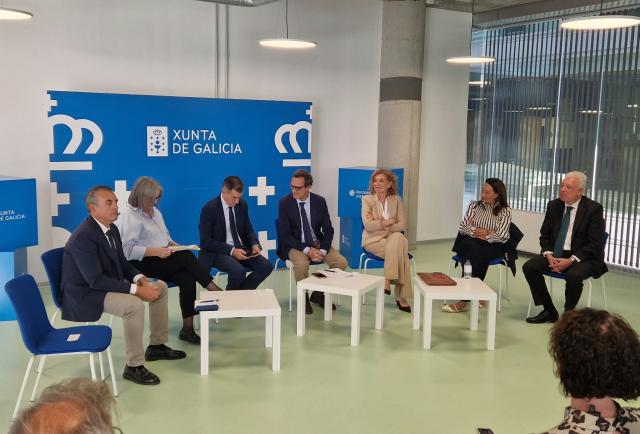
The regional minister for Education, Science and Universities, Carmen Susín, took part in the 1st European EducaIA Forum on October 2, 2026, held at the Cidade da Cultura de Santiago de Compostela. The gathering addressed the governance, regulation, and responsible deployment of artificial intelligence in education systems.
Susín spoke at a working meeting with regional education officials, where participants shared experiences and examined the challenges facing the system, with particular attention to the findings of the latest PISA Report. The minister also took part in a closed-door session on those challenges and the role AI can play.
Aragón’s strategy envisages using the technology to reduce administrative burdens and free up time for teaching. The Department of Education is also developing a training program for families, a teacher literacy guide aligned with the UNESCO framework, and observation and research networks among schools to assess when AI improves learning and critical thinking.
The ministry maintains that the integration of artificial intelligence must align training, innovation, and assessment. Its approach prioritizes strengthening mathematical, language, and scientific skills, alongside a culture of effort and equity.
CATEDU drives AI training for nearly 3,000 teachers in Aragón
The director of the Aragonese Center for Educational Technologies, Juan José Mejías, presented the Aragón model at the plenary session dedicated to regional AI initiatives. CATEDU coordinates and designs teacher-training programs in STEAM skills, while also facilitating the educational use of ICT.
Among the key milestones of the 2025/26 academic year, Mejías highlighted the artificial intelligence training program, Aragón Artificial Intelligence Week, and the completion of the European PAIDEIA project. The training program was based on a survey involving 1,574 teachers.
The program comprises six modules covering ethics and responsibility, curriculum design, AI applications by subject area, assessment, accessibility and inclusion, and a final project. It provides 140 hours of training on the AulAragón platform and, since its launch in March 2026, nearly 3,000 teachers from the region’s three provinces have completed it.
Aragón Artificial Intelligence Week was held from February 23 to 27, 2026, through Aragón’s 12 teacher-training centers. The program concluded with the 1st AI in Education Conference, held on February 28 at the Huesca Conference Center.
The European PAIDEIA project expands Aragón’s collaboration on educational AI
Aragón has also taken part in the European PAIDEIA project, which ran from 2023 to 2026. Zaragoza hosted one of its technical meetings, and the region was involved in the international closing event held in Malta.
Within this framework, an international course has been launched and piloted by more than 500 teachers from Aragón under Erasmus+. The initiative has been shared with governments and universities in Belgium, Ireland, Italy, Greece, Turkey, Bulgaria, and Malta.
The forum, organized by Siena Educación and the newspaper Magisterio, with institutional support from the Xunta de Galicia, will compile its contributions in the White Paper Artificial Intelligence and Education: Vision, Experiences and Recommendations for Education Systems, produced jointly with the European University of Madrid.