



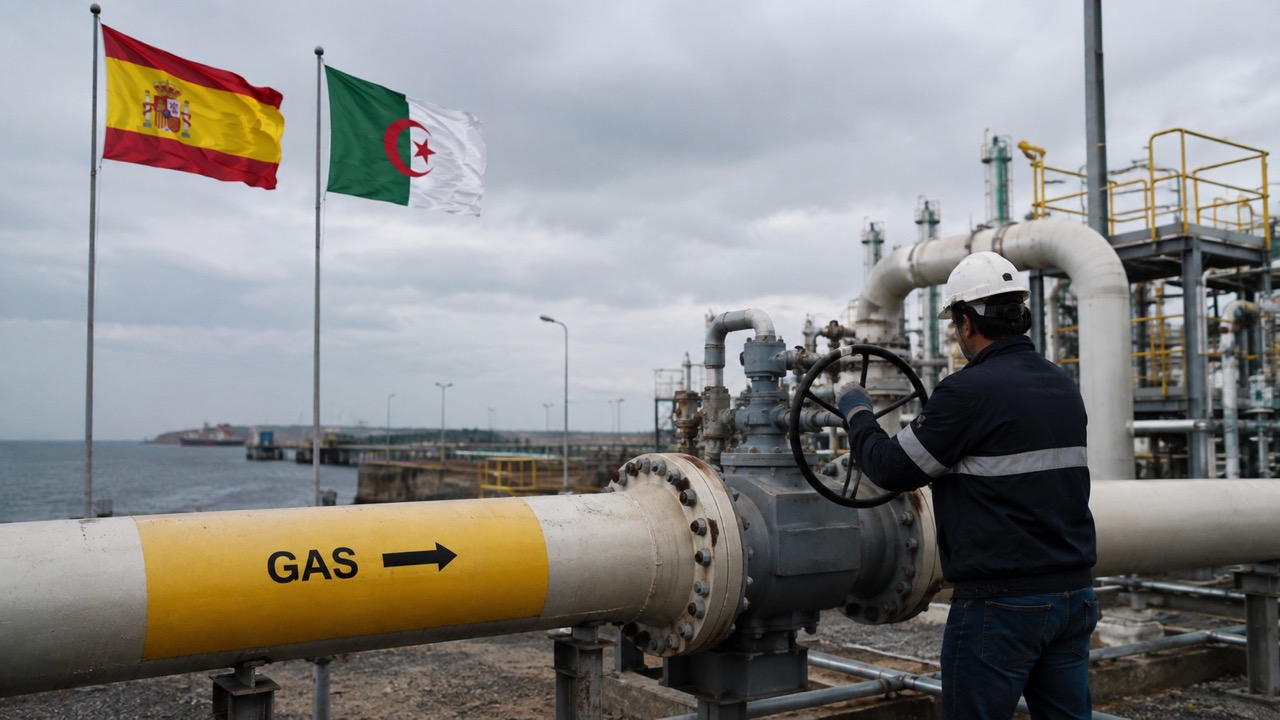
Spain and Algeria aim to embark on a new chapter in their energy relations with the goal of increasing imports of Algerian gas and enhancing Spain’s security of supply. The plan includes utilizing part of the available capacity of the Medgaz pipeline and increasing the volume of liquefied natural gas (LNG) arriving by sea, at a time characterized by uncertainty in international markets.
This rapprochement represents a new step in normalizing relations between the two countries after several years of diplomatic tensions. Energy, which remained one of the main economic links during the bilateral crisis, is once again at the center of the strategic relationship between Madrid and Algiers.
Algeria is currently Spain’s main supplier of natural gas, accounting for approximately one-third of imports. Its geographical proximity and the direct connection via the Medgaz pipeline make the North African country a particularly relevant partner for Spain’s energy system.
More gas through Medgaz
One of the main avenues for strengthening cooperation involves increasing the volume of gas transported through Medgaz, the underwater pipeline that directly connects Algerian coasts with Almería. The infrastructure has the capacity to transport over 10 billion cubic meters per year and serves as one of the main entry points for Algerian gas into Spain.
The targeted goal is to utilize around 10% of the additional capacity that is still available in the pipeline. This possibility is complemented by an increase in LNG imports via methane carriers, with volumes that, according to the planned approach, could be doubled.
Commercial details will need to be negotiated by the energy companies, but the political agreement establishes a framework to move in that direction. The combination of both channels would allow for an increase in Algerian supply, while simultaneously maintaining the flexibility offered by the international LNG market.
Naturgy and Sonatrach, strategic partners
The energy cooperation between Spain and Algeria also has a significant business dimension. Naturgy has maintained a close commercial relationship with Sonatrach, the Algerian state-owned hydrocarbons company, for decades. The supply contracts between the two companies currently extend until 2030 and envision annual volumes of around 5 billion cubic meters.
The two companies are also partners in Medgaz. Sonatrach controls 51% of the infrastructure and Naturgy holds 49%. The relationship goes beyond the pipeline: the Algerian company also holds more than 4% of Naturgy’s equity, reflecting business ties that date back to the late 1960s.
This structure provides Spain with a stable supply route directly connected to one of the main gas producers in North Africa. For Algeria, Spain represents a nearby market and a gateway to the European energy network.
Energy security returns to the forefront
The strengthening of the relationship with Algeria comes at a particularly complex time for the international gas market. Geopolitical tensions in the Middle East have heightened concerns over the security of certain supply routes, while Europe continues to reshape its energy map to reduce, and ultimately eliminate, its dependence on Russian gas.
In this context, Spain needs to maintain a diversified supplier portfolio. The country has a different position compared to other European states due to its extensive network of regasification plants, international connections, and the direct entry of Algerian gas via Medgaz.
The underwater connection between Algeria and Almería allows for fuel deliveries without transiting third countries. At the same time, Spain’s regasification capacity facilitates the arrival of LNG from markets such as the United States, Nigeria, and other producing countries.
This combination of infrastructures offers leeway to adjust purchases according to price developments and system needs, although it does not eliminate exposure to geopolitical tensions or the volatility of the international market.
Algeria regains the top position
In 2026, Algeria regained its position as Spain’s main supplier of natural gas. During the first half of the year, it accounted for approximately 34% of Spanish imports, ahead of the United States.
The recovery of Algerian flows coincides with the gradual normalization of political and commercial relations between the two countries. Spain and Algeria went through a serious diplomatic crisis starting in 2022, following a shift in the Spanish government’s stance on Western Sahara. The tensions particularly affected Spanish exports to the Algerian market, although energy exchanges continued to play an essential role.
Bilateral trade has since recovered, and in 2025, it again reached approximately 8.5 billion euros. Gas has acted as one of the main points of continuity between the two countries even during times of significant political distance.
A relationship seeking new sectors
The rapprochement between Madrid and Algiers aims to extend cooperation into other areas beyond hydrocarbons. Areas of interest include renewable energy, green hydrogen, infrastructure, and various industrial and technological sectors.
Major Spanish energy companies can play a significant role in this new phase. Naturgy, Repsol, Moeve, and Enagás have interests related to the Algerian market or the energy relations between the two countries.
The evolution of this cooperation will also have implications beyond the bilateral realm. As Europe seeks to reduce its exposure to suppliers considered geopolitically vulnerable and ensure sufficient reserves to face the upcoming winters, North Africa is gaining renewed importance on Europe’s energy map.
For Spain, the proximity of Algeria, the direct connection via Medgaz, and decades of commercial relations between companies in both countries make the Maghreb partner a relevant element of its supply strategy. The new approach seeks to leverage this position to increase supplies and simultaneously rebuild an economic relationship that has been conditioned by diplomatic differences in recent years.








