



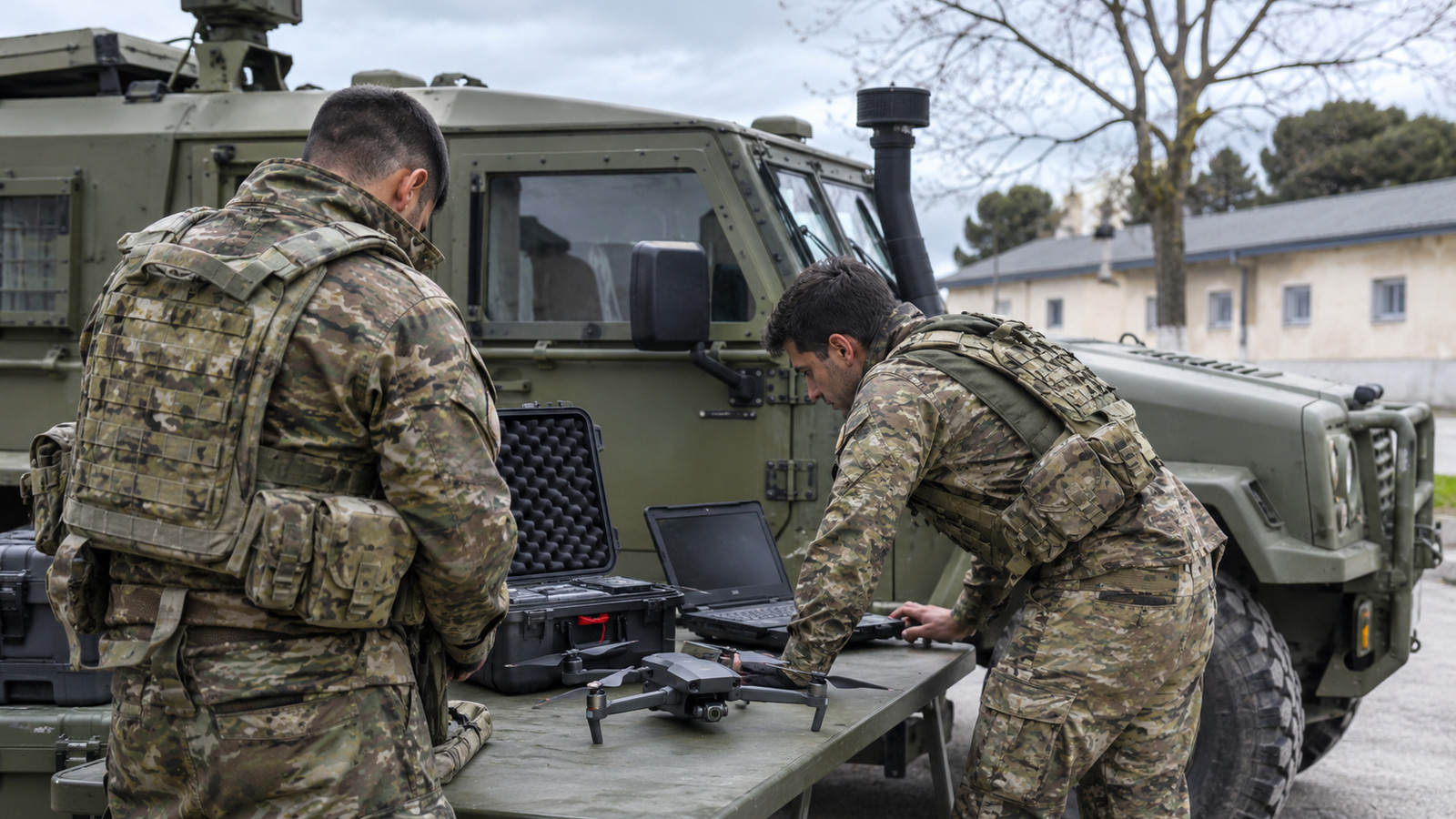
The Castillejos Division Headquarters, based at the Sancho Ramírez military base in Huesca, is entering the decisive phase of its preparations to assume command of NATO’s Allied Reaction Force (ARF) land component. Beginning November 24, the unit will take part in the Steadfast Dagger 26 exercise in Stavanger, Norway, which will assess its ability to command multinational military operations. If it successfully completes the certification process, it will take on the responsibility for one year, from July 1, 2027, to June 30, 2028.
Maj. Gen. Luis Francisco Cepeda Lucas, commander of the Castillejos Division, presented preparations for the exercise on Monday, November 16. Around 260 personnel will take part, according to information published by Diario del Altoaragón. The assessment will conclude a process launched in 2025 that has required adapting operational procedures, upgrading command-and-control systems, and conducting coordination activities with units from other allied countries.
The responsibility assigned to the Castillejos Division involves organizing and directing the land operations of a multinational force designed to respond rapidly in crisis situations. The Allied Reaction Force brings together land, air and naval capabilities, as well as special operations units, logistical assets and other military resources. According to Cepeda, it is a high-readiness structure that must be prepared to deploy in fewer than 10 days.
A command structure prepared to operate with other armies
NATO established the Allied Reaction Force in 2024 as part of a reorganization of its rapid-response capabilities, prompted by Russia’s 2022 invasion of Ukraine. Its purpose is to provide multinational units capable of serving as a strategic reserve to strengthen deterrence, respond to crises and take part in collective defense operations.
The Castillejos Division’s integration into this structure requires its headquarters to be able to plan and conduct operations with forces of different nationalities, using procedures and communications systems compatible with those of the Alliance. That interoperability is one of the central elements of the preparation and assessment process being carried out by the Spanish Army.
The work has included national and international exercises, planning meetings and integration activities with other military commands. In June 2026, the headquarters drew up the operations order to be used in Steadfast Dagger 26, with Spanish and allied personnel taking part. International officials involved include Turkish Col. Bahri Yildiz, appointed deputy commander of the land component.
Huesca also hosted a multinational seminar on October 14 and 15, at which representatives of participating countries presented the assets and capabilities they will contribute to the force. During the event, the Castillejos Division and the Legion Brigade, designated as the ARF brigade, outlined their respective roles and joint operating procedures.
The exercise in Norway will take place at NATO’s Joint Warfare Centre, a facility specializing in headquarters training. It will assess the Spanish command’s ability to plan, make decisions and coordinate land units during a simulated operation. The outcome will determine whether it has met the operational requirements set by the Alliance.
A year on standby to respond to international crises
The timetable set by the Spanish Army distinguishes between two periods. From July 2026 through June 2027, the headquarters will undergo its preparation and readiness phase, known as Stand Up. The Stand By phase will begin on July 1, 2027, during which it must maintain a high level of readiness to assume command of land operations wherever NATO requires it.
The responsibility is part of a rotation system among allied countries for leading the various components of the Allied Reaction Force. Spain has already performed leadership roles in other areas of this structure, including the air, maritime and special operations components. Castillejos’ designation applies specifically to command of the land component for the 2027-2028 period.
The process also involves other Spanish Army units and military facilities in Aragon. Activities planned for 2027 include certification of the brigade assigned to the ARF, with exercises at the Minerva simulator at the San Gregorio National Training Center in Zaragoza, as well as further maneuvers and multinational planning activities.
The upcoming assessment in Norway will determine whether the Castillejos Division has completed the operational transformation required to take on its assigned duties. The commitment places the Huesca headquarters within the Atlantic Alliance’s rapid-response structure and gives it direct responsibility for preparing and conducting international land operations during the 2027-2028 period.








