



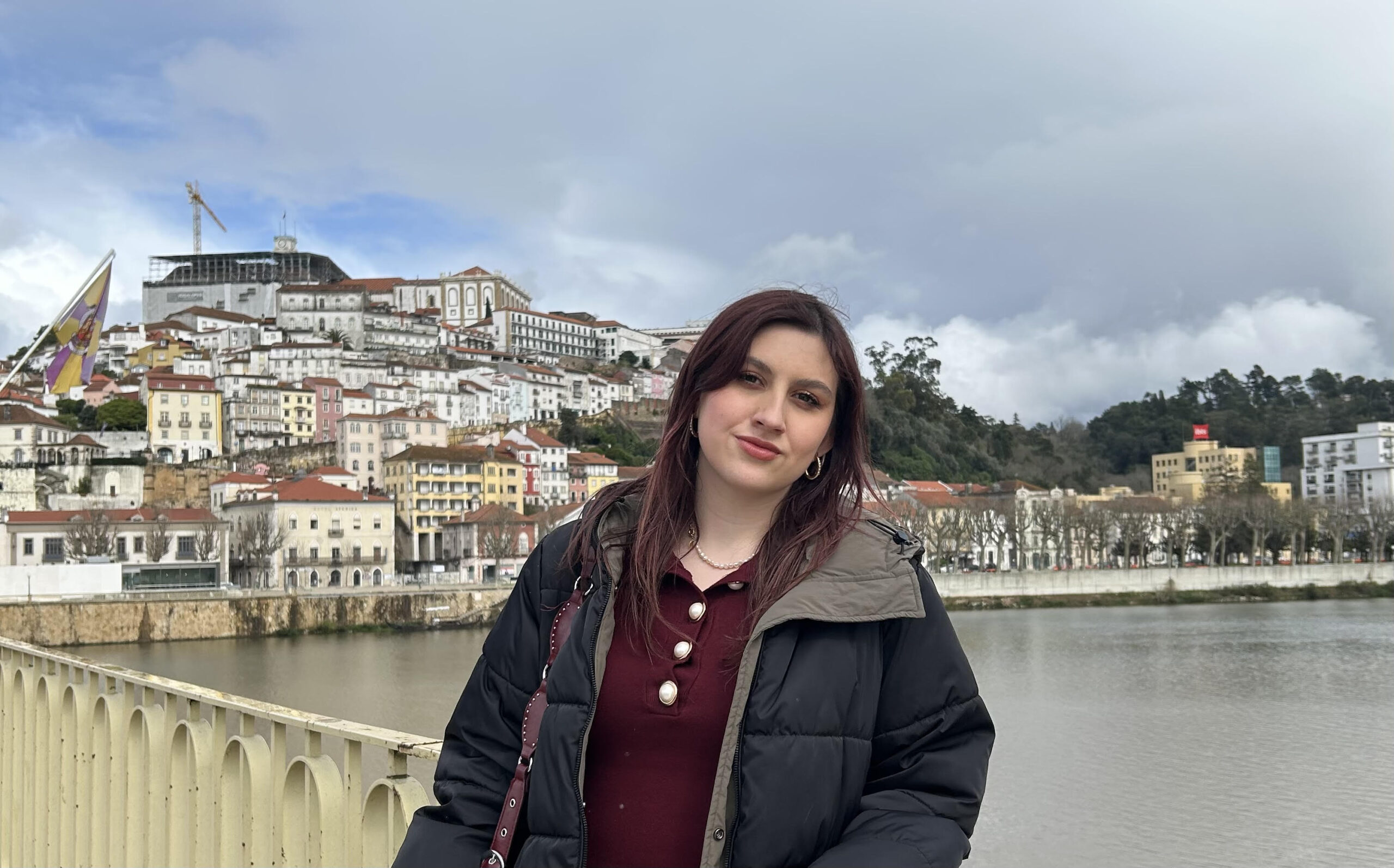
Clara Muñoz is currently in her third year of philosophy at the University of Zaragoza. This last semester, she had the opportunity to spend a few months studying in Coimbra, thanks to the Erasmus scholarship program. In this interview, we will journey to Portugal through her experience to learn about the positive and negative aspects of being an Erasmus student in the Portuguese city.
Why did you choose Coimbra as your Erasmus destination?
In Philosophy, I didn’t have many options, and of those I had, this one seemed the most attractive to me. Mainly because, according to what I’ve been told, the culture shock was much smaller compared to other countries, which would make adaptation easier. Also, there isn’t much distance between Spain and Portugal, so it was the easiest option overall.
Despite being similar countries, have you noticed any differences that caught your attention?
Yes, quite a few. There are certain things where we can be similar, such as character or way of life. For example, in Spain we enjoy doing lots of activities outdoors when it’s sunny, and here in Coimbra, since it rains so much, when the weather improves, everyone rushes outside. However, I do notice greater differences in schedules and ways of relating to each other. The Portuguese are a mix of Europeans, from whom they have adopted their schedules and part of their diet, but at the same time, they have very Mediterranean traits. They are a rather curious mix.
It is often said that we in Spain welcome everyone with open arms. Does the same happen in Portugal?
It’s interesting. The middle-aged and older people are indeed very open, even though many do not speak English or find it difficult to communicate in that language. However, when you speak to them in Spanish, most get very excited and even try to speak it. On the other hand, people our age, who theoretically should be more open because they have knowledge of languages, especially in Portugal, where they can study Spanish or English from a young age, unlike in Spain, are much more closed off. At least, that’s what I’ve experienced. They don’t want to talk to us unless they speak very good English. They don’t particularly like Spaniards; they tolerate us, obviously, but just barely.
Therefore, I understand you haven’t been able to connect as much as you would have liked with your Portuguese classmates at university.
Absolutely. It is true that Philosophy is a very small program, much smaller than in Zaragoza. Also, because most Portuguese students don’t usually attend classes; in that respect, they are quite informal. So it becomes even more complicated to connect with them outside the university. The few who do attend class don’t talk to you. They are aware that we can communicate in Portuguese, and except for a few students who are interested in practicing the language, we haven’t been able to relate to them at all. Even for going out at night, each group has its own spaces. Moreover, it’s normal for them to go out almost every day. They know that a Tuesday is like a Friday, even if there is class the next day. Still, it is very rare to run into them. In fact, I have never found anyone from my course partying. They have nightclubs that are only for Portuguese, and I have also heard of some negative experiences from Spaniards who have tried to enter and were not well received.
Is the same true for other Erasmus students from other countries?
I would say it’s even worse for them because their language is very different from Portuguese. So what happens is that Spaniards gather with Spaniards, Italians with Italians, and then those from other nationalities group together, as they all tend to speak good English. In that respect, I’ve been lucky because the Erasmus students I’ve met were very open, but I know Spaniards who, when they tried to speak in English with students from other countries, were told that they didn’t speak English and didn’t want to talk to them. From my perspective, that seems a bit inconsistent. If you are going to study in another country, you should be open-minded about meeting people from many nationalities. That is something that will enrich you immensely.
Regarding university management, how have they helped you during your stay?
Administratively, they have helped me a lot with paperwork or financial agreements, but in other areas, they have left us quite to our own devices. Since you also don’t have much information about your destination, you end up feeling a bit lonely in that respect. In the end, what many people do is talk with students who have done their Erasmus there in previous years, and they help with more specific things. In my case, I met a girl who came here; in fact, she was the one who encouraged me to choose Coimbra as my destination. She provided me with much more information about the subjects and how the university was organized.