


On October 1, the documentary Influjo psíquico will be presented at Madrid’s Palacio de la Prensa. It focuses on the phenomenon of lawfare through the case of Rafael Correa, Ecuador’s former president. The powerful feature-length film bears an Aragonese stamp, as it was produced by Milyunahistorias, headed by Idoya Barrabés.
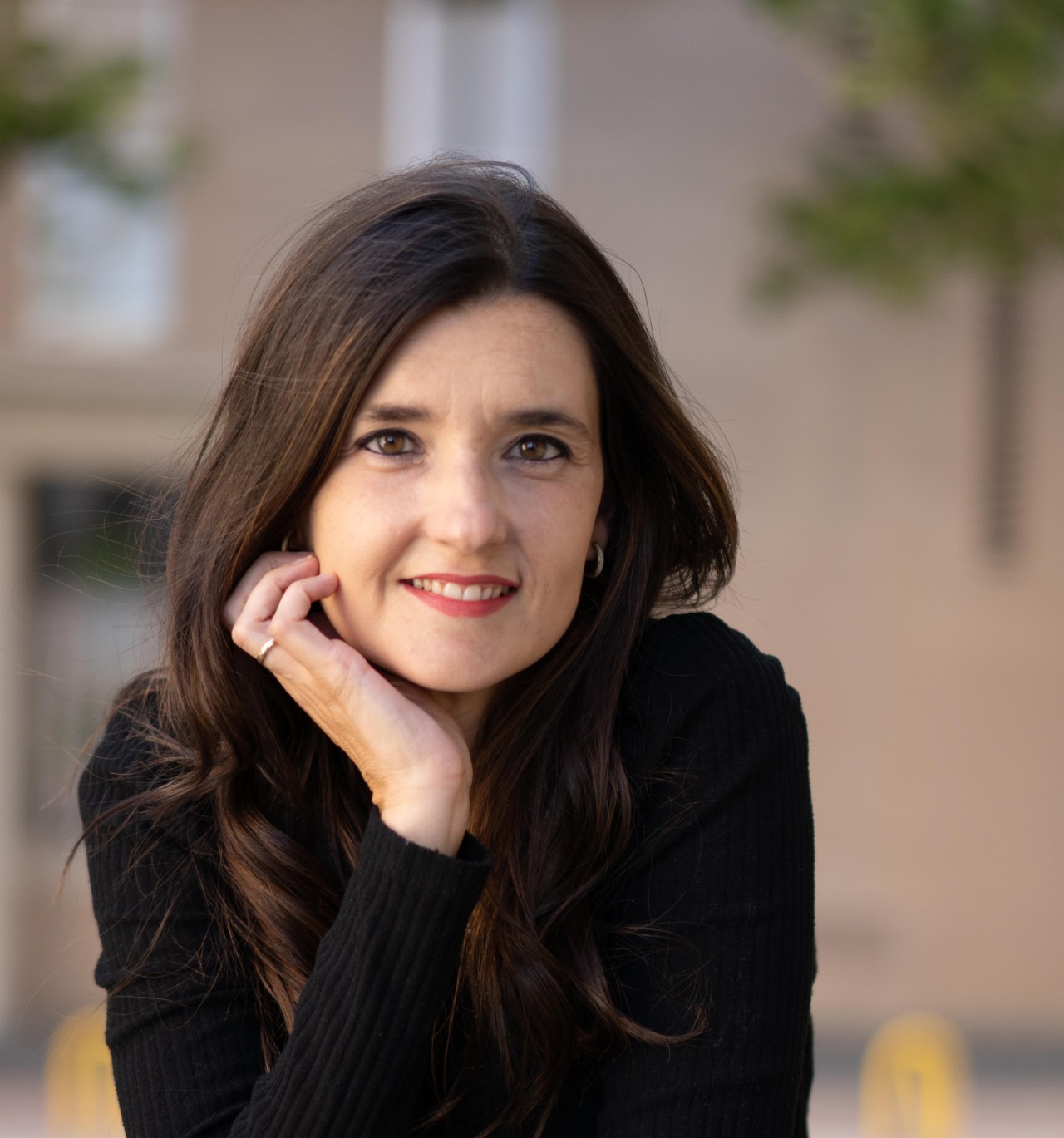
Idoya has spent years bringing audiovisual communications and advertising projects to life. That extensive experience has led her to become an active member of the Association of Women Filmmakers and Audiovisual Media Professionals (CIMA), while also heading the Industry section of the Zaragoza Film Festival. Now, at the height of her professional career, she has taken this important step into documentary filmmaking. She tells us about it from the Zaragoza headquarters of her production company.
Advertising, where persuasion is so important, seemingly has little to do with documentary production, where objectivity should in principle prevail. How did that transition come about? It was very natural, because our production company has always been focused on telling stories that are useful. And as a production director, I have always enjoyed doing the kind of advertising work that involves storytelling. When this incredibly convoluted story came our way, we went for it.
In fact, this is not the first documentary project you have been involved in. No, I previously took part in Petro, another production out of Zaragoza telling the story of a Latin American president—in this case, Colombian President Gustavo Petro’s rise to power. It is true that I was not as involved in that production as I was in Influjo psíquico, but I am tremendously proud of the work that was done. By the way, everyone can watch the documentary on Movistar and Amazon Prime. And, in a way, without Petro, Influjo psíquico would never have come about.
Tell us, how did you come across Rafael Correa’s case? It was very curious. Someone told us: since you like telling stories such as Petro’s, you have to learn about Rafael Correa’s. And that was that. I was on maternity leave at the time, but when I came back, the story captivated me. I told myself: I have to get involved in this project somehow.
Briefly tell us what happened. Rafael Correa was convicted in absentia of bribery, since he has been living in Belgium for some time. And in the 600-page ruling, there is an obscure paragraph stating that he committed bribery through psychic influence. In other words, that he used mental powers over his ministers and team to commit the crime.
Fascinating and also absurd, isn’t it? Exactly. That drew us in, and we began preproduction work to document the issue. We planned for around six months, but it ended up taking us three and a half years.
It seems things became a little complicated… Yes, for multiple reasons. To begin with, we had to understand the ruling from a legal perspective. For that, we had the involvement of many legal experts and lawyers. We also interviewed different psychologists to talk to us about whether this psychic influence exists or not. And, of course, we had to speak with politicians. Every step in the investigation opened up new lines of work. Not to mention that it was an ongoing story, with many twists and turns.
So, for a production director, managing so many changes must have been terrible. From a production standpoint, you become much less emotional. You have to be very rigorous, very practical. You think about locations, timing and money, because everything costs money. You have to make it all fit together. But at the same time, you are talking to people who are on edge, people in exile, people who are suffering. With many of them, you do not know whether they will be able to take part or not. We spoke to a great many people. There was a prior research process involving people who told us things but were afraid to express them publicly.
And all of this from here. Yes, we are a modest production company from Zaragoza. But that did not stop us from filming in eight different countries, with all kinds of experiences and problems. Suddenly, you find yourself in situations such as traveling to Colombia to interview the expert witness who analyzed the case at the Attorney General’s Office. But that interview was canceled because her plane was detained and she was sent back over an Interpol matter. At first, you cannot grasp the scale of what you are getting into. On the one hand, you think you are setting something very big in motion, and on the other, you tell yourself: there are only three of us trying to tell a story.
Yes, but it is the story of a politician, with everything that entails, isn’t it? One thing I like to say, although it can sometimes be difficult to understand, is that our objective is not linked to any political party. We want to tell a story that we believe deserves to be told, from the most objective perspective possible. In other words, how can something like this happen? Our purpose is not to tell any one person’s truth, but to try to examine every side. To do that, we contacted many people, including Diana Salazar, who was attorney general at the time. Although she thanked us, she said she could not answer our questions because of her schedule.
I imagine there were countless anecdotes and adventures, even dangers, during filming. We were always accompanied by security personnel there. That gave me a certain sense of reassurance. Besides, you are focused on what you have to do, so you are not always fully aware of what is going on. They warn you that the situation is very complicated, but you are not really conscious of certain dangers. If you saw them clearly, you might not do it.
During your filming, it was a hot-button issue in a highly turbulent Ecuador. A lot was happening. During the filming process, Ecuador’s current president raided the Mexican Embassy in Quito and dragged Vice President Jorge Glas out, putting him in a maximum-security prison; he was later convicted of corruption. Perhaps he is the great forgotten figure in this whole matter and deserves another documentary. But beyond that, many other things happened that forced us to change our plans.
For example… For example? Well, a presidential candidate was murdered in the first round of voting. Or the then-vice president, Verónica Abad, was removed from office and President Novoa sent her to Israel as ambassador. So we contacted her and had to go to Israel to interview her, because she now claims that she is suff