



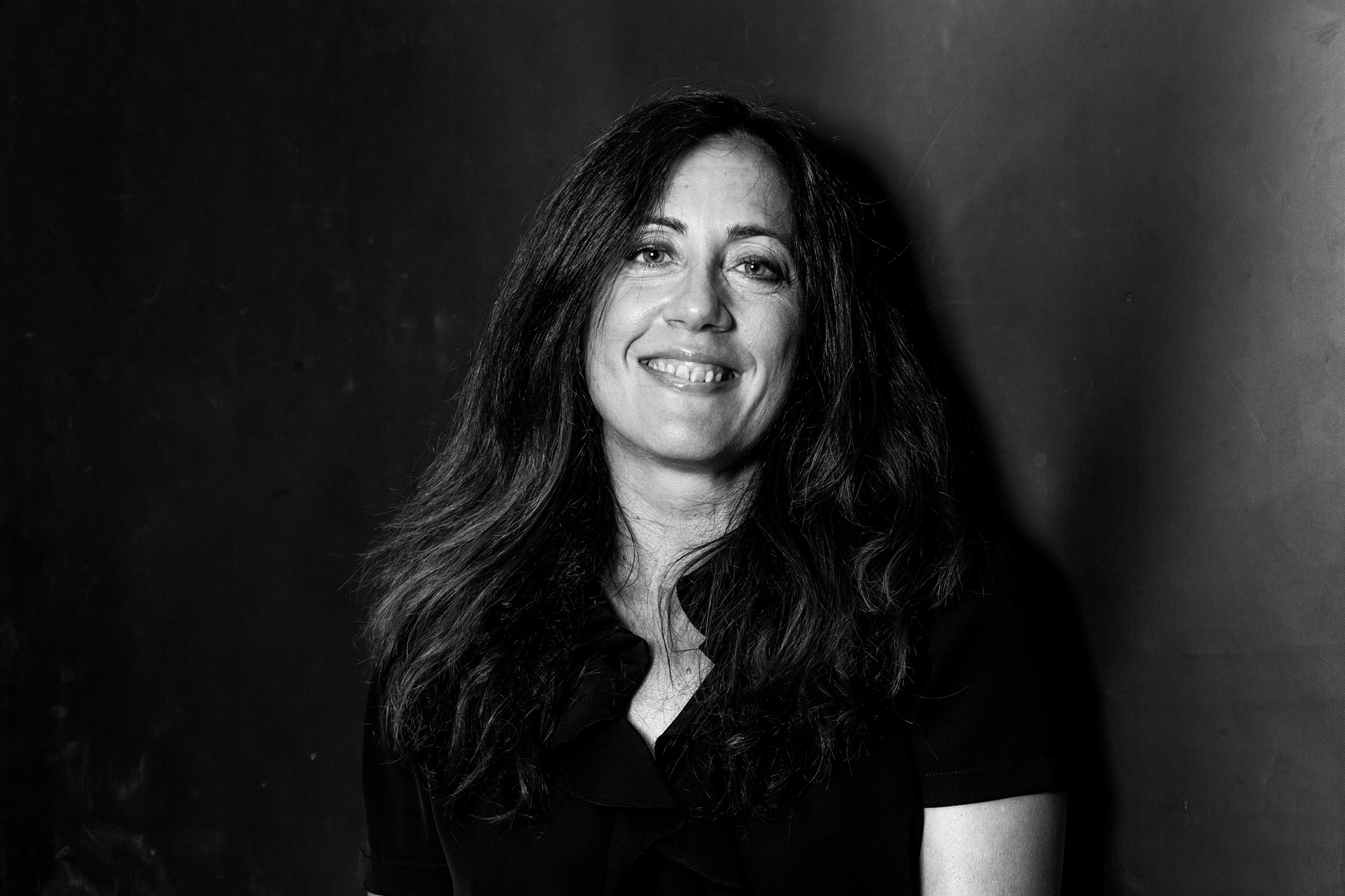
She has traveled halfway around the world as an organist, and this afternoon she will play the organ at Teruel Cathedral, offering a concert as a prelude to the Third National Congress of the Rural School, which will be held this Friday, May 16, in Teruel. Ester Ciudad is one of only four or five organists in Spain, the only one in Aragon, a vocation she has combined with cultural management and teaching. “The organ is part of me, it has made me resilient,” she says in this interview, “and it has forced me to face myself. I think the instrument chose me.”
What is so special about the organ?
Whenever I am asked this question, I have to go back to my childhood, which is when you absorb and experience the things that leave a mark on you. I come from a very Christian family that was very involved in the religious and cultural life of Ejea de los Caballeros. I spent a lot of time in the chapel of the Virgen de la Oliva, which my mother looked after, and for some reason I felt drawn to it and connected to it. Life has been very generous to me because when I went to France on an exchange with a friend, her grandfather was an organist and I found myself in the same environment.
Do you feel like you’re part of a minority, musically speaking? How has that been?
Photo 1 Esther Ciudad in the Church of Santa Engracia in Zaragoza
Education is at a very interesting point right now. There are musicians of a very high standard, almost all of whom have had to go abroad to study, not because we don’t have good training here, but because that’s what European higher education requires at the moment. In the world of the organ, it’s much more important to go abroad, because of the quality of the instrument and the requirements and needs of the instrument. You don’t become an organist in a parish, you become an organist in the world because every organ, in every place, has its own peculiarities and differences. The organ I studied on in Toulouse has nothing to do with the one I later studied on in Freiburg or Ghent or in Aragon… each has its own construction, aesthetic and sound characteristics. Each organ requires a particular repertoire, and to train as an organist it is essential to know as many organs as possible. In my case, I studied in Zaragoza, then I went to Barcelona, Freiburg (Germany), Toulouse, and Ghent.

Have you played many organs around the world?
More than 200, for sure. I have played almost all the organs in Aragon, I have also played a lot in Spain and in France, Italy, Portugal, Romania, Mexico, Austria, Norway, etc. In many villages, there is an organ in every parish, and this is undoubtedly a very important element of territorial and cultural cohesion to take into account.
It’s easy to have a guitar, a violin, a clarinet, or even a piano at home. But with the organ, things get complicated. Is it an unknown instrument? Does the public understand the musicality of the organ?
It really is a mysterious instrument. Over the years, I’ve identified two types of audiences that come to concerts. Either they like the instrument and are familiar with it, or they have never heard it before and are surprised and impressed. This second type of audience is fascinated by an instrument they didn’t know existed, with a repertoire they have never heard before and which touches their hearts. The curious thing is that the organ appeared before the modern piano, in the third century BC. It is the instrument with the longest history in the world because, since it was invented in the third century, it has continued to evolve and music has always been composed for it.
What was your teaching experience like at the conservatories in Zaragoza and Teruel?
I have really covered all areas of education, teaching for 25 years at conservatories and previously in secondary and primary schools. I am very proud of my teaching contribution at the Zaragoza Conservatory, where I taught for 14 years and where I had up to 16 students each year. This was a milestone because I had only three students when I started. Even Monserrat Torrent, dean of the Spanish organ, said that I had created a school. Humbly, I believe that I did a good job with the students, working intensely and powerfully.
In addition to being a concert organist and teacher, you are very involved in cultural and educational management.
Yes. There is more than one Ester. One is the professional performer, but there is another Ester who loves public management and cultural action. Through the Kultus Foundation, of which I am president, we organize the National Culture Forum, as well as activities to promote our heritage throughout the Aragon region. We have promoted cycles, conferences, festivals, live sessions, productions such as the one we developed on the Camino de Santiago in collaboration with Neopercusión, the Advent Festival, etc. The instrument needs to be transcended in order to be disseminated, to make it known.

What role can music, and in particular the organ, play in rural education?
Music is a fundamental discipline that generates not only cultural industry and employment. There are many schools that are playing a role in social cohesion in rural areas throughout Aragon, as well as performing an essential educational function, occupying free time, outside of digital educational tools, sensitivity, discipline, good taste… This work is extremely important and I believe that the role of music in rural areas is very noteworthy. The organ, in particular, has historically been a common element throughout the region, much more so than other cultural expressions. All villages had parish churches, and many of them had an organ. It has been fundamental, not only in musical production but also in the transmission of knowledge for a long time.
What do you expect from this Third National Congress on Rural Schools in terms of reflection or cultural inspiration?
I think this rural school congress is essential, especially in Aragon, a very scattered territory where the entire educational community, teachers, and families who decide to live in rural areas have to work extremely hard. I think it is not only necessary but also useful and intelligent. Being able to learn about and compare projects from other places and other regions is essential for enriching ourselves, even if we then have to adapt those projects to our specific reality and cultural identity. We need to breathe life into our regions, our rural areas, and our children, and this will only happen if there are good educational and cultural opportunities. I would like to highlight the importance of music schools and conservatories in the development of the region and in keeping people in rural areas. They are a fundamental anchor for our community structure.
As an artist with ties to the local and rural areas, what motivates you to continue supporting projects in regions such as Teruel?
I worked at the Teruel Conservatory for 15 years, and I carry the city in my heart. I believe that Teruel is doing pioneering work in culture. I have always worked to promote our heritage, developing projects through the Provincial Council or with the Culturas Foundation, and we have reached the entire region, from Salvatierra de Esca to towns such as Fuentespalda. We have traveled throughout the region because it is essential that information reaches every corner, information that is sometimes absent from digital platforms, or that is not easy to find, or that has not been given the attention it deserves. Ultimately, music is an intangible heritage, but it is essential for the intellectual, emotional, and cognitive development of our young people. We must give them the tools or means to help them settle where they want to and protect our heritage. I have met wonderful people, brilliant children who have appreciated the proximity of these musical projects in the region.
In sparsely populated areas, how do you see the relationship between culture, education, and community development?
At the moment, the relationship between culture, education, and community development is perhaps in need of more analog and less digital cultural expressions. When I have traveled around Aragon with educational and cultural projects, I have seen that children and adults get excited when they feel part of a community. It would be necessary to promote this type of activity, what we call culture, which requires a certain effort and not just entertainment. Music is a fundamental element.
What place do you think the organ occupies in today’s music scene?
The organ has enjoyed a very buoyant period for some time, but perhaps at the moment it needs a boost from professionals and the development of this specialty. There is a very important element, which is that it is not only necessary to train professionals, but also to create spaces for professional development where these professionals can have a paid workplace. And to move from the amateur to the professional sphere.
What could be done to bring it closer to the general public?
It’s true that it’s not an easy instrument to understand, due to its circumstances and the place it occupies. There are organs in churches, liturgical spaces, and there are organs in auditoriums. I think a lot has been done, and in my case, I did projects that traveled throughout the region for many years, thanks to the Provincial Council at the time or to projects with European funding. We traveled throughout Aragon with educational activities tailored to different educational levels, and with great success. I can tell you that every year, 3,000, 4,000, and even 7,000 children participated in these activities through their schools. This type of activity requires perseverance and funding. The aim is to bring the instrument closer to the public in a professional manner with the goal of having it played in the future by professionals who, in turn, will continue to develop this project and create a network of venues where music can be heard. In the end, the public is wise and knows how to distinguish between good music, even if it is popular, and other types of music, and that is very important. Outreach projects that are educational, well-designed, with good music and well performed.
What advice would you give to young musicians who are interested in this instrument?
The first piece of advice is that they should get involved in the world of liturgy. There are very few organists who make a living from giving concerts, there are also very few teaching positions for organ, and there are very few paid positions in parishes or similar places. In any case, one of the fundamental parts of being an organist is liturgical service, and for that you also have to train and be serious about the repertoire you are performing. Another piece of advice is to never stop studying, not a single day of the year. Organists are not seen, we don’t have star profiles, we are not Freddie Mercury.
What has the organ meant to you in your life, beyond the professional?
It has been a constant since I decided to start studying it at the age of 13. It has made me resilient, it has confronted me with myself and it has given me the greatest friends and the most extraordinary people I know in this world. The organ is always there, either because I’ve played it, met someone, had to look for a project, or because someone has heard me play. I think it’s the organ that chose me and not me who chose the instrument.