



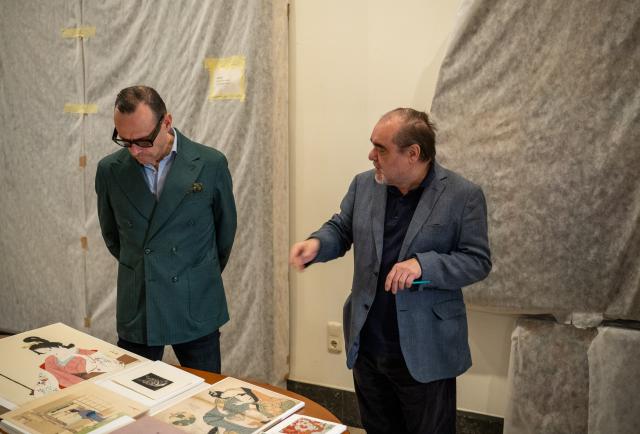
The recent donation from Víctor Pasamar Gracia to the Museo de Zaragoza marks a significant milestone in the representation of women artists in Japanese graphic art. With this contribution, the museum not only enriches its collection but also strengthens its position as a European leader in showcasing works by Japanese artists.
A donation that celebrates women’s art
Pasamar’s donation, formalized in March, includes 18 works by women artists, consisting of fourteen prints, three photographs, and one ceramic piece. These works are notable for the woodblock printing technique, a Japanese tradition brought to life by authors such as Uemura Shōen, Mizuno Hidekata, and Iida Shikō, among others. The collection also features works by the renowned Kusama Yayoi and photographer Kawauchi Rinko.
The addition of these works to the Museo de Zaragoza not only expands the artistic heritage of the institution but also underscores the importance of visibility for female talent in art, aligning with the advocacy of International Women’s Day.
Víctor Pasamar and his commitment to equality
Víctor Pasamar Gracia, a collector from Zaragoza, has been a fundamental pillar in promoting Japanese graphic art in Spain. His collection, known as the ‘Pasamar-Onila Collection’, is one of the most important in the country, encompassing works from the 17th to the 20th century. This collection includes genres such as bijin-ga, landscapes, and shunga, and has rescued many women artists from obscurity.
With this second donation, Pasamar has increased the number of works by 34 women artists from Japan in the museum to 48, solidifying his commitment to gender equality and honoring the memory of Marian Emil Onila.
Fruitful collaboration with the Museo de Zaragoza
Since 2018, the collaboration between Pasamar and the Museo de Zaragoza has been prolific. The donated works have been part of exhibitions such as ‘The Elegance of Tradition’ and ‘Kimono. Silk Skin’, attracting thousands of visitors. In 2025, the exhibition ‘Treasures. Collections of Asian Art’ had 98,943 attendees, highlighting the cultural impact of these initiatives.
Pasamar’s efforts extend beyond donating works; they also include guided tours and advice on acquisitions, in line with the museum’s policies. This joint effort has allowed the Museo de Zaragoza to stand out as an institution committed to diversity and inclusion in the art world.