



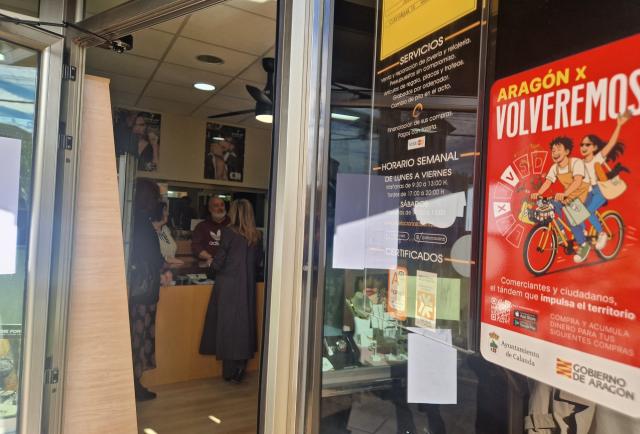
The Volveremos program of the Government of Aragón, designed to support local commerce, has successfully expanded to 72 municipalities in Aragón, consolidating its territorial presence. This growth reflects the acceptance and success of the program, which has increased from 22 municipalities in 2024 to 62 in 2025, and now reaches a record participation.
Territorial Expansion and New Additions
In 2026, the program has added 16 new localities, while six municipalities have decided not to participate this year. The distribution of new additions is notable across the three provinces of Aragón. In Huesca, Biescas and Laspuña have joined; in Teruel, Albarracín, Arens de Lledó, Calamocha, Formiche Alto, Mazaleón, Monreal del Campo, Montalbán, Mora de Rubielos, and Utrillas; and in Zaragoza, Ariza, Calatorao, Daroca, Lécera, and Urriés.
Economic Impact and Program Assessment
Carmen Herrarte, Director General of Commerce, Fairs, and Handicrafts, has highlighted the success of the Volveremos program, emphasizing its ability to change consumption habits and generate economic impact in local commerce. Herrarte noted that the program has managed to shift consumption from digital platforms to local commerce, achieving a return of more than 10 euros in local commerce for every euro invested.
In 2025, the program facilitated purchases in local commerce amounting to 98 million euros. This figure was reached thanks to an investment of 5 million euros from the Government of Aragón, complemented by similar contributions from 62 municipalities. In total, 1,155,000 transactions were recorded in 3,412 businesses, with a participation of 136,400 active users.
Aragón, Leader in Commercial Growth
The commerce sector in Aragón has demonstrated notable leadership at a national level. According to the National Institute of Statistics, retail trade in Aragón grew by 4.2% in February, double the national average, positioning the community at the top of the territorial ranking. This growth reaffirms Aragón’s role as a benchmark in promoting local commerce and its ability to adapt to new consumption trends.