



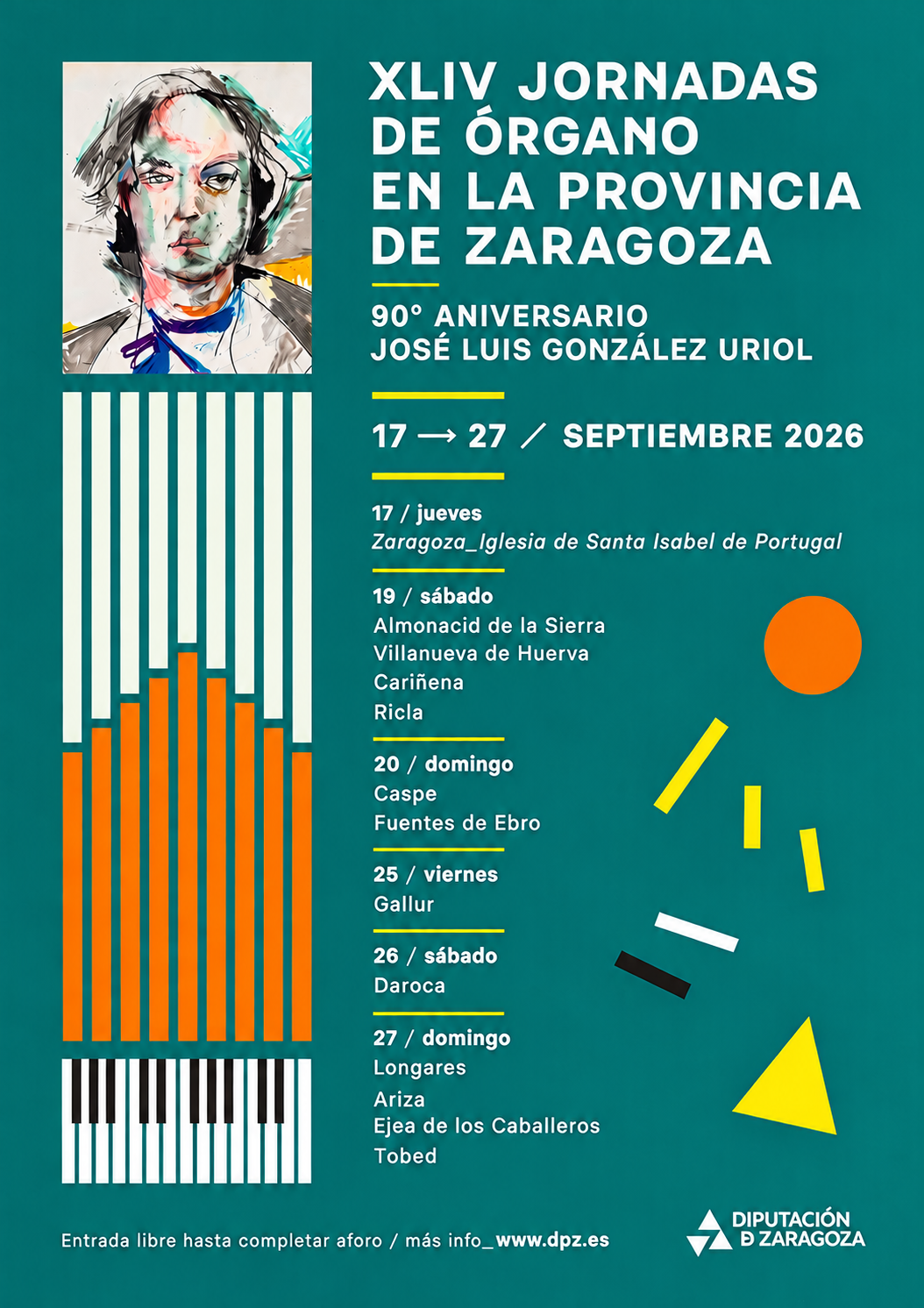
The 44th edition of the Zaragoza Provincial Council Organ Festival concludes this weekend with six concerts in Gallur, Daroca, Tobed, Longares, Ariza and Ejea de los Caballeros. The series, which offers free admission until capacity is reached, pays tribute to organist José Luis González Uriol in the year of his 90th birthday.
Six concerts bring the Organ Festival to a close across Zaragoza province
The closing program begins on Friday, September 25, at 7:00 p.m. with a concert by Juan San Martín at the parish church in Gallur. A day later, on Saturday, September 26, organist Saskia Roures will perform at 7:00 p.m. at the parish church in Daroca.
The final day, Sunday, September 27, will feature four performances. Eduardo Gregorio will give a concert at 11:30 a.m. at the parish church in Tobed, while Sonia Pueyo will perform at 7:00 p.m. at the parish church in Longares.
Also that day, Chus Gonzalo will perform at the parish church in Ariza, although the recital time has not been specified. The closing concert in Ejea de los Caballeros will be performed by Luis Antonio González Marín at 7:00 p.m. at the Santa María parish church. All concerts will be free of charge until venue capacity is reached.
A tribute to José Luis González Uriol on his 90th birthday
This year’s edition marks the 90th birthday of José Luis González Uriol, whom the festival recognizes as a key figure in the restoration and promotion of Zaragoza province’s organ heritage. The performers on the program were selected for their national and international careers, as well as for having studied under the master.
The festival began on September 17 at the Church of Santa Isabel in Zaragoza and, before its conclusion, has traveled through Almonacid de la Sierra, Villanueva de Huerva, Cariñena, Ricla, Caspe and Fuentes de Ebro.
More than four decades promoting Zaragoza’s organ heritage
For more than 40 years, the Organ Festival has brought Spanish and international concert artists to towns across the province. The series has highlighted Zaragoza’s preserved organ heritage, distinguished by the diversity and richness of its stops.
Efforts to preserve these instruments have sought to maintain them as their creators originally conceived them, from organs built in the 17th century to more recent instruments. Through the festival, the churches that house them have become meeting points for professionals and specialists from all five continents.