



The Spanish government is preparing a new payment schedule for the Eurodrone program, whose implementation has been extended through 2030. The adjustment affects the €1.42947 billion loan granted to Airbus Defence and Space and, according to the available documentation, does not increase its total amount.
The Council of Ministers has approved expedited processing of the draft royal decree that will amend the terms established in 2022. The aim is to align disbursements with the program’s current pace and finalize the amendment to the loan award order before the end of 2026.
The original schedule spread payments between 2022 and 2028, with the largest amounts concentrated in the later years. The Ministry of Industry and Tourism says technical issues encountered during development rendered that schedule outdated and has therefore proposed deferring the outstanding annual payments. The loan is multiyear and carries a 0% interest rate.
The financing channels Spain’s contribution to the Eurodrone through Airbus Defence and Space, which transfers the funds to the Organisation for Joint Armament Cooperation (Occar). The organization manages the project on behalf of Germany, France, Italy and Spain.
A program for 60 aircraft
The multinational contract was signed in February 2022 by Occar and Airbus Defence and Space GmbH, the prime contractor. Airbus Defence and Space España, Leonardo and Dassault Aviation are participating as the main subcontractors in the development, production and initial in-service support phase.
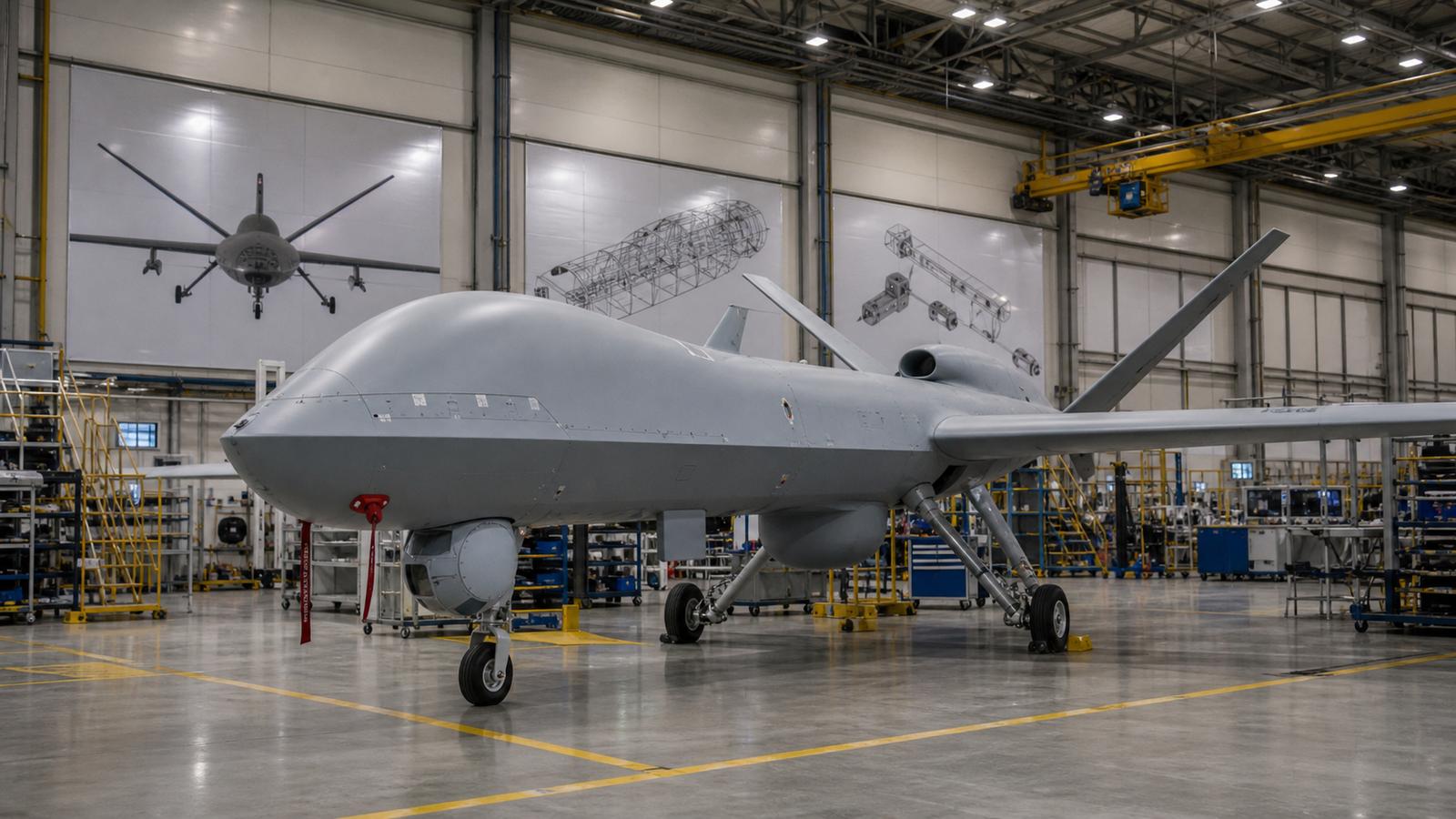
The project calls for the manufacture of 20 systems, each comprising three aircraft and two ground control stations, for a total of 60 aircraft. The Eurodrone is a medium-altitude, long-endurance remotely piloted aircraft system designed primarily for intelligence, surveillance, target acquisition and reconnaissance missions. It will also be able to integrate weapons and other mission payloads.
The program passed its preliminary design review in May 2024 and completed its critical design review in October 2025, according to Occar. Following the completion of the design phase, the 2026 plan includes prototype manufacturing and ground testing, while delivery of the first production systems is scheduled for the end of the decade.