



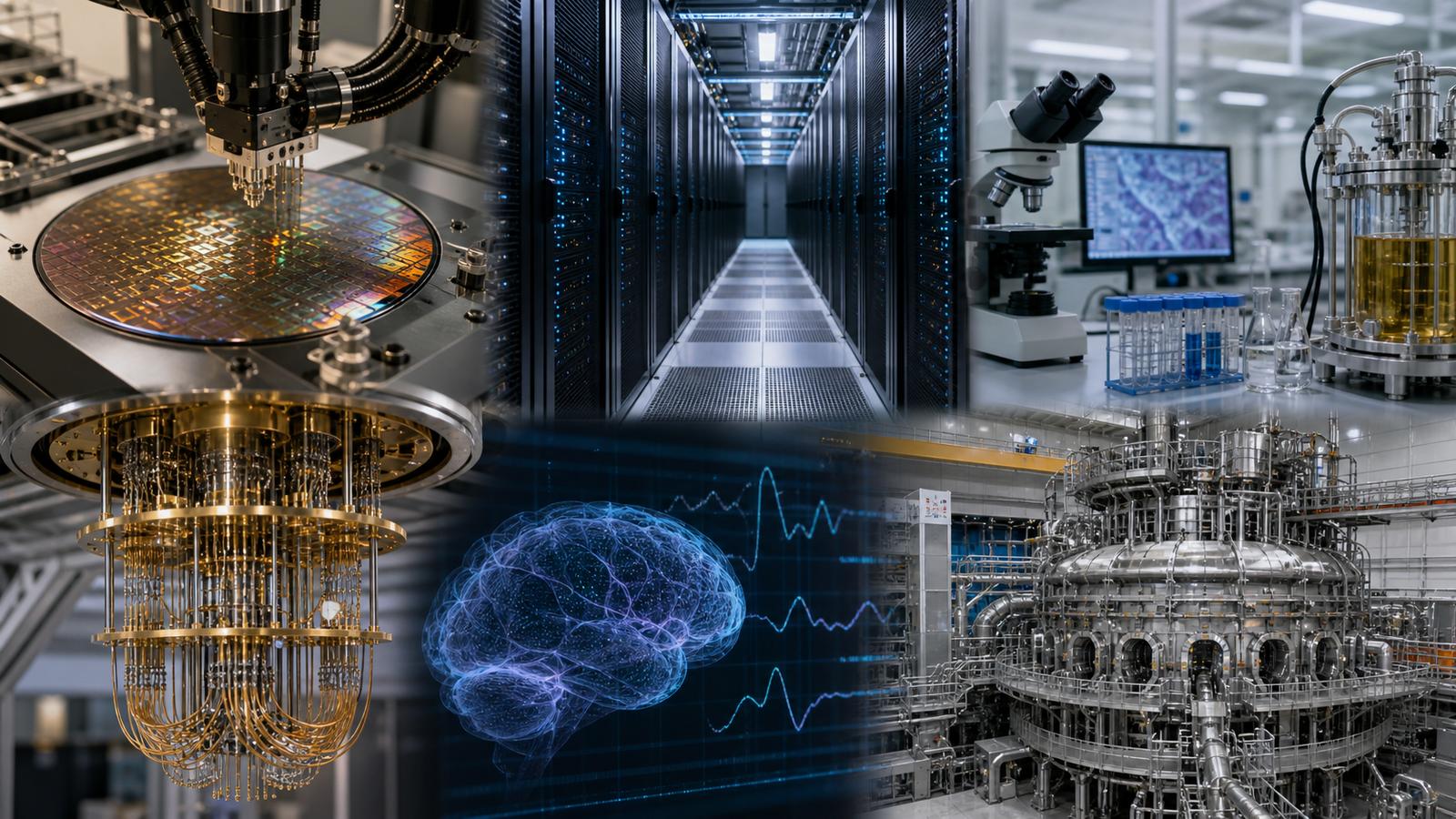
China has identified artificial intelligence, integrated circuits, quantum technology, and biotechnology as research and innovation priorities for the 2026-2030 period. The strategy also includes brain-computer interfaces, nuclear fusion, advanced materials, and 6G communications, according to information released by the state-run Xinhua news agency based on guidelines from the Ministry of Science and Technology.
The plan signals the areas toward which Beijing intends to direct public resources, infrastructure, and talent during the next five-year cycle. For international companies, this selection is relevant because it could shape investment, demand for scientific equipment, and the development of strategic supply chains, particularly in semiconductors, artificial intelligence, biotechnology, and advanced energy.
Greater technology transfer to companies
Chinese authorities say they will seek to accelerate the conversion of scientific results into industrial applications. Their objectives include directing more funding, data, specialized personnel, and research infrastructure toward companies, with the stated aim of strengthening their role in technological innovation.
These guidelines set out government priorities and do not in themselves guarantee that all announced projects will achieve commercial results. Their implementation will depend on the specific allocation of funding, companies’ ability to develop competitive products, and restrictions affecting China’s access to certain foreign technologies.
An investment effort with global reach
China said its research and development spending exceeded 3.92 trillion yuan in 2025, equivalent to around $584 billion and 2.8% of gross domestic product. The figures, reported by official sources, reflect the scale of the country’s push to expand its technological self-reliance and turn research into industrial capacity.
The concentration of resources in sectors deemed strategic could intensify international competition for capital, researchers, and intellectual property. It could also create opportunities for suppliers of materials, scientific instruments, and specialized services, although access to the Chinese market will be shaped by its regulations, industrial policies, and the geopolitical environment.
The simultaneous inclusion of technologies with immediate applications, such as artificial intelligence and chips, and still-experimental fields, such as nuclear fusion and brain-computer interfaces, points to a strategy that combines short-term industrial objectives with longer-horizon research. The level of funding and the specific programs developed around these priorities will determine their actual impact on global markets.