



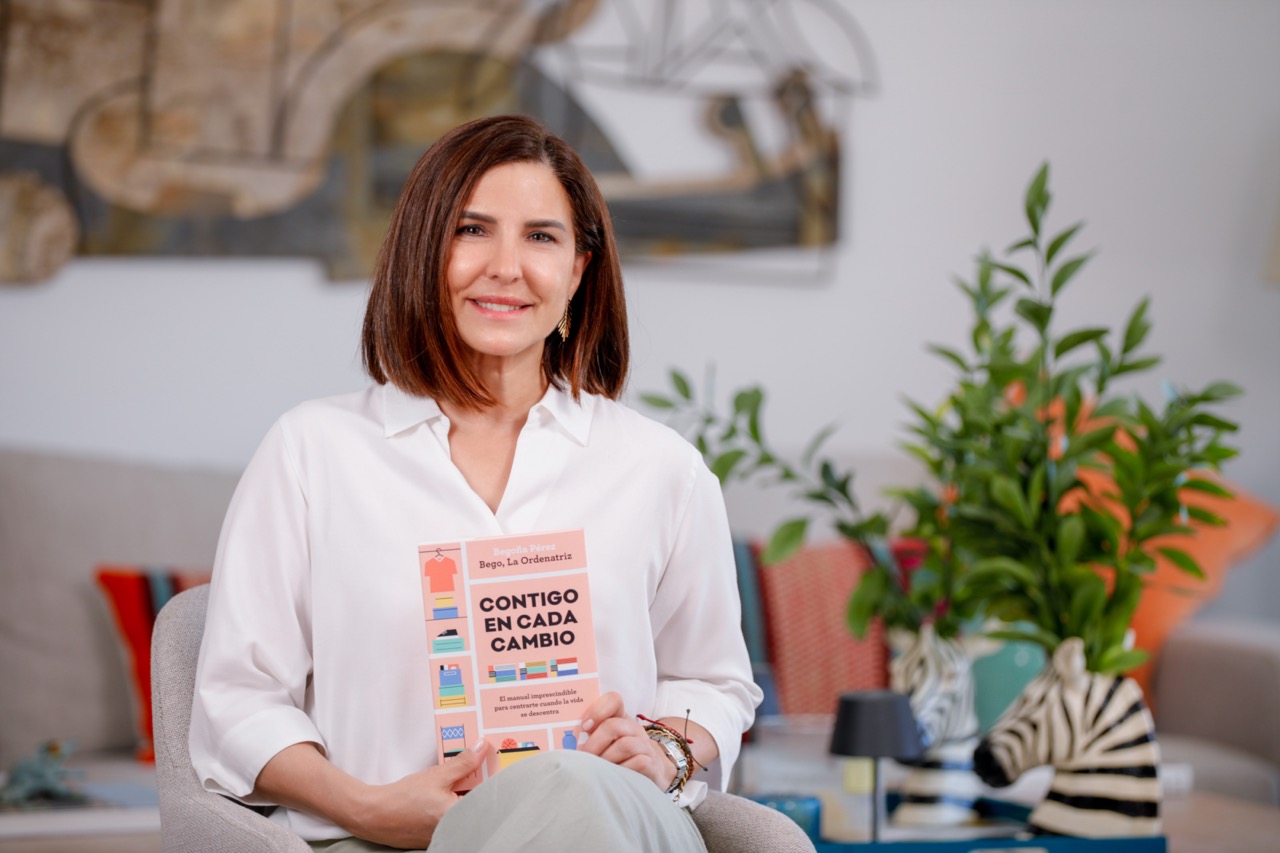
A home is never organized once and for all. The people who live in it change, as do their schedules, their needs and, sometimes, their entire lives. Begoña Pérez, known as La Ordenatriz, talks about closets and routines, but also about mental load, illness, family and something that is often harder than tidying up: accepting that we cannot control everything.
A wheelchair that cannot fit through a doorway. A baby starting to crawl. A person who suddenly can no longer manage the tasks they handled every day. In such situations, organizing is not about arranging things more efficiently, but about asking what the home now needs to keep functioning.
That is the idea running through Contigo en cada cambio. Pérez, a mother of seven, advocates an approach to organization that can adapt to the people living in the home, even—or especially—when plans go awry. “Order should serve us, not the other way around,” she says.
Making plans without expecting them to happen
“At 52, I already know that no day will turn out exactly as I had planned,” she says. Some unforeseen events are welcome; others are not. “Some surprises are wonderful, and others I wish had never happened.”
“Say goodbye, thank the object for the purpose it has served and put it in a bag without looking at it”
For Pérez, getting organized does not mean trying to avoid the inevitable. It means having a foundation that helps people respond when something changes. A planned grocery run or clearly assigned chores may seem like minor matters, but they allow a household to keep moving forward if someone has to be away or can no longer take care of what they usually do.
The work no one sees
Putting food on the table is a visible task. Deciding on the menu, checking what is left in the pantry, making a list, adjusting the budget and finding time to shop are often far less visible. That work carries weight, too. “Organization is the umbrella,” Pérez explains. Under it are the tasks, but also the decisions required for someone to carry them out. “It is one thing for me to cook, and another for me to go shopping, make the list or plan the menu.” Dividing up who cooks or cleans is not enough if the responsibility for anticipating everything still falls on the same person.
“Don’t judge; help. More love.”
When a difficult situation arises, that organization can become a very tangible form of care. “Suddenly, everyone is at everyone else’s service,” she says. Someone who has never done a load of laundry starts doing it because another person no longer can. A home is adapted so that a wheelchair can pass through, or the floor is cleared so a baby can move around safely. Routines change because needs have changed.
That is why, she insists, it makes no sense to keep a household system simply because it used to work. If it now makes life harder, it is time to rethink it.
The doubt bag
Adapting a home also means deciding what stays in it. And that is not always easy: a dress may take up little space yet hold memories of a particular chapter in life or the affection of the person who gave it.
Pérez suggests acknowledging that connection before making a decision. “Say goodbye, thank the object for the purpose it has served and put it in a bag without looking at it.” This is her “doubt bag”: setting aside the things that are difficult to let go of and, after some time, seeing whether they have truly been missed. If a year passes without needing them, she suggests recycling, donating or selling them.
She does not present it as an easy or immediate gesture. “The more often you do it, the faster you are able to decide when the moment comes,” she says. It is about practicing, not getting rid of everything without looking back.
Hosting without feeling judged
The same distance from perfection applies to celebrations. Preparing a meal or opening one’s home to family can turn into a race to make sure the table, the menu and every corner are flawless. Pérez believes that, in doing so, people lose sight of what matters: being together.
“A family gathering at Christmas, a dinner or any celebration should never become an exam,” she warns. Guests can help by bringing something, clearing the table or putting dishes in the dishwasher. “Don’t judge; help. More love.”
And when the problem is no longer a celebration but the feeling of never getting everything done, her initial advice is not to add more tasks to the agenda. “Stop, stop and stop.”
Stopping makes it possible to determine what is really going wrong. If someone arrives late to work every day, perhaps the solution starts with an adjustment as small as getting up five minutes earlier. It is not a cure-all, but an example of how a specific problem can be hidden beneath a general feeling of being out of control. “When you stop and see the problem, you can find the solution.”
“Many times, we rush around wildly and do not even see what the problem is—and, of course, we do not see the solution either,” she says. Her proposal begins there: observing the life unfolding inside the home before demanding that the home—or those who live in it—fit into a perfect order.