



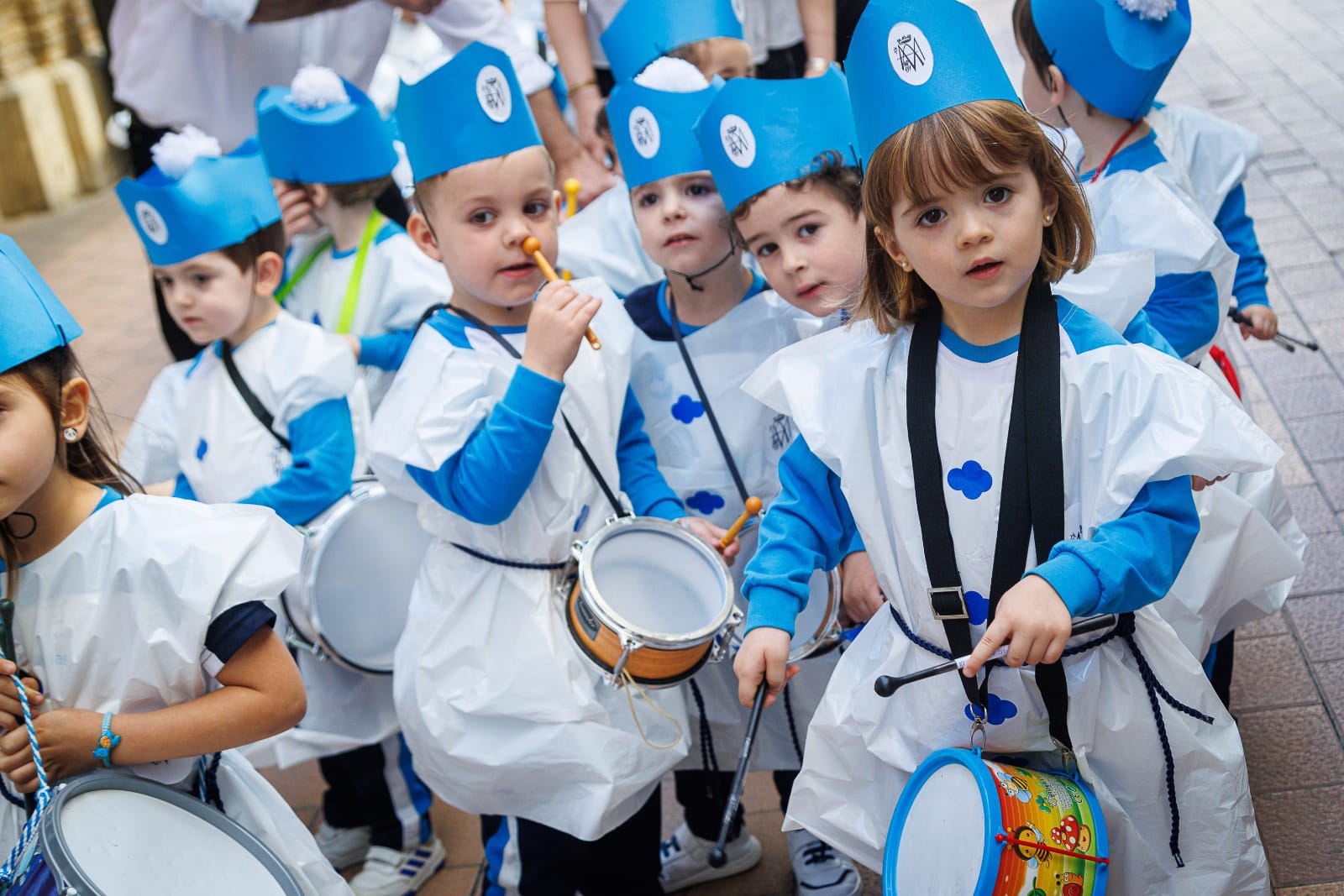
The Escolapias Calasanz School in Zaragoza is preparing to experience one of its most endearing moments of the year today: the fourteenth edition of its Children’s Holy Week Procession. On Wednesday, March 25, at 3:30 PM, around 120 children aged 3 to 6, accompanied by students and alumni of the Brotherhood of the Arrest from the capital of Aragon, will stroll through the streets near the school carrying floats that they, along with teachers and parents, have been crafting throughout the year.
This event has already become a fixture in the school’s calendar and, since its first edition in 2010, it has managed to earn a special place in the Aragonese educational community.
An educational tradition
Far from being a mere ceremonial act, this procession was born with a clear educational purpose: to introduce the youngest children to the meaning of Holy Week in a gentle, approachable manner that is suitable for their age. Over its fourteen editions —with the obligatory hiatus during the pandemic and the subsequent school year—, the initiative has maintained its original spirit and resumed with the same enthusiasm as always.
About 120 children from first, second, and third grade of Early Childhood Education participate, accompanied by students and alumni from the Brotherhood of the Arrest, in front of about 350 excited family members, including parents and grandparents.
The Children’s Procession of the Escolapias Calasanz School in Zaragoza was born with an educational purpose: to bring the meaning of Holy Week to the youngest in a gentle and age-appropriate manner.
The route: a meeting full of symbolism
The procession’s route has remained true to its essence over the years. Students are organized into two brotherhoods that simultaneously depart from two different exits of the school — Palomeque Street and Salamero Square — to converge at San Roque Square. There, the emotional act of the Meeting takes place, accompanied by the reading of a small manifesto. Once the act is concluded, both brotherhoods return together to the school, thus marking the final touch on a route that is brief in distance but rich in meaning.
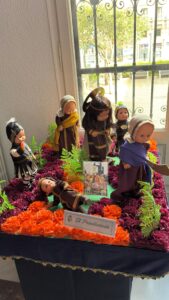
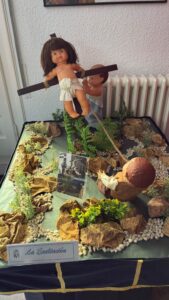
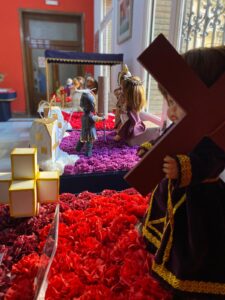
One of the most unique elements of this procession is its floats, handmade with dolls and school materials and designed specifically for a young audience.
Handmade floats, a result of collective work
One of the most unique elements of this procession is its floats, crafted by hand and specifically designed for a young audience: their images are recreated with dolls, giving them a close and evocative character.
Their preparation is a true exercise in community: students, teachers, families, and the entire educational community work side by side to make habits, bases, banners, and ornamental details that make each float a unique piece.
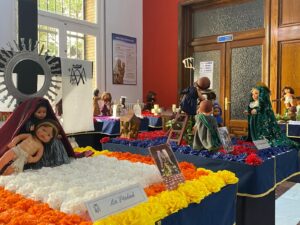
An exhibition to celebrate fourteen years of history
This year, the school has wanted to pay tribute to this tradition with an exhibition…