



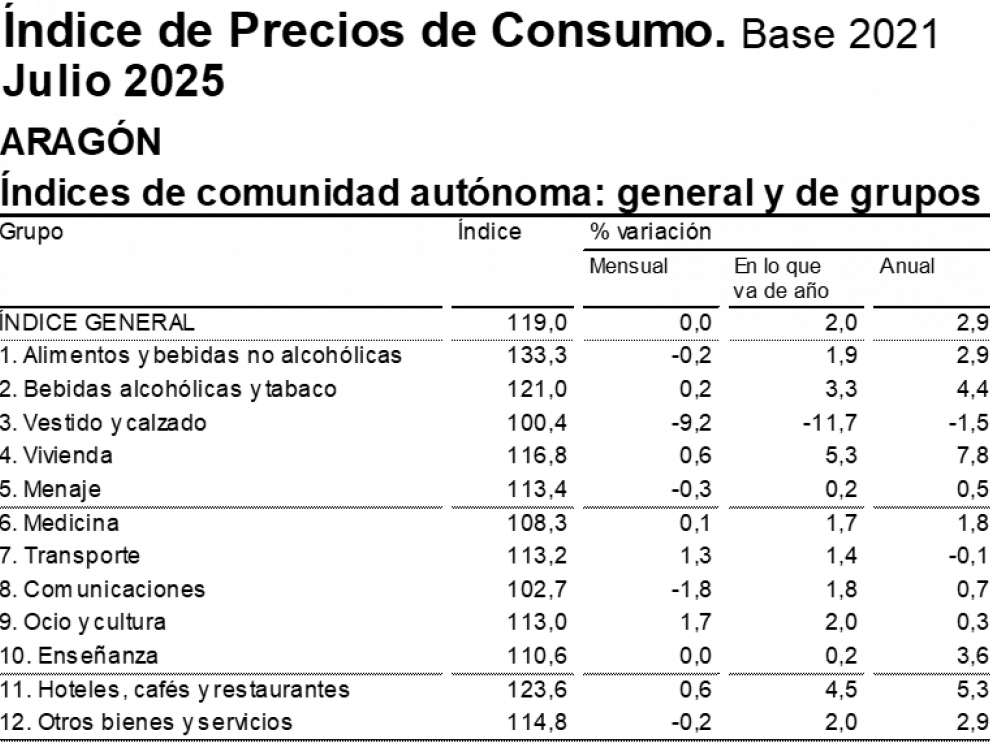
Inflation in Aragon accelerated in July, reaching an annual rate of 2.9%, four tenths higher than the previous month. This increase places the region above the rate recorded for Spain as a whole, which rose to 2.7%.
Regional and Extrazonal Comparison
Aragon considerably exceeds the average inflation rate of the Eurozone, which stands at 2.0%, thereby widening the inflation differential against the Economic and Monetary Union.
What is Driving Prices Up?
The main driver of this surge is the housing sector, which grew by a notable 7.8% year-on-year, fueled by the rising cost of electricity. This is followed by sectors such as hospitality (hotels, cafes, and restaurants), which saw an increase of 5.3%, and alcoholic beverages and tobacco, which rose by 4.4%. Increases are also notable in education (3.6%) and basic food (2.9%).
Sectors Resistant to Price Increases or Even Declines
In contrast, other sectors moderated their pace or recorded declines. Clothing and footwear fell by 1.5%, while transportation slightly decreased (–0.1%).
Monthly Breakdown: How Did Prices Evolve in July?
On a monthly basis, the Consumer Price Index (CPI) remained stable in Aragon, with a variation of 0%, as increases in leisure, transportation, and housing were offset by significant discounts in fashion, particularly during the summer sales season (-9.2%).
The inflationary surge in July reflects the pressure in key sectors such as energy and tourism. Although the level of 2.9% remains moderate in historical terms, the accumulated pressure may significantly affect the wallets of the people of Aragon. In the short term, it will be crucial to observe whether inflation can moderate or maintain a steady pace in the coming months.








