



Monasterio de Piedra is one of those places that seem to bring together several landscapes in one. Waterfalls, lakes, caves, and lush vegetation surprise visitors in an area where dry terrain and farmland dominate just a few miles away. The former Cistercian monastery completes a visit that blends heritage and nature.
Yet many travelers head home after touring the park without stopping in the surrounding towns. That is a missed opportunity, as the area around Nuévalos offers enough attractions for a two-day getaway.
The La Tranquera Reservoir, the caves of Ibdes, the Mesa River canyons, and the valley’s towns reveal a region where water has shaped both the landscape and the lives of its residents.
Nuévalos and the La Tranquera Reservoir
The first stop can be Nuévalos, the municipality where Monasterio de Piedra is located. Its town center retains traditional buildings, the Church of San Julián, and remnants of an old fortress, including a surviving medieval tower.
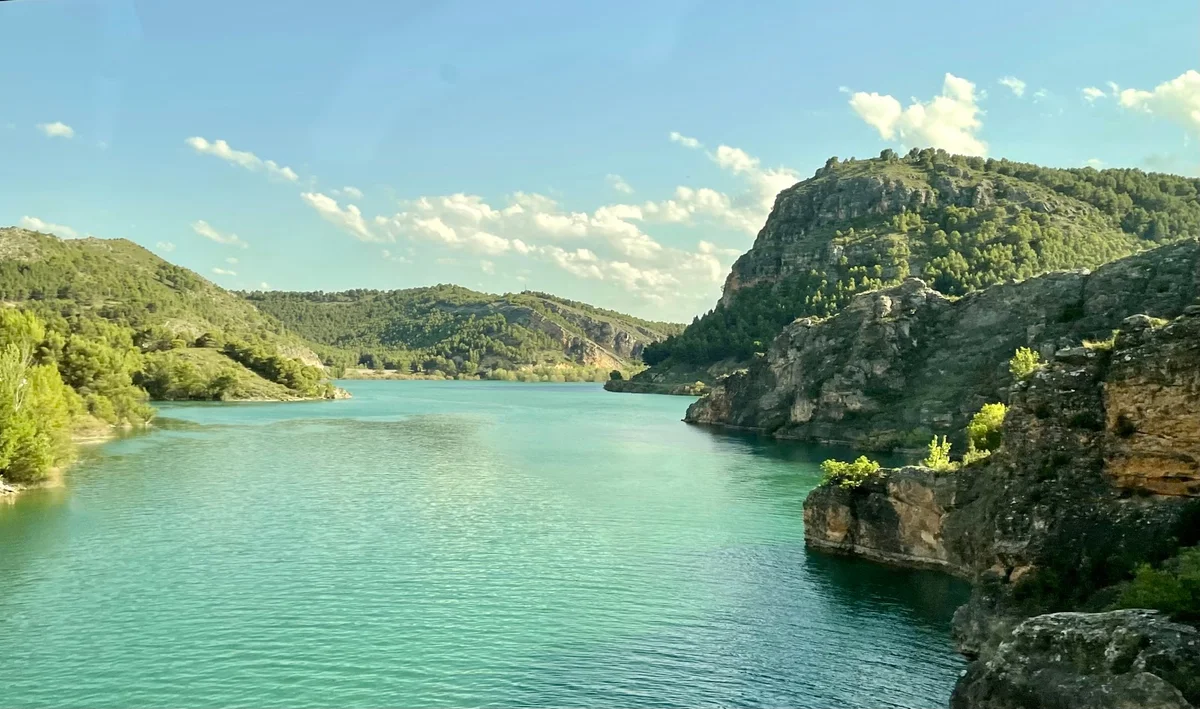
The town lies beside the La Tranquera Reservoir, a large body of water surrounded by hills and mountains. The scenery changes considerably depending on the season and the reservoir’s water level, but it offers a very different perspective from that of the Monasterio de Piedra park.
It is worth stopping at one of the accessible viewpoints and exploring the area at a leisurely pace. The area is associated with recreational activities and fishing, although visitors should check conditions and required permits in advance.
Ibdes and the remarkable Gruta de las Maravillas
A short distance from Nuévalos lies Ibdes, a town home to one of the most interesting geological sites in this part of Zaragoza.
The Gruta de las Maravillas was discovered in the early 20th century and consists of two main galleries. Its interior features limestone formations created by the action of water over thousands of years.
According to official tourism information, the cave developed in sediments linked to the Mesa River and has galleries measuring approximately 15 and 46 meters. A visit offers insight into how water can slowly transform the interior of rock formations.
Ibdes also preserves the Church of San Miguel Arcángel and several hermitages scattered around the surrounding area. Nearby natural attractions include the Paradera waterfall, which can be added to a walk in the area if trail conditions allow.
The cave has limited opening hours, so availability should be checked before traveling. Booking a visit is recommended, followed by time to explore the town.
Jaraba and the Mesa River canyons
From Nuévalos, visitors can also continue on to Jaraba, a town known for its thermal waters and the landscape shaped by the Mesa River.
In the surrounding area, the river flows between rock walls, forming a network of gorges and ravines. The contrast between the rock and the riverside vegetation makes this one of the region’s most appealing natural landscapes.
The area lends itself to hiking routes, with viewpoints and scenic stops along the way. It is also well suited to those looking to combine a day of hiking with a stay at one of Jaraba’s thermal establishments.
Routes should be selected according to their difficulty, and their condition should be checked, particularly after periods of rainfall. Some areas near the riverbed may pose risks from flooding or rockfalls.
Alhama de Aragón, a tradition linked to water
Alhama de Aragón is another town that can be included in a getaway around Monasterio de Piedra.
Its tourism history is closely tied to its thermal waters. The presence of springs encouraged the development of spa establishments and a tourism industry that remains one of the town’s defining features.
In addition to its thermal facilities, Alhama has a town center that is well suited to a stroll and offers an introduction to a community shaped by its spa tradition. It is an especially appealing option for those seeking to combine heritage, relaxation, and nature.
The visit can be planned as a stop of several hours or as a longer stay, depending on the activities chosen.
Calatayud, a monumental complement
For those with a second day available, Calatayud offers an excellent way to round out the trip with a more urban and monument-focused experience.
The city retains a significant Mudéjar heritage, historic churches, and traces of its Islamic and medieval past. Its most recognizable landmarks include the Collegiate Church of Santa María, the Church of San Pedro de los Francos, and the network of fortifications extending across the hills.
The historic center offers a journey through different stages of the city’s history, as well as an opportunity to discover its culinary traditions. It is a suitable stop for lunch before beginning the return journey or for devoting an entire afternoon to its monuments.
How to plan a two-day getaway
The most convenient option is to reserve the first day for Monasterio de Piedra and Nuévalos, allowing enough time to explore the park at a leisurely pace and enjoy views of the La Tranquera Reservoir.
The second day can be devoted to Ibdes and the Mesa River canyons, with a stop in Jaraba. For those who prefer a more cultural itinerary, Calatayud offers an appealing alternative to complete the getaway.
The appeal of this area lies in the variety of its landscapes. Within a relatively compact territory, visitors will find caves, waterfalls, medieval architecture, reservoirs, and thermal waters—enough to show that Monasterio de Piedra is also a gateway to other corners of the province.








