



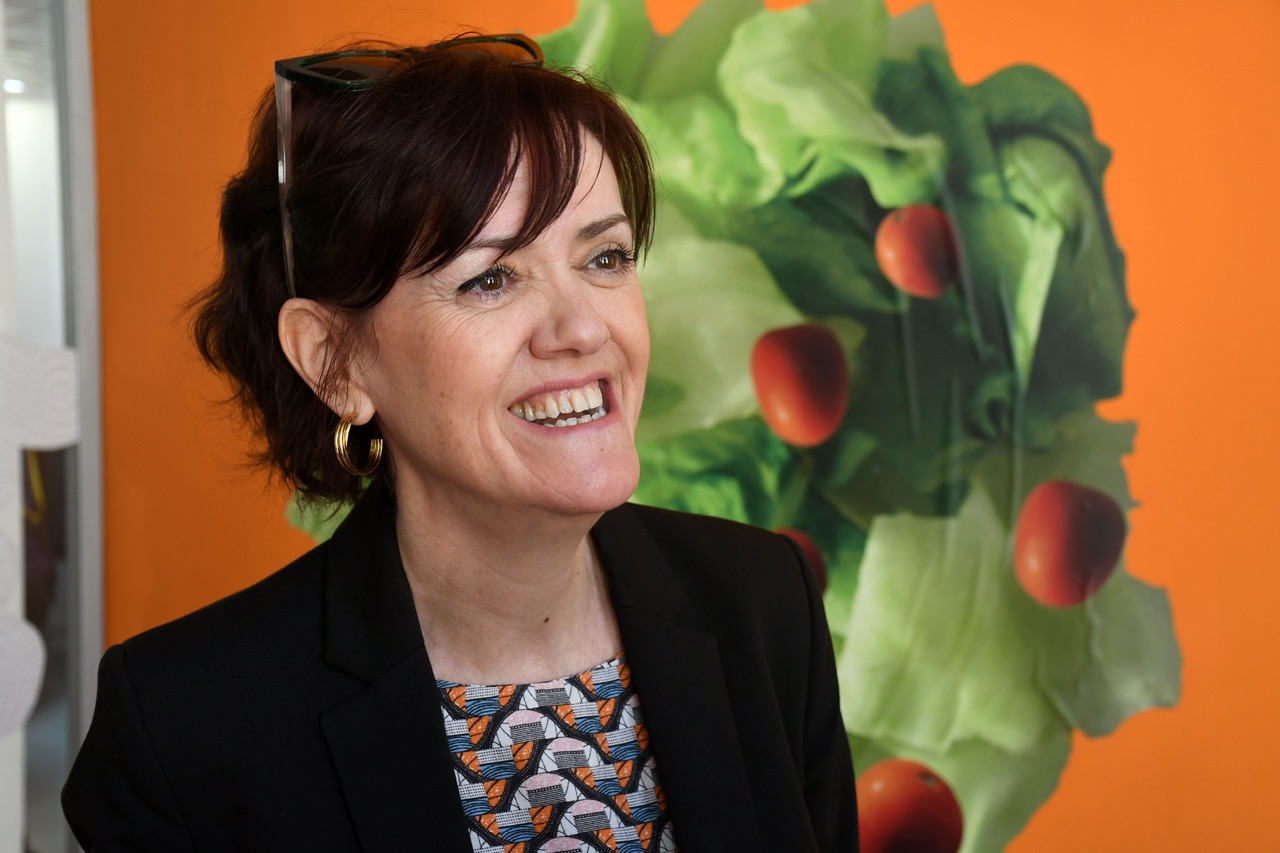
Program director and manager of the Teatro de las Esquinas, Raquel Anadón reflects in this interview on the birth and consolidation of a cultural project founded by seven partners 13 years ago during an economic crisis. The Teatro de las Esquinas has become a benchmark, enriching the cultural offering in Zaragoza and betting on a private management model with a public vocation that is brave, hybrid, and close to the audience. Anadón passionately advocates for the value of theater as a collective experience and as an art form that transforms, emphasizing the importance of a female-focused program alongside the challenge of fostering a steadily more diverse audience. Zaragoza is demanding; you never know what will work, she adds as she concludes: “We have 49 employees. This is not just art; it’s a business.”
Q. How was Teatro de las Esquinas born and what attracted you to the project?
A. We arrived by way of an opportunity and a shared need between Teatro Che y Moche and Teatro del Temple. We had been working together for a while in the Performing Arts Association, the cultural market was changing, and we understood that we wanted a space of our own, a place we could manage directly for the public, without intermediaries. The Teatro de las Esquinas presented itself as a unique opportunity: a municipal space that was left unfinished after the crisis and was put up for public bidding. We submitted a mixed management project, prepared it for a year, and decided to go all in.
Q. A bet that required a lot of bravery. How did it start and how was it sustained financially?
A. With a tremendous amount of effort and extremely difficult financing. It was a time of crisis; banks weren’t lending anything, and there was very little confidence in cultural projects. Even so, we invested all our assets and built the theater with a significant investment. Those were very hard years, but we were clear that we weren’t setting up just any business, but rather a cultural service for the city.
Q. What vision did you have back then for the theater you wanted to build?
A. We were very clear about what we didn’t want: intermediaries who separated us from the audience, lack of autonomy, and a space that did not meet the real needs of the companies and spectators. We wanted a lively, flexible theater with a retractable seating arrangement, which could also serve as a concert hall. The idea was for the artistic content and the relationship with the audience to be central.
Q. What have you learned as a programmer from your previous career as an actress on stage?
A. A lot. Having worked as a theater company and having been on so many different stages gives you a very concrete perspective on the technical, artistic, and human aspects. You learn what works, what a production needs, and how a tour or performance feels from the inside. This helps me program from a place of empathy and also from real experience, not from theory.
Q. How would you define the programming line of Teatro de las Esquinas?
A. We are very eclectic. We program for many different tastes and believe there should always be something you want to see. We support well-made commercial theater, but also transgressive proposals, social, political, and inclusive theater, and very specific cycles that allow us to take risks. We like for the audience to discover new things while still caring for the sustainability of the project. In addition to purely theatrical programming, we offer concerts, specific cycles like Delicias Clásicas (revisited classics), Teatro Rebelde, and theater classes (with 25 highly qualified teachers)…
“Commercial theater fills seats, but the more daring one is the one that transforms”
Q. What type of shows work best?
A. Comedy. People seek to disconnect, laugh, forget their day-to-day lives… Theater, laughing live, is also therapeutic. It works because it connects, and people leave the theater with a sense of relief and enjoyment. This does not mean renouncing deeper proposals, but it does mean understanding that the audience also wants to have a good time, disconnect, and live an enjoyable experience.
Q. You have created cycles with a strong female focus. What is their aim?
A.