



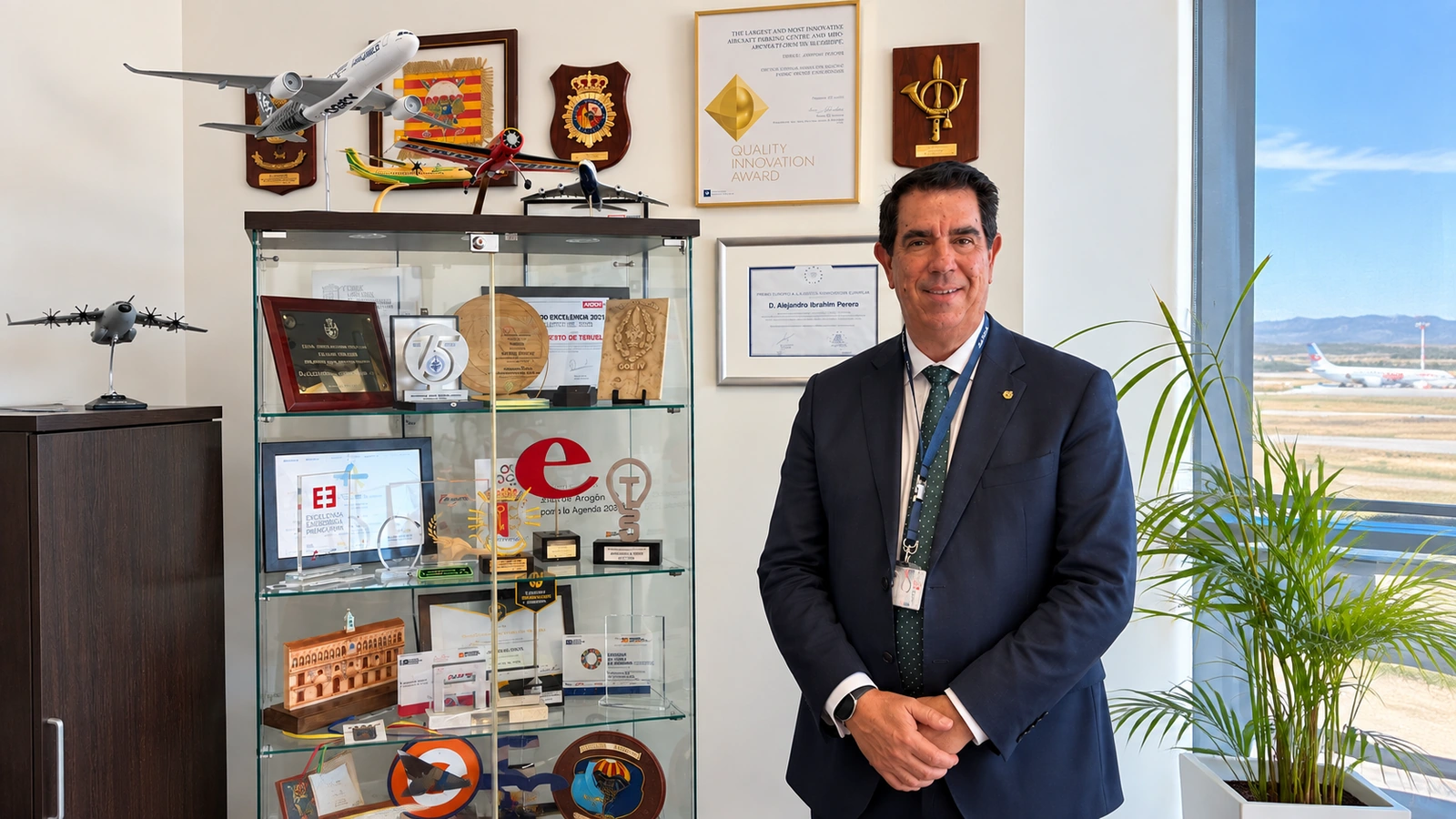
At Teruel Airport, scale needs context. From the ground, a hangar can look enormous until you learn it is designed to accommodate two Airbus A380s. Alejandro Ibrahim has been here since September 2012 and, as we tour the facilities, speaks with the ease of someone who has watched it all emerge where there was once nothing.
When I arrived here, the main goal was to get an airport up and running from scratch.
At the time, the airport had not yet been certified, lacked the necessary authorizations from the Ministry of Public Works, and had no clients because the contract with Tarmac—the company that became one of the pillars of its industrial model—had not yet been signed.
—The next stage was to attract other clients that would give the airport more substance, to diversify. Farmers do this a lot here: rather than growing only wheat, they look for other options.
The comparison may seem simple, but it explains a strategy that is easier to understand 14 years later. One such strategy came with PLD Space, whose transformation began when its founders, then just 23, were looking for a place to test a rocket. Today, the company has facilities at the airport to test its engines.
Ibrahim also mentions the smart airport, which incorporates sustainability and new technology to improve management. In addition, the Ministry of Defense has chosen Teruel for CIEMA, a project that adds a new dimension to the facilities.
—They need to go to places where there are no airports, so land has to be prepared. We are going to build a dirt runway alongside the asphalt runway we already have.
Teruel has built a network of companies whose activity extends beyond the airport perimeter. Added to this are the challenges of a highly specialized industry, meaning some professionals have had to come from elsewhere, while others have trained in Teruel.
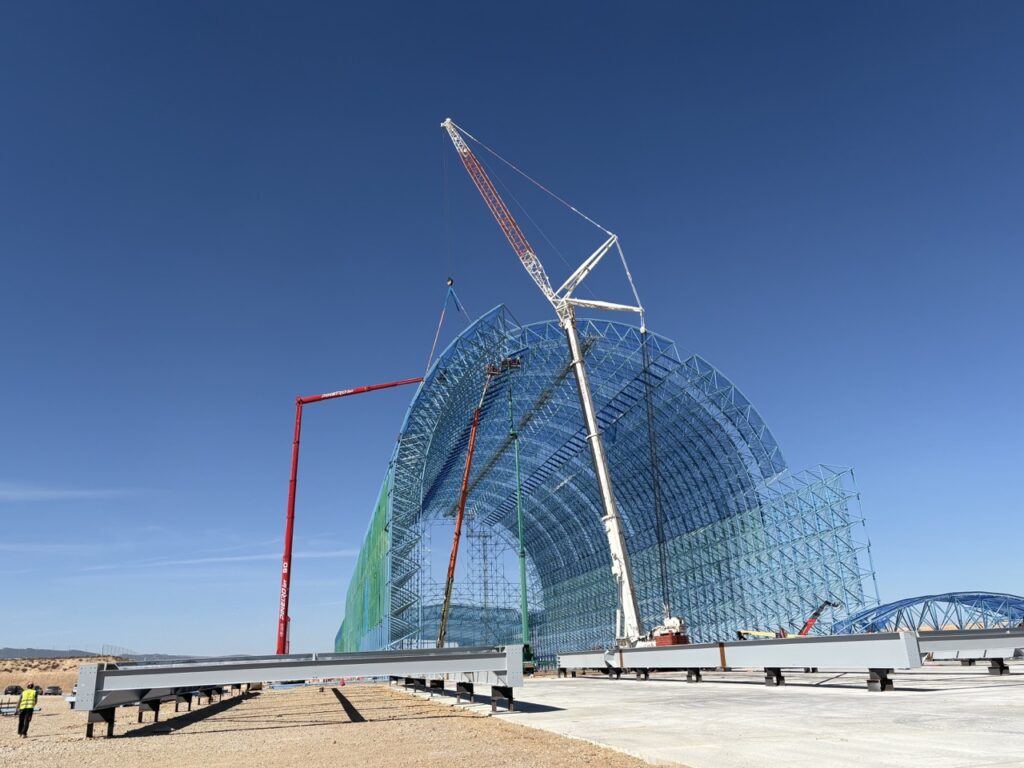 An infrastructure where an aircraft can spend days or weeks undergoing maintenance can also serve as a film set.
—Our priority is to serve our clients. But if they have no objections, the space can be used. Film productions matter because of what happens outside the airport: they bring in hundreds of people, and their economic impact far exceeds the fees the airport itself may charge.
Perhaps it is this capacity to generate activity around it that best explains the airport’s impact on Teruel. Touring the site, one sees rockets, airships, military personnel, engineers, and film crews.
Before wrapping up, Ibrahim highlights innovations that are pioneering in Spain and the airport’s ability to receive some of the world’s largest aircraft.
The project that had to prove its viability in 2012 now faces a very different question: How far can Teruel Airport continue expanding its reach?
—Are we disruptive? Well, we are doing things that are not being done anywhere else…