



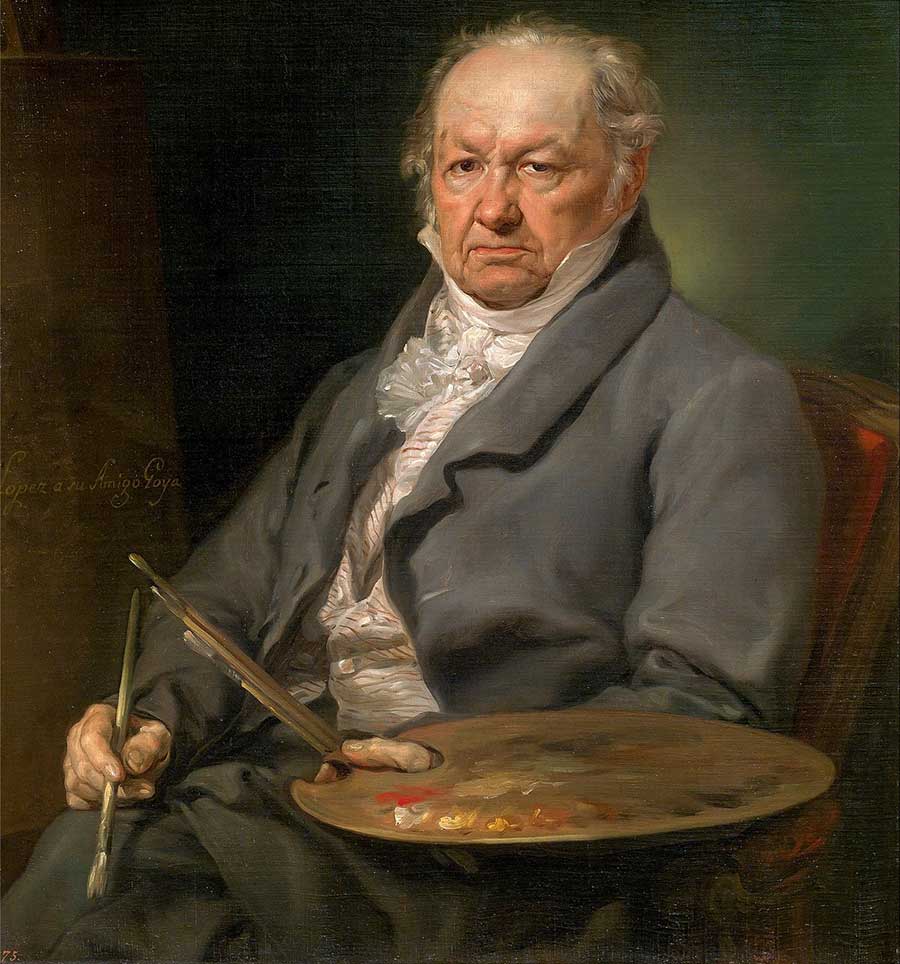
As we approach 2028, the bicentennial of Francisco de Goya’s death, the Spanish master continues to feel strikingly contemporary. Born on March 30, 1746, in the tiny Aragonese village of Fuendetodos, and passing away on April 16, 1828, in Bordeaux, France, Goya bridged the old world and the modern with unmatched psychological depth and visual power.
The son of a gilder and a woman from a modestly prosperous rural family, Goya’s early years were spent between Fuendetodos and Zaragoza. After training under José Luzán, he made two unsuccessful attempts to enter Madrid’s Royal Academy of Fine Arts. In 1770–71 he travelled to Italy, absorbing the lessons of the Renaissance and Baroque masters. Upon his return, he secured important early commissions in Zaragoza, including frescoes for the Basilica of Our Lady of the Pillar and the Charterhouse of Aula Dei.
In 1773 he married Josefa Bayeu (affectionately known as Pepa), sister of the influential painters Francisco and Ramón Bayeu. The marriage lasted until Josefa’s death in 1812 and produced several children, though only one son, Javier, survived into adulthood. This connection helped open doors at court. By 1775 Goya was designing lively Rococo tapestry cartoons for the Royal Factory of Santa Bárbara. His rise was meteoric: appointed painter to King Charles III in 1786 and court painter under Charles IV in 1789. His royal and aristocratic portraits remain masterpieces of surface elegance combined with penetrating, often ironic, insight into character.
A turning point came in 1792–93 when a serious illness (likely an infection or encephalitis) left him profoundly deaf at the age of 46–47. This personal crisis, coinciding with the upheaval of the French Revolution, darkened and deepened his vision. In 1799 he published Los Caprichos, a biting series of 80 etchings that mercilessly satirised superstition, corruption, and folly. That same year he was named First Court Painter.
The Peninsular War (1808–1814) pushed Goya’s art into even more harrowing territory. Although he had sworn allegiance to Joseph Bonaparte along with many Spanish liberals, he witnessed the full horror of conflict. Paintings such as The Second of May 1808 and The Third of May 1808 (both 1814), along with the unpublished print series The Disasters of War, remain among the most powerful anti-war statements in art history.
In the repressive years following Ferdinand VII’s restoration, the ageing artist withdrew to his country house on the banks of the Manzanares, known as the Quinta del Sordo (“House of the Deaf Man”). There he created the haunting Black Paintings, dark, visionary murals now housed in the Prado that explore themes of madness, witchcraft, fear, and human cruelty.
In 1824, disillusioned with the political climate, Goya went into voluntary exile in Bordeaux. He was accompanied by Leocadia Zorrilla (his companion after Josefa’s death) and her daughter Rosario, for whom he felt great affection. Even in his final years, nearly blind and frail, he continued working on lithographs, bullfighting scenes, and portraits until his death at 82.
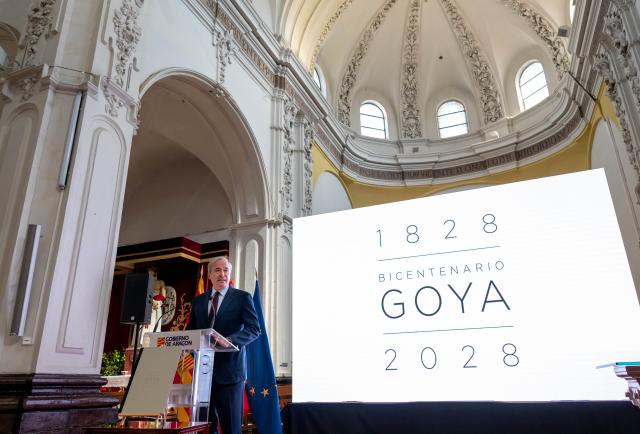
Looking Ahead: The 2028 Bicentennial
Today, May 29, 2026, marks an important milestone in the countdown to the bicentennial. In Zaragoza, at the historic Charterhouse of Aula Dei, the Spanish Ministry of Culture and the Government of Aragon officially presented the national programme for Goya 2028 and established the National Commission.
Highlights include major exhibitions across Spain (with special emphasis on Zaragoza and Madrid), the loan of key Prado works to regional museums, a large-scale show titled “Two Hundred Years with Goya” at La Lonja in Zaragoza in 2027, and an immersive exhibition in the same city. Plans also involve the creation of a Goya Centre and a rich calendar of cultural, educational, and tourism initiatives running through 2027 and 2028.
Two centuries after his death, Goya’s ability to capture both the splendour and the nightmares of his time feels more relevant than ever. The upcoming bicentennial promises not just celebration, but a fresh opportunity to rediscover an artist who remains one of the most honest and unsettling mirrors of humanity.