



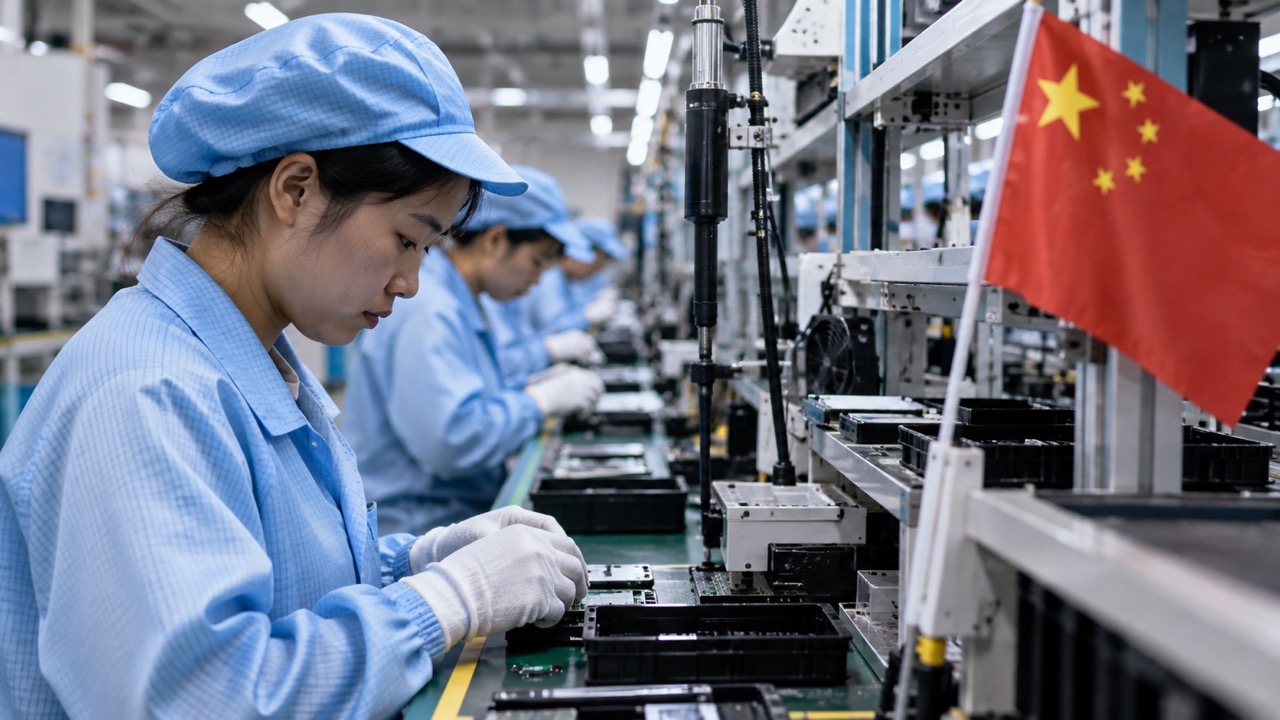
In recent years, tariffs, trade tensions with the United States, and the desire to reduce risk have prompted many companies to seek alternatives to China. Vietnam, India, Indonesia, and Thailand have gained prominence as manufacturing destinations, while the strategy known as China+1 has become widespread: maintaining operations in the Asian giant while developing a second production base in another country.
The process is continuing, and investment in Southeast Asia has not stopped. However, some companies that shifted orders or production capacity are finding that replicating outside China the industrial ecosystem available there is more difficult than expected. Reuters has documented several cases in which Chinese suppliers have regained orders or companies have reconsidered decisions made during the latest wave of tariffs.
There is not yet enough data to speak of a broad-based return of production to China. What is beginning to emerge, however, is a reassessment of some offshoring decisions when factors beyond labor costs or import tariffs come into play.
One of the cases reported by Reuters involves Dawang Metals, a Chinese manufacturer of metal parts. One of its main U.S. customers moved part of its orders to India, but later returned them to the Chinese company after encountering problems in the new location. Dawang itself considered producing outside China but ultimately decided against it.
The shift also involves large companies. Reuters, citing people familiar with the operations, reported that Target has returned some orders to Chinese suppliers after facing supply problems and production constraints in other markets. Shein, meanwhile, has scaled back part of its operations in Vietnam.
These are different situations, but they share one challenge: relocating a factory or hiring a new supplier does not also relocate the network of suppliers, specialized workers, infrastructure, and services that has developed around China’s major industrial hubs over decades.
Tariffs do not explain the full cost
The search for alternatives to China has been driven in large part by U.S. trade policy. The tariff gap remains significant. Estimates from the Economist Intelligence Unit cited by Reuters put the effective U.S. tariff in July at roughly 20% for Chinese goods, compared with 6.1% for Vietnam, 13.4% for Indonesia, and 4.5% for Thailand.
On paper, the advantage of manufacturing in other countries appears clear. The calculation becomes more complex when other costs are included.
A furniture maker cited by Reuters opened a workshop in Ho Chi Minh City in 2024 to diversify its production. It eventually closed it after discovering that it still depended on China for components, molds, and other items needed for manufacturing. Maintaining the Vietnamese operation added costs without delivering genuine independence from the Chinese supply chain.
China+1 is not over
These return cases do not mean the diversification strategy has come to a halt. India, Vietnam, Indonesia, and other Asian countries continue to attract industrial investment, and many companies are maintaining production capacity outside China as protection against future trade tensions.
Vietnam is probably the clearest example. The World Bank has found that the country has gained share in U.S. imports precisely in categories affected by the trade decoupling between the United States and China.
Recent developments do, however, add an important qualification. Diversifying a supply chain is not simply a matter of finding another location where production can be carried out at a lower cost. The availability of nearby suppliers, reliable power, logistics, skilled workers, the ability to produce at scale, and the speed with which processes can be adapted are also part of the decision.
China retains a substantial advantage in several of those areas. Its accumulated weight in global industrial production has created concentrations of suppliers that are difficult to replicate in the short term.
That is why some companies are choosing middle-ground approaches. They retain suppliers or facilities in China while simultaneously building capacity in other countries, rather than replacing one market entirely with another.
Trade tensions will continue to shape those decisions, and changes to tariffs could once again alter the calculations. But the experiences documented over the past year show that the industrial map is not reorganized solely from corporate offices. When a company moves production, it must also rebuild many of the relationships that allow a factory to operate.
And in certain sectors, that network remains one of China’s greatest strengths.