



At the foot of Moncayo, beside the Ebro and amid the waterfalls of the Piedra River, three major Cistercian monasteries offer a journey through centuries of history and some of the most distinctive landscapes in Zaragoza province. A proposal for combining heritage, culture and nature on a short getaway.
Zaragoza province is home to three of the most important monastic complexes in Aragonese heritage. The Monastery of Veruela, the Monastery of Rueda and the Monastery of Piedra share Cistercian origins and a history that began in the heart of the Middle Ages, when religious communities played a fundamental role in organizing the land, managing water resources and developing agriculture.
Although all three belong to the same tradition, each offers a different experience. Veruela impresses with its monumental scale and the Moncayo landscape; Rueda preserves one of Aragon’s most complete medieval monastic complexes, on the banks of the Ebro; and Piedra combines Cistercian architecture with a historic park of waterfalls, grottoes and gardens.
All three can be visited independently on a day trip, or serve as stops on a multiday route through the province. In either case, they offer an opportunity to discover how history, architecture and landscape have evolved together for more than eight centuries.
Veruela, a monastery in the shadow of Moncayo
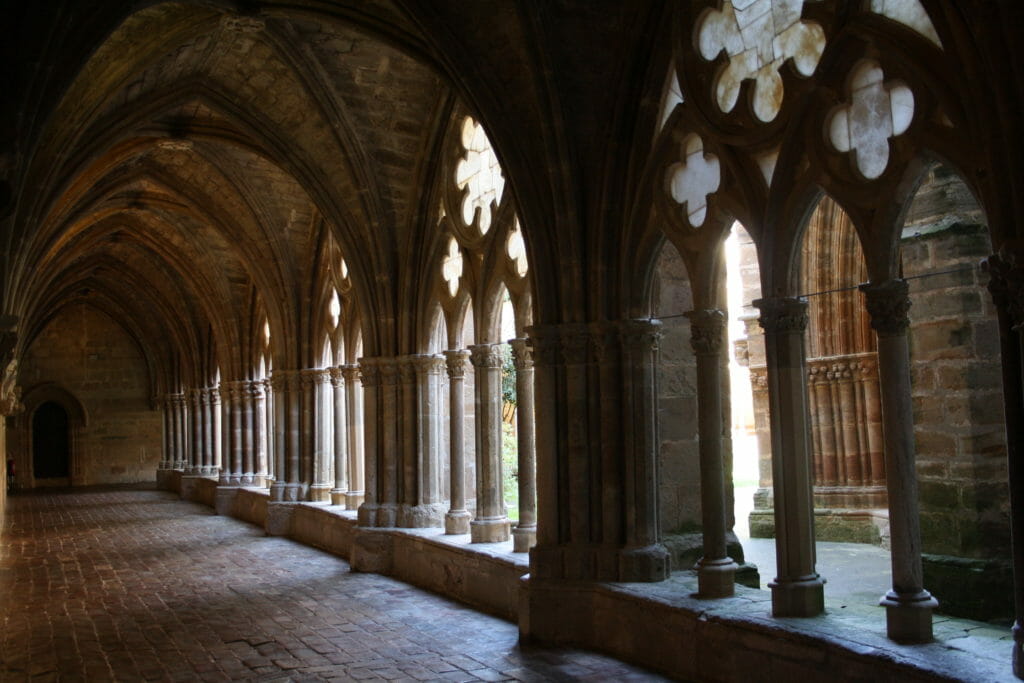
A few kilometers from Vera de Moncayo, near Tarazona, the Monastery of Veruela stands amid vineyards, farmland and mountains. Its walled enclosure, built at the foot of Moncayo, reflects the importance this religious complex held from its founding in the 12th century.
Veruela was Aragon’s first Cistercian monastery. Its origins date to around 1145, and for centuries its monks carried out intensive religious, economic and agricultural activity. The community harnessed the waters of the Huecha River and organized a system of crops, irrigation channels and mills that contributed to the development of the area.
The visit begins by passing through the walled enclosure and following a tree-lined path to the church. The building stands out for its imposing proportions and the austerity characteristic of Cistercian architecture, although successive additions incorporated elements from different periods.
One of its most appealing spaces is the cloister, with its pointed-arch galleries and decorated capitals. Around it are the main quarters of the former community, including the chapter house, refectory and other rooms that offer an insight into the monks’ daily lives.
The complex also has an interesting connection to Spanish literature. In the 19th century, Gustavo Adolfo Bécquer spent time in Veruela, where he found inspiration for his well-known Letters from My Cell. The Moncayo landscape, popular traditions and the monastery’s atmosphere feature in those pages, helping to reinforce the site’s Romantic dimension.
Today, Veruela is owned by the Provincial Council of Zaragoza, which is responsible for its preservation and for promoting cultural activities on the site. The monastery hosts concerts, exhibitions and other events that offer different ways to experience its heritage. During the summer, its cultural program adds another draw for visitors, although it is advisable to check planned activities in advance.
The trip can be rounded out with a tour of Vera de Moncayo, Tarazona or one of the nearby villages. The landscapes of Moncayo Natural Park and the winemaking tradition of the Campo de Borja Designation of Origin offer compelling reasons to extend the stay.
The Monastery of Rueda, eight centuries of history beside the Ebro

The second destination takes us near Sástago and Escatrón, where the Monastery of Rueda stands beside the Ebro River. Its location is no coincidence: water was one of the essential elements in the life of Cistercian communities, which sought sites where they could pursue agricultural activities and access the resources needed for their survival.
Rueda’s origins date back to the late 12th century, when Alfonso II supported the establishment of a monastic community in the area. Over the following decades, the complex’s main buildings were constructed, and much of its medieval layout has been preserved.
One of its most distinctive features is the large waterwheel that gives the monastery its name. This system made it possible to lift water from the Ebro and distribute it through channels to meet the needs of the community and its agricultural activities. The infrastructure is a notable example of the technical knowledge monks applied to managing natural resources.
The cloister is another of the visit’s main attractions. Its galleries provide access to spaces such as the chapter house, refectory and other rooms associated with monastic life. The church, with its austere lines and grand scale, follows Cistercian architectural principles, while the Mudéjar tower adds one of the complex’s distinctive artistic features.
Walking through Rueda makes it possible to imagine the activity that unfolded within its walls for centuries. The monks devoted their time not only to prayer, but also to agriculture, managing their estates and maintaining an economic organization that had considerable influence on the surrounding area.
Today, the monastery is one of the leading cultural tourism assets along the Ebro riverbank. Visits offer an opportunity to explore its principal historic spaces and understand the complex’s importance within Aragon’s medieval heritage.
The trip can be completed with a visit to Escatrón and Sástago, two towns closely linked to the Ebro landscape. Those with more time can continue on to Caspe, where its historical heritage and proximity to the Sea of Aragon broaden the possibilities for a getaway.
The Monastery of Piedra, where nature meets heritage
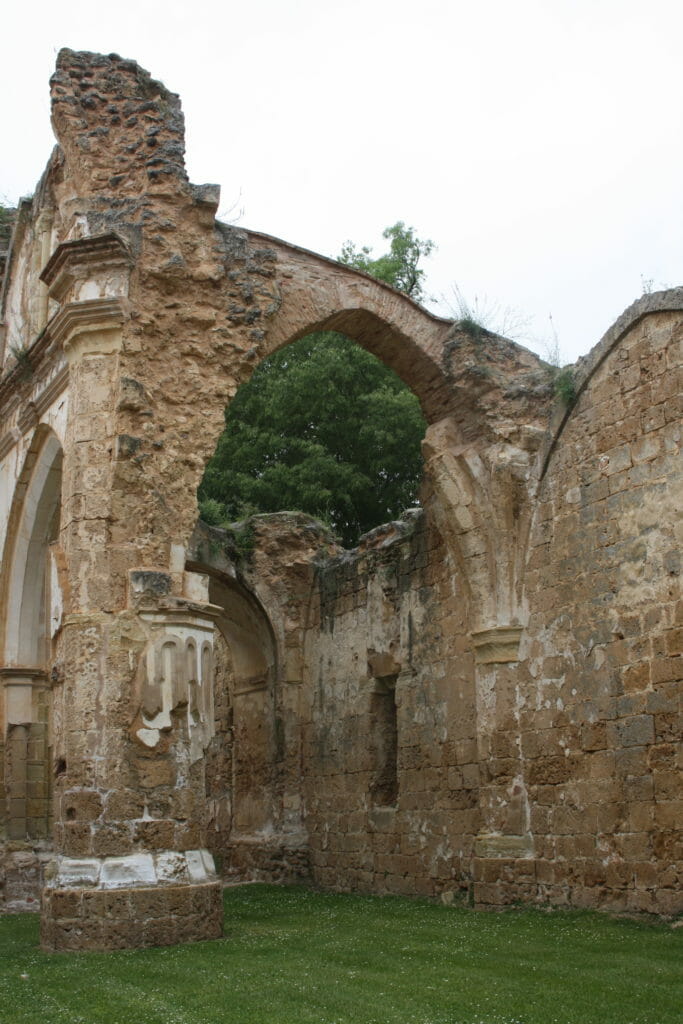
The third destination on this route is in Nuévalos, in the Calatayud Community region. The Monastery of Piedra is probably the best known of the three for its extraordinary historic park, but behind its waterfalls and gardens lies an important monastic history.
The monastery was founded in the late 12th century, when a Cistercian community settled in this enclave in the Piedra River valley. As at Veruela and Rueda, the monks found water to be an essential resource for organizing their activity and developing their estates.
The monumental complex preserves spaces that offer insight into the architecture and daily life of the religious community. The








