



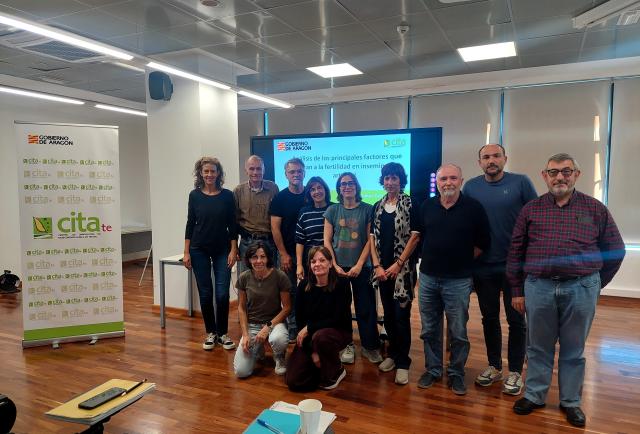
Aragon’s Center for Agri-Food Research and Technology has presented in Teruel the results of PROCMOVI Teruel, a project that has added more than 20 males to insemination centers and preserved more than 2,500 semen doses and 50 embryos from native sheep breeds.
PROCMOVI Teruel strengthens conservation of native sheep breeds
The Conservation and Improvement of Teruel’s Native Sheep Breeds project, known as PROCMOVI Teruel, began in 2024 under the Teruel Investment Fund call for proposals, FITE 2023. Its aim is to contribute to the conservation of animal genetic resources from endangered sheep breeds in the province.
The initiative has enabled reproductive material to be added to the Regional and National Animal Germplasm Banks, while supporting genetic improvement programs for the territory’s more technologically advanced sheep breeds.
The project is in line with FAO recommendations on conserving animal genetic resources. The organization considers this work a priority for food security, climate-change adaptation, and the resilience of livestock systems. Conservation on farms and in areas of origin is thus complemented by cryoconservation, which serves as a safeguard against irreversible genetic losses, breed extinction, health issues, natural disasters, or changes in production.
More than 2,500 semen doses preserved in germplasm banks
The presentation event was held at Teruel’s Rural Bioeconomy Innovation Center, CITAte, and was organized and coordinated by Belén Lahoz, a researcher in CITA’s Department of Animal Science. The meeting brought together researchers and technicians associated with the Ojinegra, Maellana, Cartera, Merina variety from the Montes Universales, and Rasa Aragonesa breeds, as well as professionals from the Government of Aragon’s Agri-Food Transfer Center.
During the session, Lahoz outlined the work carried out over the project’s two years, the sheep embryo production and preservation work conducted at CITA, and the main factors influencing artificial insemination fertility.
PROCMOVI Teruel has added more than 20 males to Aragon’s artificial insemination centers. It has also preserved more than 2,500 semen doses and 50 embryos in animal germplasm banks.
Artificial insemination debated as a tool to improve livestock operations
Itziar Garitano, a veterinarian at Masía El Chantre of the Provincial Council of Teruel, and Ignacio Morató, a veterinarian at the Government of Aragon’s CTA, reviewed the status of male training and semen-dose preparation at artificial insemination centers.
The event concluded with a discussion of obstacles and potential improvements in the use of artificial insemination on livestock farms. The tool is seen as one means of conserving and improving native breeds amid the continuing decline in animal numbers, a trend that threatens genetic and cultural heritage of importance to the province of Teruel.