


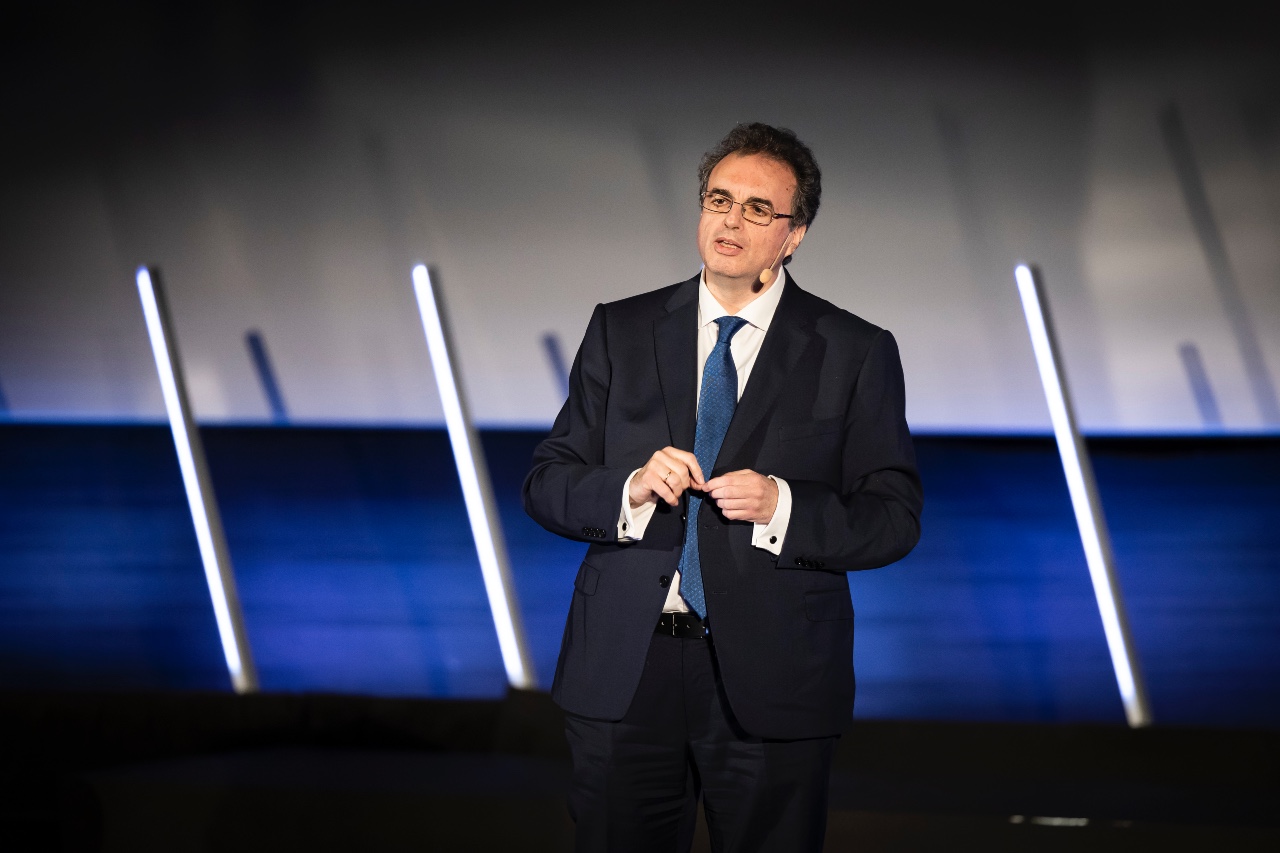
On the occasion of the Third Rural Education Congress held in Teruel, his hometown, the president of Ibercaja reflects on the fundamental role that rural schools play in the future of less populated areas. In this interview with Go Aragón, he emphasizes how education not only serves as the backbone of the region, but can also become a key tool for attracting population, promoting local entrepreneurship, and retaining talent. He also highlights Ibercaja’s long-standing commitment to Aragon and the rural world, and defends the need to promote public-private partnerships to ensure that students in rural areas have the same resources and opportunities as those in cities. “Education is the most effective lever for social transformation,” he says, convinced that rural schools should no longer be seen as a disadvantage but rather as an investment in the future.
What does it mean for you personally, and for Ibercaja, to be present and support a conference focused on rural schools?
In my case, it means excitement about returning to my hometown. It is a pleasure to do so whenever I can, whether for work, family, or leisure. I am proud to have been asked to participate in the opening of this conference, and I am very grateful to the organizers.
For Ibercaja, supporting this initiative is an opportunity to highlight and showcase our historic ties with Teruel and our commitment to education in the regions where we operate. Rural schools are one of the most effective tools for social and regional cohesion, so it is very fitting and appropriate that Teruel is hosting a conference on this topic.
“Education is always the most effective ‘lever’ for transforming societies.”
Ibercaja has a long history of supporting education. How would you define the role it plays in promoting quality education throughout the country?
Finance is part of the daily lives of individuals, families, and businesses. Most of the decisions we make, both personally and professionally, have financial implications, which is why it is so important to acquire knowledge that helps us make the best possible decisions.
At Ibercaja, we are strongly committed to promoting a better understanding of the economic and financial aspects that have the greatest impact on our customers’ personal finances, encouraging accurate knowledge of banking practices and the consequences of contracting products and services.
That is why, together with our shareholder foundations, we carry out numerous initiatives, both on our own and in collaboration with others, to bring this knowledge to professionals, companies, entrepreneurs, and schoolchildren.
How does Ibercaja understand the role of education as a driver of social transformation, especially in rural areas?
As a financial institution with its roots in a long-standing savings bank, we are fully committed to rural areas. It is no coincidence that we are the only institution present in 100 small Spanish municipalities and have 291 branches (out of a total of 892) in towns with fewer than 1,000 inhabitants.
We are a leading institution in rural areas for agricultural and livestock farms: we have 19,000 CAP declarations registered throughout Spain; 10% of the institution’s loans and credits are dedicated to these activities (compared to the sector average of 4%); and we have 43 collaboration agreements with different public and private institutions that support the agricultural sector.
In short, as the “circulatory system” of the economy, at Ibercaja we are fully committed to business activities and to the families living in the region, providing them with on-site services and supporting them in their investment projects. And, as we all know, economic activity is what generates employment and attracts and retains the working population in the region and, therefore, students for rural schools.
“Rural schools are essential for families to decide to settle in villages.”
What kind of projects or initiatives does Ibercaja promote in the field of education? Are there any that you would like to highlight for their impact or innovation?
Our Foundations, with the dividends they receive from the profits distributed by the Bank, carry out hundreds of activities in many areas, including education, with publications, conferences, and digital content that are made available to the educational community.
In particular, in recent years, with the options opened up by new information and communication technologies, all the content generated by the foundations is fully accessible and available for use in rural schools.
In fact, in my opinion, the digital economy provides enormous opportunities to converge on educational opportunities and quality between rural schools and those located in urban areas, which all of us who want to support less populated areas must promote and take advantage of.
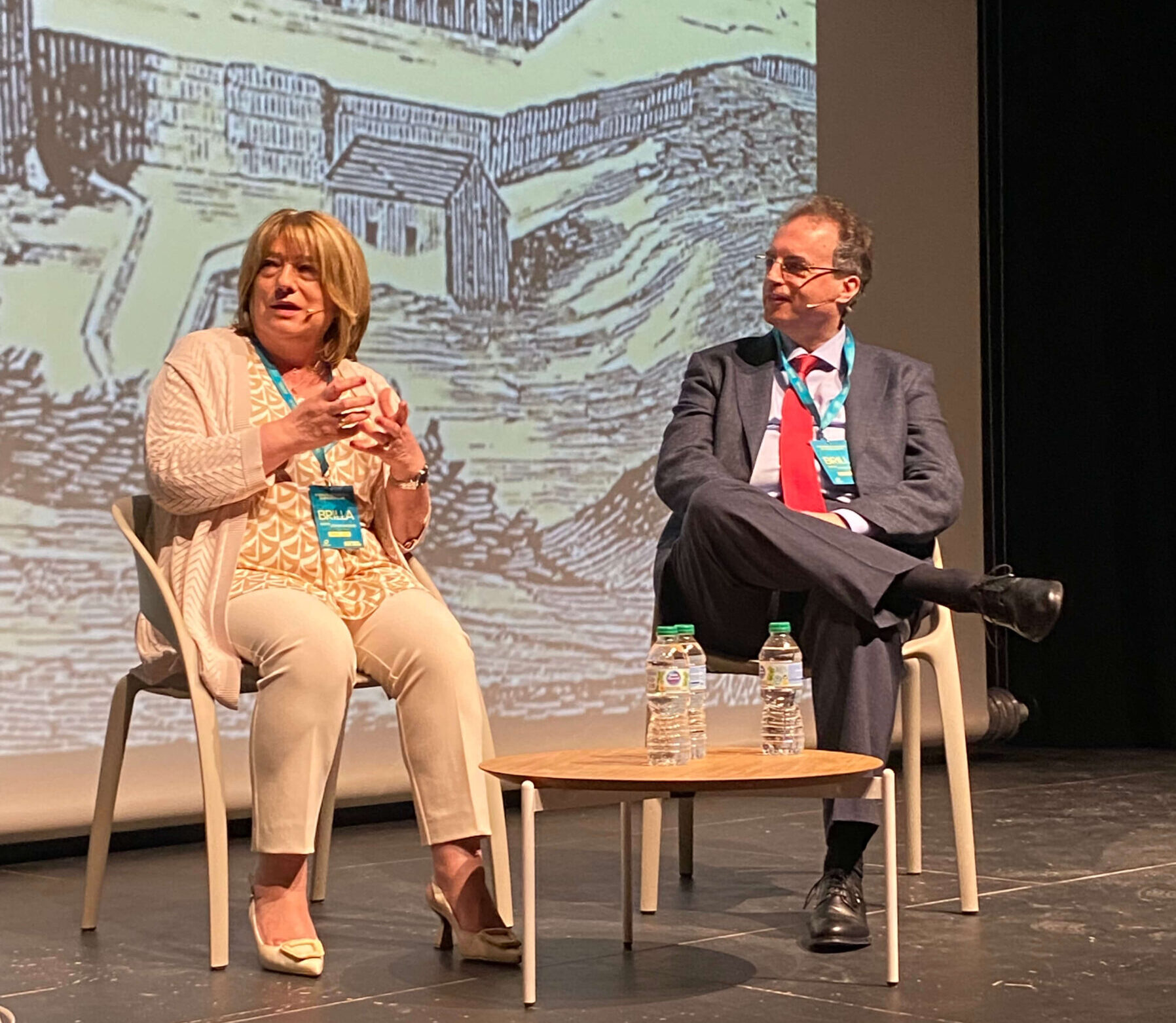
Photo during the National Congress of Rural Schools
In this area, the Ibercaja Foundation is very committed to education and will certainly continue to contribute to helping you meet the challenges facing rural areas and schools in the coming years.
What progress would you highlight in the Aragon Government’s commitment to strengthening these schools? And what still needs to be done?
Public administrations must provide the necessary technological and human resources to ensure that the quality of education in rural areas is as high as possible, and this is what the Aragonese government is promoting in rural schools.
We must prepare the boys and girls who live in villages so that they can later obtain higher qualifications in whatever field they choose (either in person in cities and/or remotely in their own villages through the options offered by new technologies). In this way, if they so choose, they will be able to contribute their talent in the future to business projects developed in these areas… or even launch and undertake new initiatives themselves.
In my opinion, there is still a need, not only in rural areas but throughout the entire education system, to adapt the programs studied in schools and universities to the real needs of the environment and the business and productive fabric of the territory.
The current mismatch between the training and skills required by job seekers and those provided by schools and universities must be corrected in order to capture the full development potential of the economy in these areas.
To move forward, public-private collaboration is essential, which, in my opinion, is always very “fertile” and effective. When public administrations and the business sector combine their capabilities, we are able to multiply results and move forward much faster than we would individually.
“Training must be adapted to the real needs of the environment and the productive fabric of the territory.”
Rural schools face unique challenges. How does Ibercaja support this essence without sacrificing educational modernization? What can it contribute to support their sustainability and evolution?
Ibercaja’s collaboration and participation in this conference is a clear example of our support for education and rural schools. Education is always the most effective “lever” for transforming societies, as it allows us to act at the grassroots level, on the young people who will be adults in the coming years and who will face the challenges of the future.
That is why we must fight to keep as many schools as possible open in rural areas, because they are an indispensable element in encouraging families who are considering moving to small towns to do so. They are an essential service that helps to bring life to small towns.
How are the values of inclusion, participation, and community—so present in rural schools—incorporated into Ibercaja’s philosophy?
We have just launched a very powerful brand campaign highlighting our ownership model, which is very special, unique, and distinctive in the financial sector. As I mentioned earlier, 100% of the Bank’s capital is held by four foundations with their origins in savings banks; in particular, the Ibercaja Foundation holds 88% of that ownership.
This campaign represents the values you mentioned very well, since all the profits we generate at the bank through our financial activity are returned in their entirety to the people, society, and the regions where we operate through the social, educational, cultural, scientific, and environmental initiatives carried out by our shareholders, the foundations.
Rural areas need positive role models. How does the bank work to highlight success stories linked to rural schools or the region?
At Ibercaja, we are very proud of our hallmarks, which of course include Aragón, as we are an Aragonese bank, and also Ibercaja’s proximity and presence in rural areas.
That is why we never miss an opportunity to “show off” this fact wherever we go and to highlight and promote examples (of which there are many in Teruel) of professionals, companies, and personalities from different fields who have grown up here, as well as projects that are born and developed in this region.
What alliances is Ibercaja forming with administrations, educational centers, or local entities to strengthen the rural educational fabric?
In Aragon, we have a historical “climate” that is very conducive to public-private collaboration, which remains intact today and has allowed strategic projects for the development of the community to be forged and consolidated in recent decades. Examples include the ARAMON ski resorts in the provinces of Teruel and Huesca; the logistics platforms in the three Aragonese provinces (in particular, PLAZA in Zaragoza); the wine designations of origin in the three provinces; the ham curing facilities and olive oil mills in the province of Teruel; Dinópolis in Teruel, etc.
I would like to point out that Ibercaja has played an active and dynamic role in all these initiatives, mainly in collaboration with the Government of Aragon.
In the field of education, this type of alliance must also be developed, coordinating the efforts of the public sector (the Spanish and Aragonese governments) with the lines of action in this field of private foundations such as Ibercaja, business entities committed to the region such as the Teruel Chamber of Commerce, companies in the sector with a social vocation such as Edelvives or Grupo San Valero in Aragon, and other companies that, due to their links with the region, wish to support rural development through education and other areas.
To this end, it is necessary to engage in dialogue, identify projects in which collaboration is possible, and cede leadership and prominence in order to achieve a “cross-pollination” of interests between the parties. In short, all actors, both public and private, must act with generosity, with a view to the general interest and with a long-term perspective… something that is easier said than done… but which guarantees excellent results and is therefore worthwhile.
From your experience as a student in a school in a small town like Teruel, what do you think a child growing up in a village needs in order to have the same opportunities as a child living in a city?
Everyone must be guaranteed access to the same resources as in other towns, starting with quality teachers and schools that have the necessary tools to ensure an education in line with current needs. Families must also be involved, in the sense of being convinced and committed to providing an education and access to school for their children.
 Photo during the National Congress of Rural Schools
To this end, it is essential, and I once again call for the commitment and involvement of all stakeholders through public-private partnership.
If you could send a message to those who are currently unsure about raising their children in a rural environment, what would you say to them as a representative of an organization committed to education?
Go for it. Improvements in digital communication and travel options have reduced the feeling of “isolation” that may have existed in the past for those who chose to stay and study or live in rural areas.
Today, with an internet connection, we can work, learn, stay informed, entertain ourselves, buy goods and services, and more, regardless of whether we live in a big city or the smallest of towns.
Meanwhile, rural areas continue to offer their historical and unique attractions, which are increasingly valued in today’s world, such as tranquility, clean air, contact with nature and beautiful landscapes, the absence of traffic jams, etc.
What challenges do you think rural education in Aragon faces and how can Ibercaja help overcome them in the coming years?
I believe that the main challenge is to guarantee and maintain the availability of high-quality rural schools that meet the current needs of students and are able to adapt to the changing environment and the requirements of the companies, industries, and services that are currently demanding employment. In short, we must ensure that rural schools are another competitive advantage in this type of environment and that they add to the advantages that any person or family values when deciding to come and live in a rural area.
For our part, as we have done historically, we will continue to promote education through our Ibercaja Foundation and through the organization and collaboration in initiatives aimed at responding to these needs and challenges.
An interview of Juan Antonio Saura