


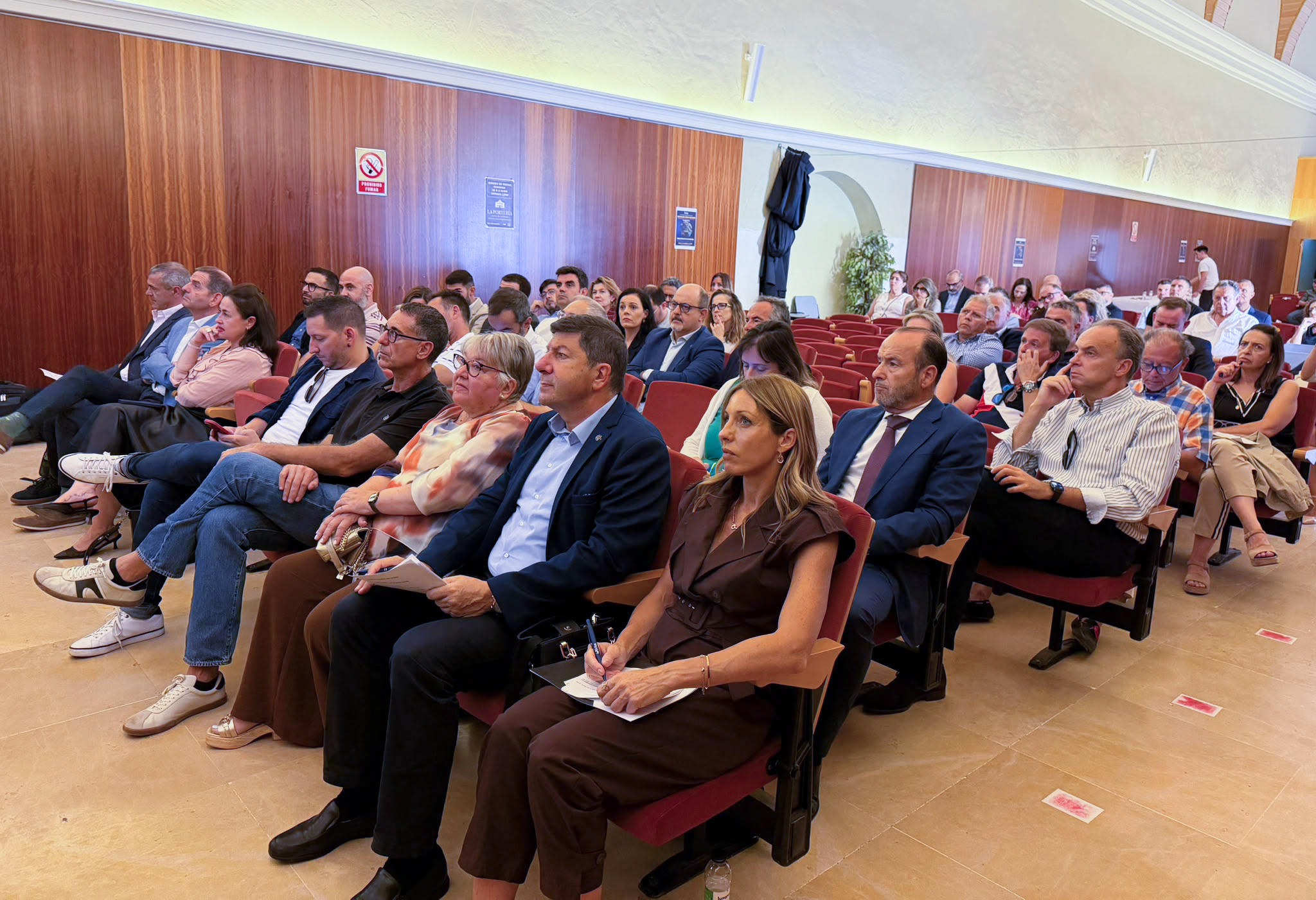
The Lower Ebro Riverside Industrial Association (AIRBE) brought together companies, specialists and institutions in La Cartuja Baja, Zaragoza, to examine how the circular economy and energy transition can strengthen Aragon’s industrial competitiveness. The 3rd Circular Economy Business Forum, held on September 23, 2026, identified access to energy, raw materials and decarbonization as among the key challenges facing the productive sector.
Renewable energy and industrial consumption at the heart of AIRBE forum
Under the theme «The circular revolution: competing in the new energy landscape», the event explored the links between renewable generation, industrial demand and regional development. AIRBE President Armando Mateos opened the forum by advocating for sustainability to be integrated into corporate strategy and highlighting its connection to competitiveness.
Mateos also underscored the forum’s role as a venue for collaboration among companies in the Lower Ebro Riverside and Cinco Villas areas, through the exchange of experience, projects and solutions. The event brought together differing perspectives on efficient resource management amid the energy transition.
The opening keynote, «Renewable Aragon: from energy generation to the industrial consumption of the future», was delivered by Pedro Machín, president of the Aragon Energy Cluster and CEO of Grupo Atalaya. He examined Aragon’s energy potential, the expansion of renewables and the challenge of efficiently linking power generation with industrial consumption.
Xavier Cugat, of Revenergetica, outlined the key factors shaping the evolution of Spain’s electricity system. His analysis focused on expected demand growth and the challenges posed by an increasingly electrified economy for businesses and regions.
Material recovery gains prominence amid costs and external dependence
Industrial waste management took center stage at the forum in a panel titled «The invisible mine: industrial costs, strategic autonomy and the regenerative power of materials». The discussion explored the value of recoverable materials in reducing costs and dependence on raw materials.
Moderated by René Sanz, Sustainability and Circular Economy Director at Grupo Itesal, the session featured Alicia Valero, director of the Industrial Ecology Group at the Energaia Institute and the Cemex Chair of Sustainability; María Lacasa, Environment Manager at Saica Paper Spain; and Antonio Luna, Industrial Director at Placo Saint Gobain Aragón.
Participants addressed the future availability of strategic raw materials, material recovery capacity and the potential to turn environmental costs into opportunities for industry. The discussion positioned circularity as a means of strengthening industrial autonomy and making better use of resources already embedded in production processes.
Aragon companies examine new solutions to reduce emissions
The forum also dedicated a panel to corporate case studies under the title «New energy and solutions to transform the production model». Moderated by industrial environmental management expert Fernando Follos, the session brought together Jesús Miguel Gaspar, maintenance manager at Cárnicas Cinco Villas; Fernando Ederra, manager of the Tauste Manure Management Center; and David Revuelto, production manager at the waste transfer plant of Adiego Hermanos.
The exchange reviewed the development of energy projects in Aragon, the needs of energy-consuming companies and the potential of new solutions to cut emissions without undermining competitiveness.
Aragon’s Director General for Energy and Mines, Yolanda Vallés, closed the event with the presentation «Aragon and the energy and circularity challenge». Vallés highlighted the opportunity to leverage Aragon’s energy potential to drive industry, employment and regional development, stressing that the challenge is to ensure renewable energy generates economic activity, attracts investment and strengthens business competitiveness.