


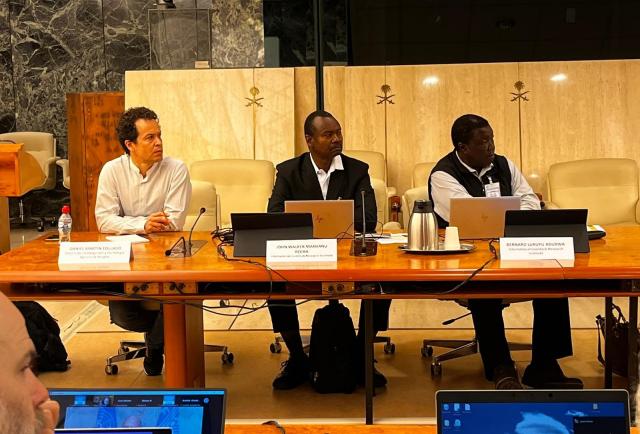
Daniel Martín Collado, researcher in the Animal Science department of the Center for Research and Technology in Agro-Food of Aragon (CITA), has participated as an author in the final guide on the assessment of ecosystem services in livestock agroecosystems developed by the FAO LEAP Partnership consortium of the Food and Agriculture Organization of the United Nations. Martín Collado is the only Spanish representative in this document presented on September 29 in Rome.
The report, titled Ecosystem services assessment in livestock agroecosystems, highlights the crucial role of livestock agroecosystems in rural development, landscape management, and food security. The document points out that public debate tends to focus on negative aspects such as environmental impacts, human health, and animal welfare, overshadowing the multiple benefits that livestock systems provide to society.
The guide presents four categories of benefits that livestock agroecosystems provide to human well-being: provisioning services (food and fiber production); regulating services (climate control and air quality, water management, disease regulation, pollination, and natural hazard mitigation); cultural services (recreational, aesthetic, educational, social, and spiritual values); and supporting services (soil formation, photosynthesis, and water and nutrient cycles).
The authors emphasize that achieving truly sustainable livestock production requires the systematic recognition and evaluation of these services. To this end, the guide calls for a harmonized international approach and recommends the Common International Classification of Ecosystem Services (CICES) as a standardized framework for identifying and categorizing ecosystem services. Additionally, it proposes a five-step roadmap to ensure robust and transparent valuation processes that generate reliable evidence for policy and management.
The document integrates biophysical, sociocultural, economic, and modeling valuation methods, constituting a first step towards coherent international guidance. It offers both conceptual foundations and practical approaches for better assessing, promoting, and maintaining the contributions of livestock agroecosystems to global sustainability.
Development Process and Scope
This publication represents an important achievement for the FAO LEAP (Livestock Environmental Assessment and Performance) Alliance, a multi-stakeholder initiative that has evolved over more than a decade. The guidelines are based on scientific evidence and have been developed through a multi-stakeholder process that promotes inclusive dialogue and balanced outcomes, with contributions from internationally renowned academic experts, public and private sector actors, and civil society organizations from 20 countries.
The authors explain that until now there has been no comprehensive and science-based framework to assess the environmental impacts of livestock, considering both positive and negative dimensions. In particular, the ecosystem services provided through livestock-related activities have been underrepresented in such assessments. The document is freely accessible and can be downloaded from the FAO website at https://openknowledge.fao.org/items/614f6c45-20a5-461e-a0eb-e1da16ca08d9.