



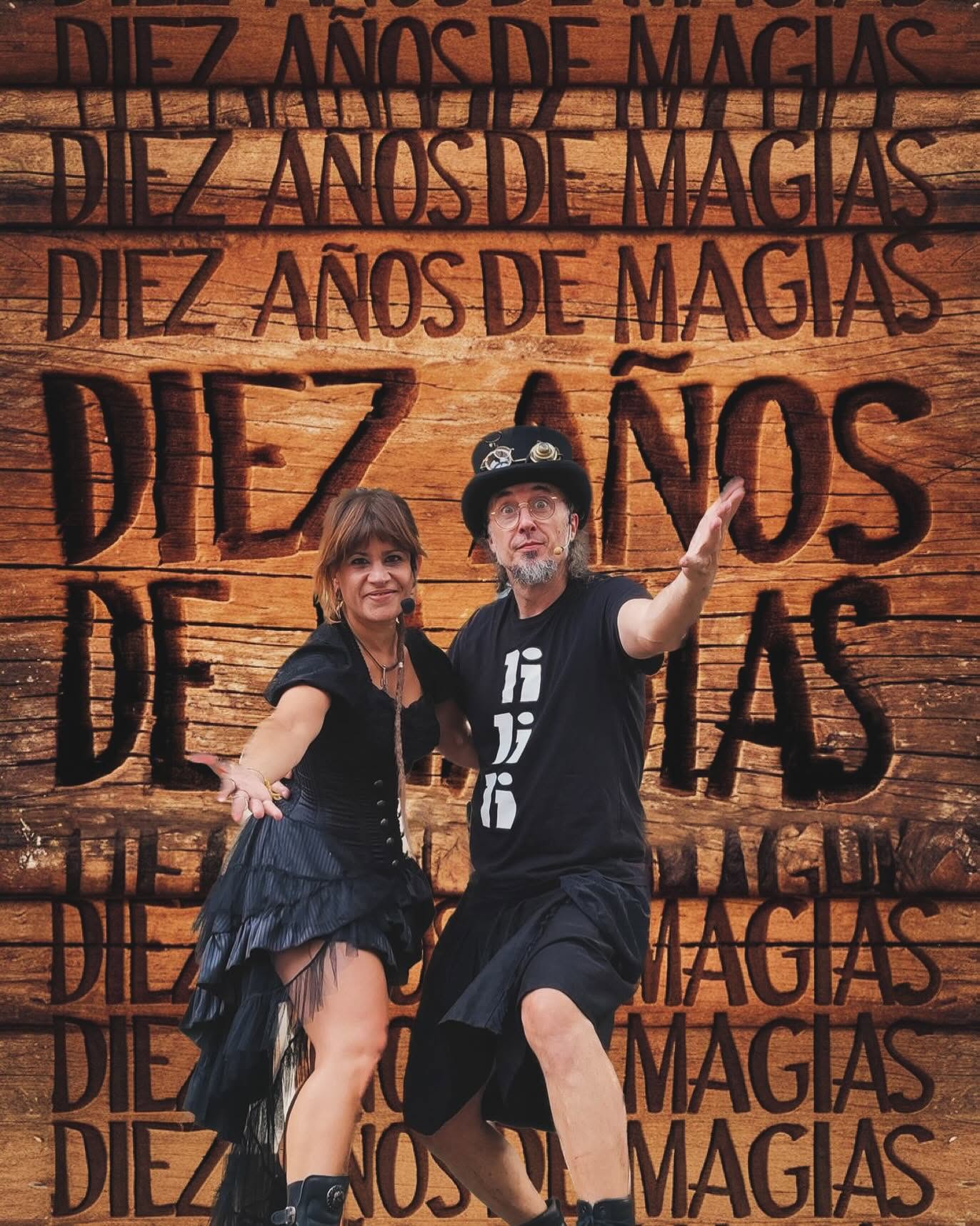
Some venues are born after market research, a business plan, and a search for the right location. Others have far less predictable origins. El Sótano Mágico clearly belongs to the latter category. Pepín Banzo had spent years collecting objects related to illusionism until the collection eventually needed a home of its own. He had another ambition as well: to establish a permanent venue for magic in Zaragoza.
That combination gave rise to El Sótano Mágico, which opened on San Pablo Street in Zaragoza on December 4, 2014. More than a decade later, the project has become a performance venue, museum, meeting point for professionals and enthusiasts, cultural space, and school.
His interest in collecting items connected with the history of magic grew through acquisitions and donations from relatives of Aragonese magicians. The collection now on public display includes, for instance, objects associated with Pepe Carroll and pieces from Javier Antón. The result is also a way of preserving a little-known part of Aragon’s cultural history: that of its magicians.
A small venue that draws major names
El Sótano Mágico’s size is one of its defining features. It cannot host the large-scale illusions designed for vast stages, but the proximity between performer and audience makes it especially well suited to close-up magic.
Just a few feet — sometimes inches — separate the audience from the magician’s hands. That completely changes the experience. “It is one of the purest branches of magic because it is where you feel the impossible most intensely,” Juan Capilla explains.
Spanish and international performers widely recognized within the world of magic have appeared on the Zaragoza stage, although many of their names may be unfamiliar to the general public. For those behind the venue, the gap between professional prestige and popular fame also helps explain a paradox: Spain has an important tradition in magic, yet much of it remains unknown outside specialist circles.
From performance venue to school
The project’s next evolution came through education. When Helena Perdomo joined El Sótano Mágico in 2019, small workshops were already being held there, but the pandemic prompted reflection on what a true school of magic could be.
Perdomo, who had teaching experience, proposed that Banzo develop a far more ambitious program. The idea was captured in a phrase that has defined the project ever since: «We do not teach tricks; we train magicians».
To make it happen, they needed someone who understood teaching from that same perspective. That was where Juan Capilla came in.
Capilla’s work is built around that idea. Students learn card and coin magic, mentalism, comedy magic, and parlor magic, while also gaining tools to use everyday objects and gradually discover which branch of magic suits them best.
From age nine to 80 in the same class
One of the school’s most interesting decisions came after it found that separating children and adults did not always improve learning. Courses now accept students from age nine, with different generations sharing the classroom.
Instruction is also delivered in small groups. The school sets a maximum of 10 students per class, although classes typically have six or seven. It currently offers beginner, intermediate, and advanced levels, with all groups together generally serving between 20 and 30 students.
An underground museum and year-round programming
The school is only one of El Sótano Mágico’s many facets. From Friday through Sunday, the venue maintains its magic programming, including family offerings and shows aimed primarily at adult audiences. Activity expands during holidays and certain periods of the year.
During the week, the space also hosts other cultural events: book launches, science outreach events, poetry, markets, and activities organized by other creators. The aim is to make use of a venue that already has a stage and an audience, providing room for cultural initiatives that face greater difficulty finding places to develop.
The recently renovated museum adds another dimension, allowing visitors to trace part of the history of Aragonese magic through original objects and materials. The architecture itself contributes to the experience: from San Pablo Street, visitors descend into an old vaulted stone space that seems particularly well suited to keeping secrets.