



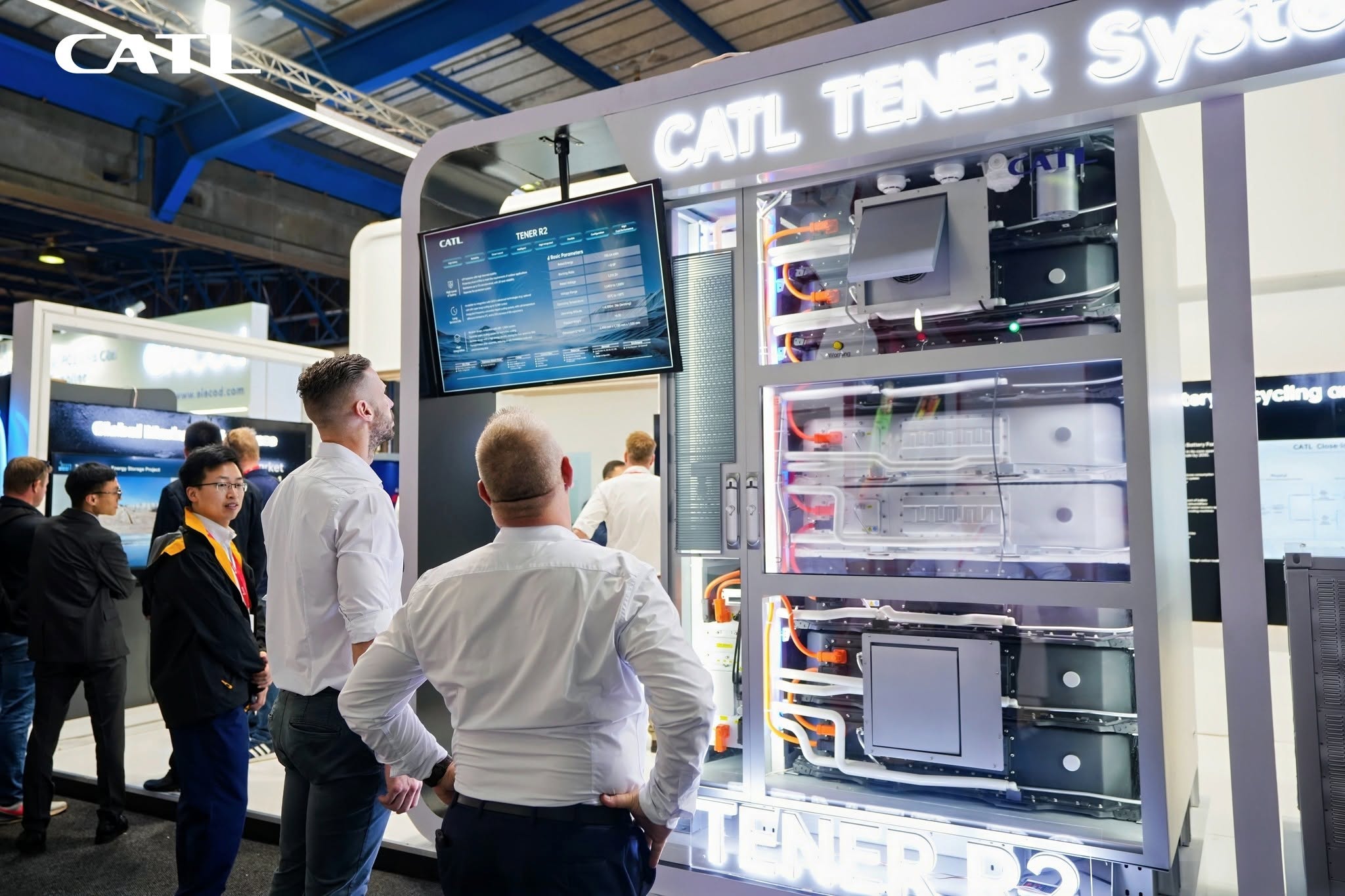
The battery factory being built in Zaragoza by CATL and Stellantis represents an investment of up to 4.1 billion euros and is expected to create over 4,000 direct jobs. The project positions Aragón within a strategic industry for the automotive sector, while also reflecting the significant role China has achieved in battery technology and the global supply chain.
Europe retains one of the largest automotive industries in the world, but the transition to electric vehicles has disrupted the international distribution of capabilities. An increasing portion of the technological value of automobiles is concentrated in batteries, and unlike the decades-long dominance in combustion engines, the European industry does not hold a leading position in this area. China does, and available data reflects an industrial concentration that is hard to overlook.
The International Energy Agency estimates that more than 80% of the battery cells manufactured worldwide in 2025 will come from China. This dominance extends to other phases of the supply chain: the country accounts for approximately 85% of the active materials for cathodes and over 90% of those used for anodes. In Europe, moreover, the share of Chinese manufacturers in the batteries used for electric vehicles surpassed 50% in 2025, nearly double the percentage recorded two years earlier.
This situation partly explains the European interest in attracting new battery factories, but it also poses a contradiction. The European Union needs to produce these components within its borders to sustain its automotive industry and reduce reliance on imports, whereas much of the technological and productive capacity needed to do so is currently found in Asia. The gigafactory being built by CATL and Stellantis in Zaragoza serves as a prime example of this process.
Producing in Europe does not eliminate all dependence
Contemporary Star Energy, the company established jointly by Stellantis and CATL, plans to invest up to 4.1 billion euros in an LFP battery plant next to the Figueruelas factory. The project contemplates a maximum capacity of 50 GWh per year and over 4,000 direct jobs when it reaches its anticipated development. Its launch will allow for the production of an essential component in Aragón that would otherwise need to be produced entirely or partially outside of Europe.
Locating such a factory reduces specific logistical risks and brings battery production closer to the plants where they will be used. However, it does not alone equate to having an independent European supply chain. The International Energy Agency itself warns about the existing geographical concentration of the materials and components necessary for battery manufacturing, particularly in technologies like LFP, cathode materials, and graphite anodes.
Trade data from the European Union highlights the scale of the problem. According to the European Commission, in 2024 the EU imported batteries worth approximately 28 billion euros, with about 22 billion corresponding to purchases from China. Therefore, the European goal of developing its own industrial capacity must face not only the challenge of building cell factories but also the challenge of developing suppliers, materials, technology, and industrial knowledge throughout the entire chain.
The opportunity for Aragón extends beyond the factory
From an Aragonese perspective, the immediate effect of the investment by CATL and Stellantis will be industrial and labor-related. The projected direct jobs will be complemented by the activity generated around construction, logistics, services, and future suppliers. Its location next to Stellantis also enables the leveraging of an automotive ecosystem that has been developed over decades around Figueruelas.
The broader impact, however, will depend on…