



The province of Zaragoza has much to offer those who enjoy discovering historic towns. Beyond its best-known destinations, its districts preserve medieval villages, Romanesque churches, castles, walls, and urban ensembles that allow visitors to travel through centuries of history without leaving Aragon.
Summer is an ideal time to explore these places, make the most of the long days, and enjoy cuisine closely tied to the region. From the Cinco Villas to the Jiloca Valley, we suggest five destinations that merit an unhurried visit and can serve as the starting point for a weekend getaway.
Sos del Rey Católico, a journey to the Middle Ages

In the north of the province, Sos del Rey Católico stands on a rise overlooking much of the Cinco Villas landscape. Its skyline, defined by towers and stone buildings, signals the medieval character of a town that has retained much of its historic layout.
The best way to experience Sos is to stroll unhurriedly along its cobblestone streets, pass through its ancient gateways, and discover its squares. The town is especially known as the birthplace of Fernando el Católico in 1452, and it preserves landmark buildings such as the Palacio de Sada, the church of San Esteban, and the medieval Lonja.
The route also highlights the value of traditional architecture, with stone houses, passageways, and corners that seem frozen in time. For those wishing to extend their stay, the district offers other historic towns and a culinary tradition featuring seasonal produce and classic Aragonese dishes.
Uncastillo, a treasure of Aragonese Romanesque architecture

A short distance from Sos del Rey Católico lies Uncastillo, another of the Cinco Villas’ leading heritage sites. Its urban center extends at the foot of Peña Ayllón, crowned by the remains of a fortress that recalls the town’s strategic importance during the Middle Ages.
Uncastillo stands out particularly for its extraordinary concentration of Romanesque architecture. The churches of Santa María, San Martín, and San Felices are among the buildings that illustrate the town’s artistic richness. They are joined by civil structures such as the Lonja and the Palacio de Martín el Humano, completing a complex of great historical interest.
The visit can be planned as a day trip or combined with Sos del Rey Católico over a weekend. It is worth setting aside time to explore its streets, pause before the churches’ sculpted doorways, and view the town from one of its elevated vantage points.
Daroca, a walled city
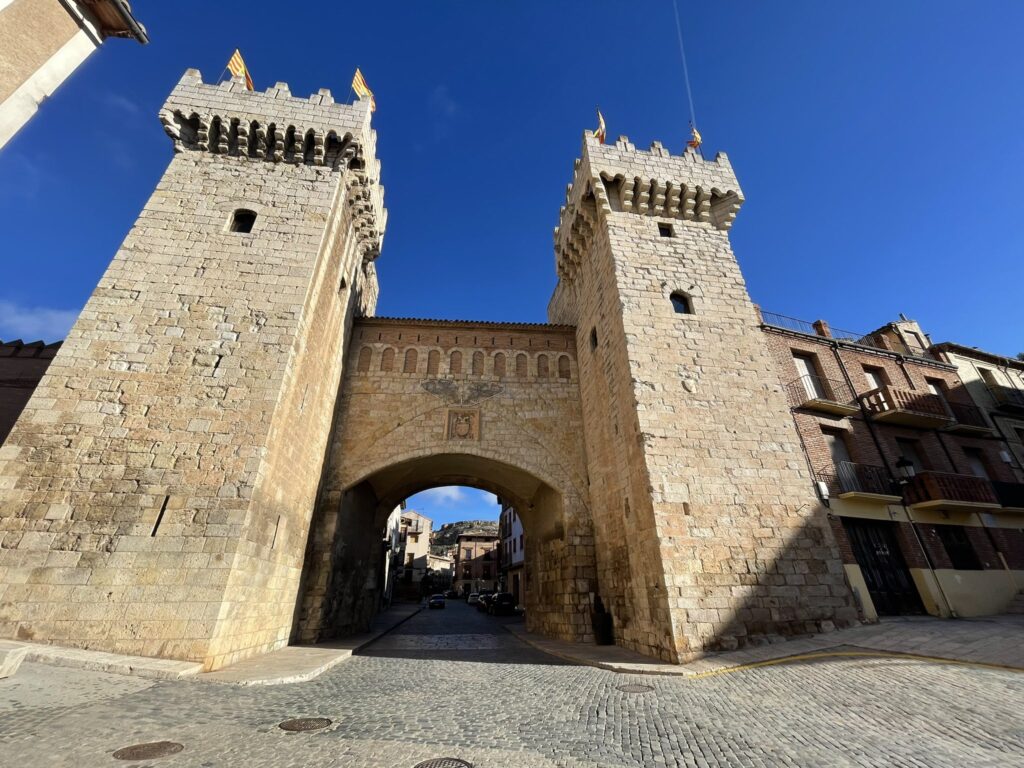
Daroca makes an impression even before visitors enter its historic center. Its walls climb the slopes surrounding the town, creating one of southern Aragon’s most recognizable monumental views. Located in the Jiloca Valley, the city was for centuries an important commercial and defensive stronghold.
The Puerta Baja is one of the most representative entrances to the historic complex, where buildings from different periods and styles stand side by side. Churches, palaces, and former commercial streets recall Daroca’s importance during the Middle Ages. Its principal monuments include the Colegiata de Santa María and the churches of Santo Domingo de Silos and San Juan de la Cuesta.
Daroca deserves an unhurried visit, particularly for those wishing to appreciate the scale of its fortified enclosure. A walk through its streets can be rounded out with a meal in town and an excursion to the villages of Campo de Daroca, a district that preserves compelling examples of traditional architecture and religious heritage.
Anento, nature and heritage among the mountains

Not far from Daroca, Anento offers a different experience. The town lies in a valley surrounded by rock formations and combines a small medieval settlement with one of the district’s most distinctive natural sites: the Aguallueve.
This site takes its name from water that filters through the rock, encouraging the growth of mosses and other plants typical of humid environments. The contrast between the vegetation and the reddish tones of the terrain makes the route one of the visit’s main attractions, although the appearance of the landscape depends on water conditions at any given time.
The urban center also merits attention. Its streets retain the character of traditional architecture, while the church of San Blas houses a notable Gothic altarpiece. The remains of its medieval castle stand on the upper part of the village, overlooking the valley. Anento is a good choice for those seeking to combine a walk in nature with a cultural visit.
Calatayud, much more than a monumental city
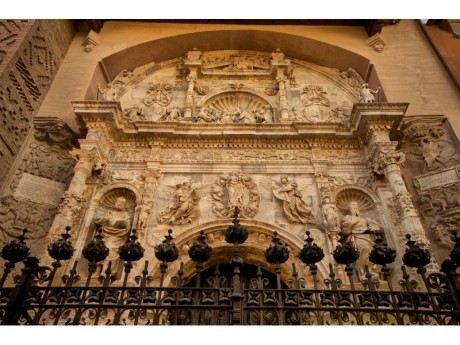
Calatayud completes this selection with a more urban proposition. Its historical importance dates back to Antiquity, when nearby Bilbilis was a prominent Roman city. Later, the Muslim presence left a deep imprint on its layout and architecture, particularly visible in its fortifications and Mudéjar towers.
The historic center invites visitors to discover churches, squares, and monumental buildings, notably the Colegiata de Santa María and the church of San Andrés. It is also worth visiting the remains of the defensive system surrounding the city and exploring the archaeological heritage of Bilbilis, located nearby.
The visit has a particularly appealing culinary complement. Calatayud has a wine designation of origin and a culinary tradition featuring products such as chickpeas and vegetables, as well as Aragonese cuisine. It is an ideal destination for spending a day exploring heritage and ending it by discovering one of the area’s wines.
These five places showcase the diversity of the region’s heritage