



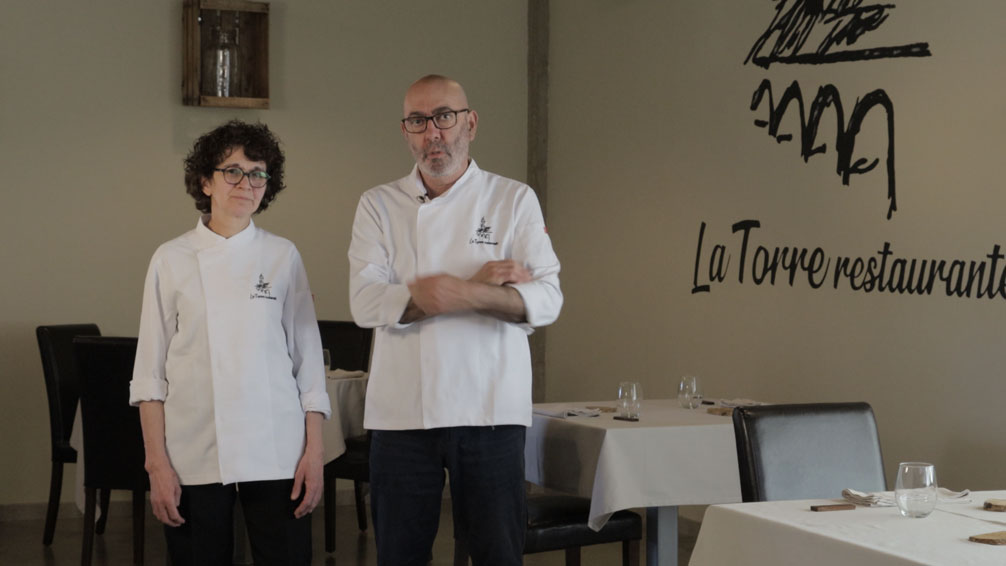
In a region like the Matarraña, where the landscape is integral to the identity of its inhabitants, gastronomy is often much more than a culinary offering. It serves as a way to preserve traditions, support local producers, and maintain the connection between the land and those who work it. This philosophy has guided the project of La Torre Restaurant since its inception.
Located in Torre del Compte and run by a couple from the area, the establishment has built its proposition around a simple yet increasingly valuable idea: to cook with what the region offers at any given time of the year. This commitment to local and seasonal produce has earned it recognition with the Circular Economy and Km0 Award as part of the Sustainable Social Tourism Plan in Aragon.
A Cuisine Connected to the Environment
Since opening its doors, La Torre has advocated for a working approach based on proximity. A significant portion of the ingredients that reach the kitchen come from local producers or nearby areas, reducing transportation, supporting the local economy, and reinforcing the connection between gastronomy and territory.
This understanding of restoration is embodied in the project «Flavors with Origin,» an initiative that focuses on seasonal products and a cuisine that respects the natural rhythms of each season. The result is a proposal in constant evolution, where dishes change in harmony with harvests, food availability, and the work of farmers, ranchers, and small producers from the surrounding area.
Rather than following trends, the restaurant aims to revive a logic that has been part of everyday life for generations: consuming what the region offers at any moment.
The Value of Proximity
The proximity philosophy also has economic and social dimensions. Working with nearby suppliers strengthens a collaborative network that benefits various activities within the region and helps keep the productive fabric of the area alive.
Every product sourced locally generates an impact that transcends the kitchen. Behind a seasonal vegetable, a local oil, or an artisanal product lies a chain of work that helps sustain jobs, knowledge, and economic activity in rural areas.
In a region like Matarraña, where cultural identity is deeply tied to the landscape and natural resources, this way of working becomes a tool for preserving what makes the territory unique.
Circular Economy Applied to Gastronomy
La Torre’s proposal also aligns with the principles of the circular economy. Reducing transportation, leveraging seasonal products, and collaborating with nearby suppliers minimize the environmental impact associated with the restaurant’s activities.
Far from being seen as a sporadic strategy, this philosophy is part of the restaurant’s daily management. Each decision aims to balance culinary quality, environmental responsibility, and commitment to the environment that makes the project possible.
Sustainability thus naturally integrates into the culinary experience, not as an add-on element, but as a logical outcome of working with respect for the origin of the food.
When a Dish Also Tells a Story
The experience at La Torre Restaurant demonstrates that gastronomy can be a way to interpret and explain a territory. Each ingredient speaks of a season, an agricultural tradition, a producer, or a specific landscape in Matarraña.
At a time when the restaurant industry strives to differentiate itself through increasingly complex offerings, projects like this reclaim the value of the essential: product, proximity, and authenticity.
Because, often, the flavors that linger most in memory are not the most sophisticated but those that retain a real connection to the place they come from. And at La Torre, that relationship with the origin remains the main ingredient of every dish.