


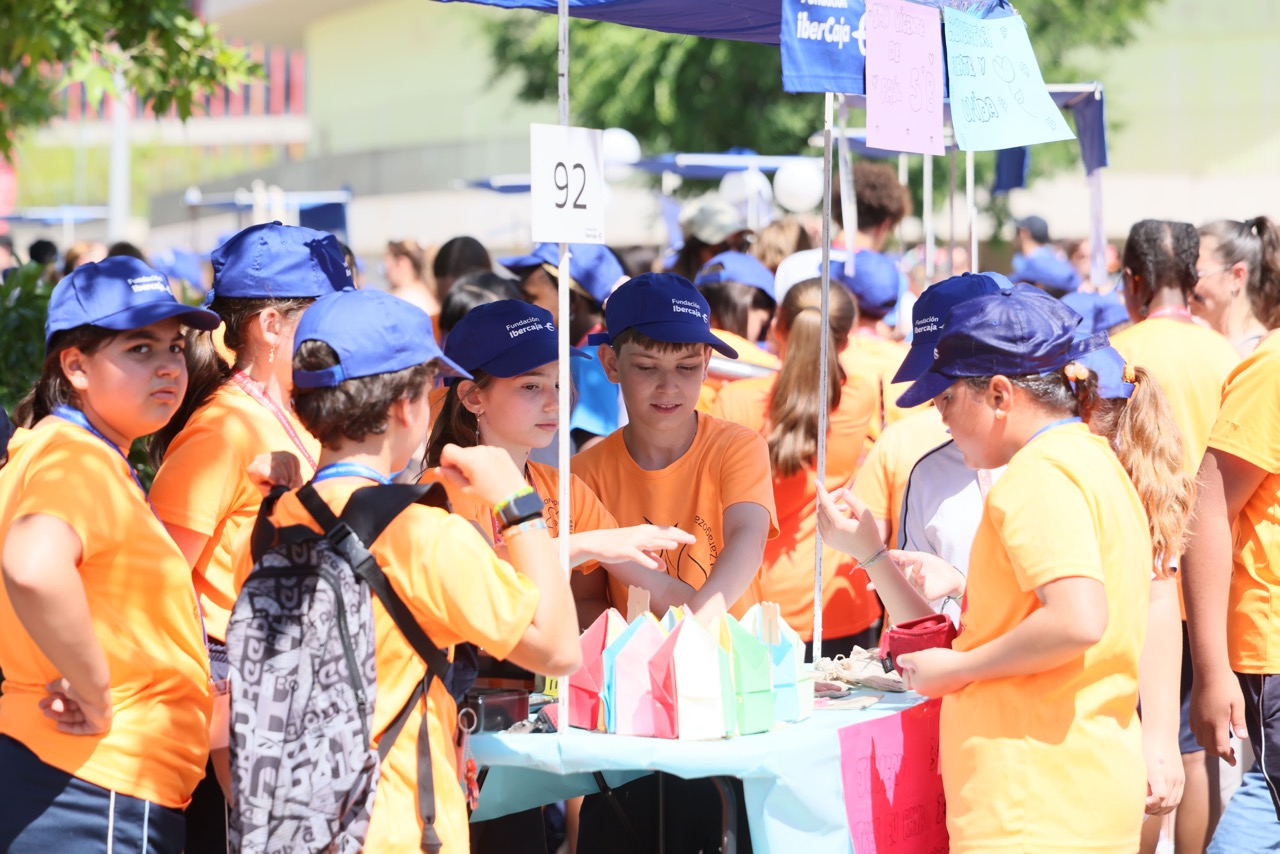
For a few hours, Zaragoza’s Plaza Expo was transformed into a marketplace where the stars were not big companies or seasoned entrepreneurs, but nearly 3,000 elementary school students who put their skills learned throughout the school year to the test. Organized into cooperatives, they designed products, managed projects, and pitched their initiatives to peers, families, and visitors as part of the educational program “Learning to Entrepreneur”, sponsored by Fundación Ibercaja.
The event brought together students from 65 educational institutions in Zaragoza and its province, participating with a total of 136 school cooperatives. The market, held alongside Mobility City, marked the conclusion of the sixteenth edition of an initiative that has established itself as one of the most significant educational entrepreneurship experiences in Aragón.
Beyond the symbolic sale of handmade products created by the students themselves, the activity pursues a more ambitious goal: to introduce young people to the business world from a practical, collaborative perspective that is appropriate for their age. For months, participants have worked on creating and managing small cooperatives, learning concepts related to business organization, decision-making, creativity, communication, and shared responsibility.
In an economic context marked by technological transformation and the need for new professional competencies, programs like this reflect a growing trend in many countries: to incorporate an entrepreneurial spirit into the educational environment as a tool for developing transversal skills that will be essential in any future career path.
The initiative is part of the educational programs of the Department of Education of the Government of Aragón and involves the active collaboration of teachers, who support students throughout all phases of the project. The students create their company, draft bylaws, contribute symbolic share capital, distribute responsibilities, and develop their own corporate identity through the creation of brands, logos, and communication materials.
Additionally, they participate in specialized workshops on advertising, video, and technology, conduct market studies, and gain firsthand knowledge of how businesses and financial institutions operate. The goal is for them to understand how a business project is built from its initial steps and what challenges are associated with managing an organization.
The institutional event featured representatives from the Government of Aragón and Fundación Ibercaja, who highlighted the educational value of a proposal that combines practical learning, teamwork, and personal initiative.
As a closing for the day, awards were presented to recognize different aspects of the work developed by the school cooperatives. Among them were awards for best brand and logo, best poster, best video, sustainable product, and best market stand.
The achievements of the program over recent years demonstrate its consolidation. Since its launch in 2010, more than 35,000 students from 727 educational institutions have participated in this experience, creating and managing over 1,600 school cooperatives.
This figure is particularly significant at a time when educational institutions, businesses, and public administrations agree on the importance of fostering skills such as initiative, creativity, problem-solving, and adaptability. These competencies, beyond fostering future businesses, are part of the knowledge and attitudes demanded by an increasingly complex and changing economy.
Fundación Ibercaja, a private non-profit organization with a long history in developing social, cultural, and educational programs, views this project as one of its key initiatives in training new generations. The organization maintains a focus on promoting personal and collective development through initiatives that connect education, innovation, and commitment to the community.
The image of thousands of schoolchildren defending their ideas, negotiating with clients, or explaining how their cooperatives work provides an optimistic snapshot of the future. Not because all of them will become entrepreneurs, but because they are learning something equally valuable: to work as a team, assume responsibilities, and turn an idea into a tangible reality.
In an era where education seeks to respond to the challenges of the 21st century, Zaragoza has once again shown that entrepreneurship can begin much earlier than university or first employment. Sometimes it starts in an elementary school classroom, with a school cooperative, a good idea, and the excitement of learning by doing.