



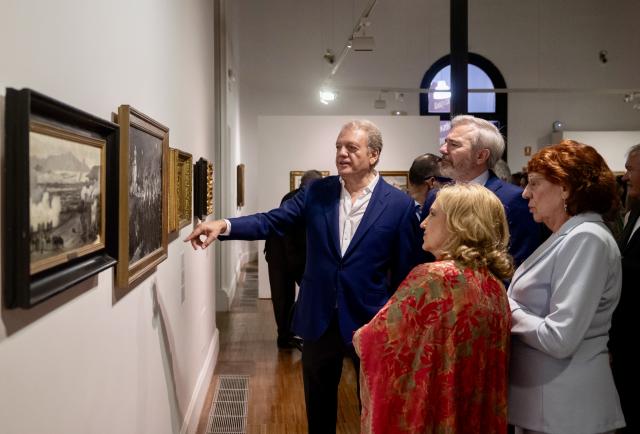
The Acting President of the Government of Aragón, Jorge Azcón, has inaugurated an exhibition that invites visitors to rediscover the artistic and cultural richness of Aragón. The exhibition, composed of works from the Francisco Palá Laguna Collection, offers a unique perspective on the development of Aragonese art between 1870 and 1920.
Exhibition at the Paraninfo Building in Zaragoza
Under the title Rome and Paris, Horizon of Aragonese Artists (1870-1920), the exhibition will be open to the public until July 18 in the Goya and Saura rooms of the Paraninfo Building in Zaragoza. Organized by the Vice-Rectorate of Culture and Heritage of the University of Zaragoza along with the Government of Aragón, this showcase is presented as a significant cultural event in the region.
The collection on display offers a window to the past, showing how Aragonese artists of the time drew inspiration from international influences, especially from the vibrant artistic scenes of Rome and Paris. This cultural exchange was crucial for the aesthetic renewal of Aragonese art, allowing local artists to broaden their horizons and adopt new techniques.
A Look at the Palá Collection
The exhibition focuses on the Palá Collection, recognized for its value in the study of Aragonese pictorial heritage. The included works reflect a diversity of genres and techniques, representing two generations of painters who marked a moment of openness and evolution in the region’s art.
The journey, both physical and intellectual, stands out as a vital experience for the artists of the time. Contact with European cultural centers not only enriched their training but also modernized the artistic perspective in Aragón, fostering a dialogue between the local and the international.
Featured Artists in the Exhibition
Among the authors whose works are displayed are notable figures such as Francisco Pradilla, Marcelino de Unceta, Mariano Barbasán, and Joaquín Pallarés, among others. These artists, along with their contemporaries, significantly contributed to the cultural legacy of Aragón, each bringing their unique vision and talent to the flourishing of art in the region.
The exhibition not only celebrates the individual talents of these painters but also underscores the importance of cultural connections and the mutual influence between different artistic traditions. In this way, it becomes a testament to the dynamism and richness of Aragón’s artistic heritage.