



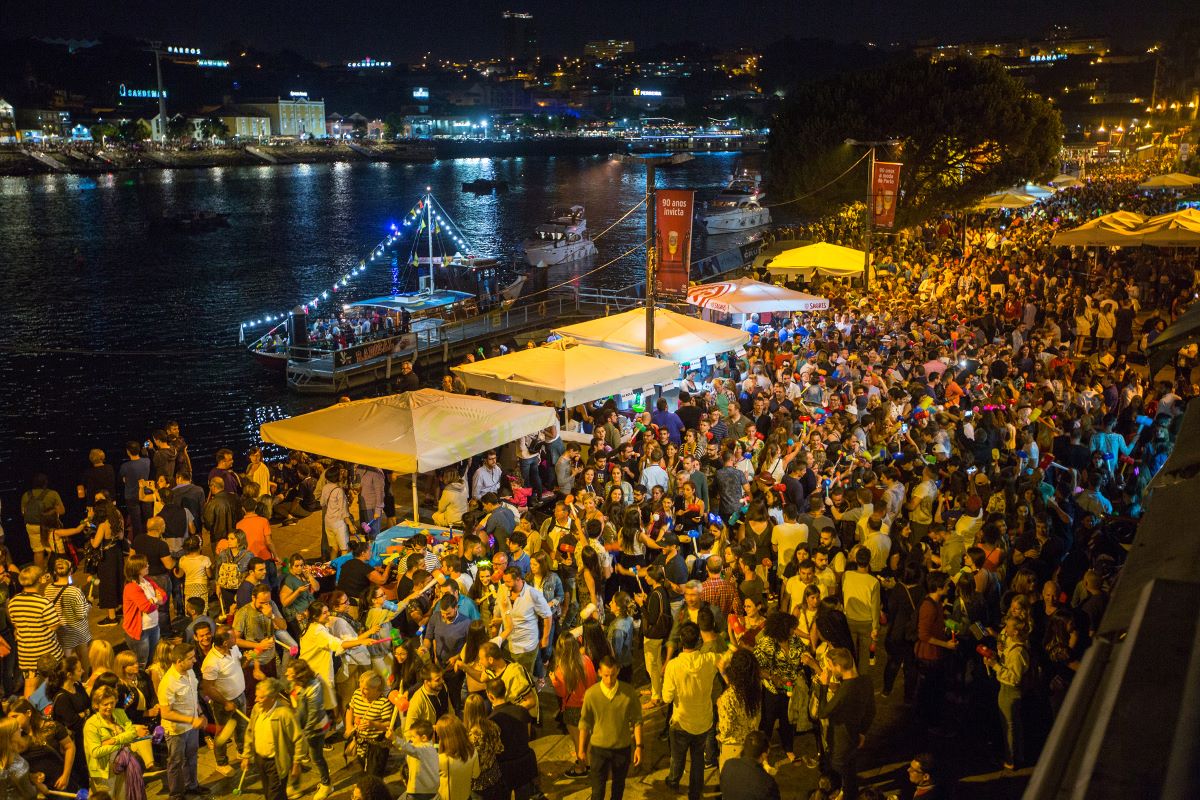
The festival of San Juan in Porto has origins dating back to the 14th century and combines pagan traditions with Christian elements. Originally, it was a celebration in honor of the summer solstice and fertility, where worship was offered to the Sun God to ask for good harvests and abundance. With the Christianization, it became dedicated to Saint John the Baptist, the patron saint of Porto, although many pagan practices were preserved and adapted.
Pagan Traditions and Christianization
During its early centuries, people participated in rituals such as jumping over bonfires (symbolizing the strength and purification of solar fire), hanging leeks in homes to attract luck and protection, and gifting aromatic plants such as basil and lemon balm. These customs represented the belief in fertility and health for the coming year. Over time, the Catholic Church integrated the festival into the Christian calendar, making it the main celebration of Saint John the Baptist in the city.
Evolution and Present Day
Throughout the centuries, new traditions have emerged, such as the use of «martelos de São João» (plastic hammers with which people playfully hit each other on the head), inheriting the original game with garlic leaves and leeks. The launching of paper balloons, fireworks over the Douro, and communal meals featuring grilled sardines and caldo verde are now the most recognizable elements.
The festival of San Juan is today the most awaited and crowded celebration in Porto, with a unique blend of pre-Christian rituals and modern festivities suitable for the entire city and its visitors.