



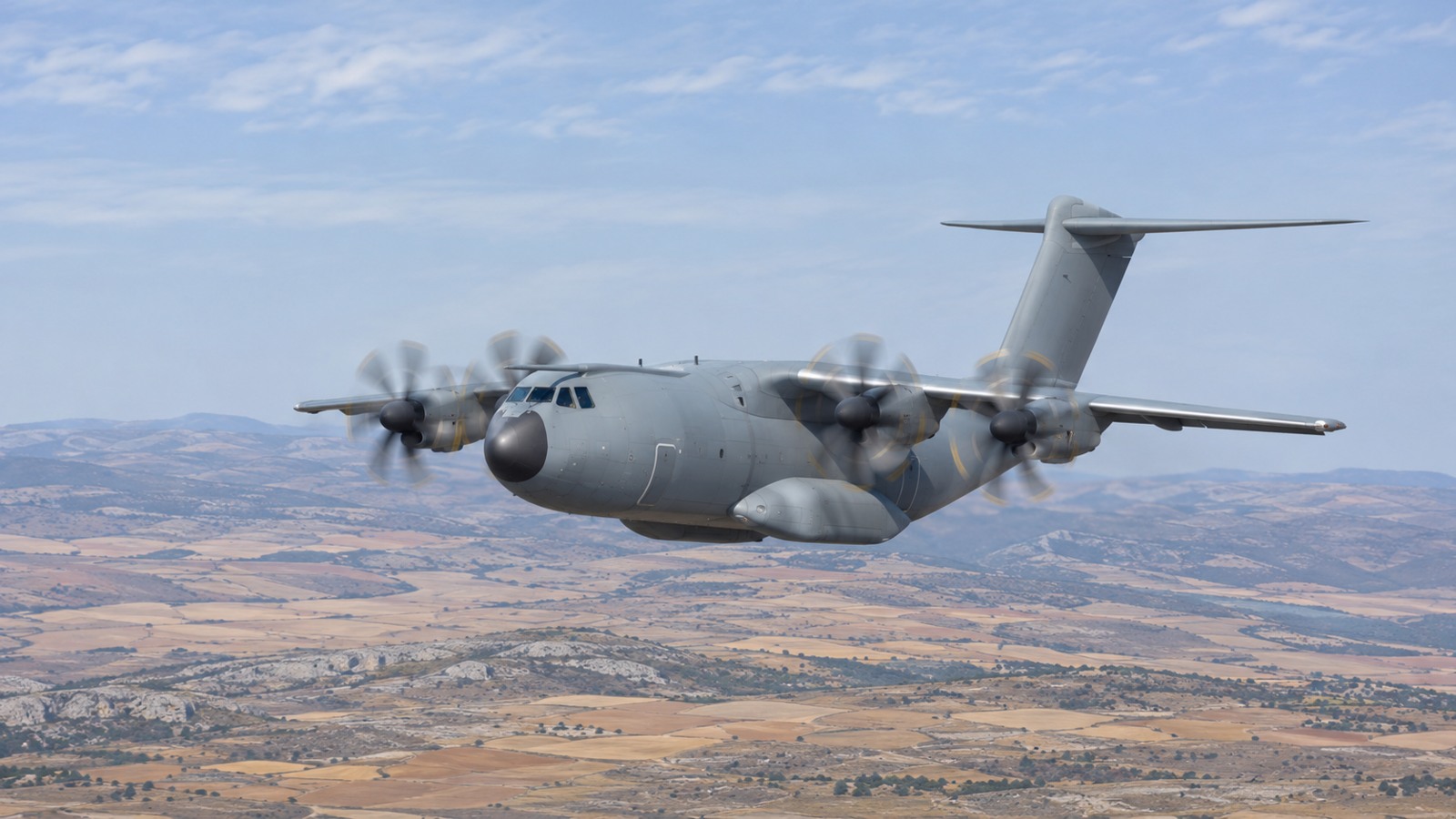
The consortium has put out to tender, for €350,000, the drafting of the urban development plan that will enable eastward expansion. The project is linked to CIEMA, a planned €42 million military investment that will add new education and training activities to Teruel’s aviation hub.
Teruel Airport is preparing a new expansion of its facilities to accommodate the Air and Space Force’s Comprehensive Air Training and Mobility Center (CIEMA). The airport consortium has launched a tender for the drafting of the Aragón Plan of General Interest (PIGA) for the East Zone, a document needed to regulate the incorporation of approximately 90 hectares into the existing site.
The tender was published on November 9 in the Official Journal of the European Union, with a budget of €350,000 excluding VAT. Interested companies may submit bids until December 14, 2026.
The contract will advance planning for an expansion whose main beneficiary will be the new military center, announced by the Ministry of Defense with an investment of about €42 million. CIEMA is intended for the education and training of air transport and deployment support units, and will include activities involving military aircraft and unmanned systems.
For the airport, it represents the addition of a specialized activity to a hub that already hosts companies dedicated to aircraft maintenance, storage and recycling, as well as aerospace technology projects.
An expansion that will take the airport beyond 550 hectares
CIEMA’s development has been divided into two phases. The first will use land available within the current site, while the second will require additional land to be incorporated into the airport complex.
In July 2026, the consortium approved the grant of eight hectares to the Ministry of Defense for 25 years. On this site, located next to facilities associated with stratospheric airships and the new aircraft parking area, plans call for the construction of an office building and a military aircraft apron connected to the airport runway.
The second phase envisages an eastward expansion of about 90.27 hectares, to be added to the current 550 hectares. The new land will make it possible to build a compacted natural-surface landing strip, as well as hangars, training areas and other facilities required to operate the center.
The planning process must establish the zoning of this area and determine the measures needed to incorporate it into the airport. The current tender covers those planning works and therefore does not yet entail the start of expansion construction.
The additional land is needed because the facilities planned for the second phase cannot be developed entirely within the existing site, according to documentation released by the consortium.
Investment and opportunities for aviation activity
The rollout of CIEMA adds a new line of activity at Teruel Airport, whose industrial specialization has attracted business projects in various areas of aviation in recent years.
Tarmac Aerosave operates aircraft storage, maintenance and recycling activities in Teruel. The hub also hosts facilities linked to aerospace projects, including PLD Space’s work, as well as other technology initiatives such as Sceye and projects involving stratospheric airships.
The arrival of the military center will create specific requirements for facilities, services and specialized personnel. Its development could generate demand for activities related to construction, infrastructure maintenance, logistics and technical services, although the contracts and participating companies have yet to be determined.
The consortium itself has projected 350 jobs associated with CIEMA once all infrastructure has been completed. This is an institutional estimate of the center’s future operations, rather than jobs already created or hiring that has been announced.
The relationship between this new activity and companies currently operating at the airport will depend on the requirements set by the Ministry of Defense and on any agreements that may be formalized. So far, no specific companies based at the hub have been announced as participants in CIEMA’s development.
Specialized training and new capabilities
One of the project’s most significant aspects is its focus on training military aviation personnel. The facilities will make it possible to prepare pilots and support units for air transport operations, conduct deployment exercises and carry out activities involving unmanned aerial systems.
This use introduces a specialization distinct from the industrial and commercial activities that currently characterize the airport. Training military units requires dedicated infrastructure, qualified personnel and specific procedures, which will be developed as the project advances.
CIEMA’s arrival could generate new technical training needs in the province, particularly in areas related to aircraft maintenance, airport operations and support services. However, no specific training programs linked to the center, nor agreements with educational institutions to prepare future workers, have yet been announced.
The project also contemplates the possibility of cooperation with the air forces of allied European countries, according to the Ministry of Defense during the signing of the protocol on July 21. For now, such cooperation remains among the initiative’s objectives, and no specific international exercises have been announced.
Next steps for the expansion
CIEMA’s timetable will depend on progress across the two planned phases. In July, the Ministry of Defense said it was working toward starting and completing construction on the first phase, located within the current site, in 2027.
The second phase must first complete the PIGA approval process, as well as the relevant administrative and procurement procedures required to build the new facilities.
The call published this week marks progress in that process and opens participation to companies specializing in technical assistance and territorial planning. The contract has an estimated duration of two years and sets criteria related to operational safety, technical quality and environmental considerations, in addition to price.
Teruel Airport is thus continuing preparations for an expansion that will add defense activities to its industrial development. Approval of the planning framework, procurement of the construction works and the definition of CIEMA’s operations will determine when the announced investments and employment opportunities can materialize.








