



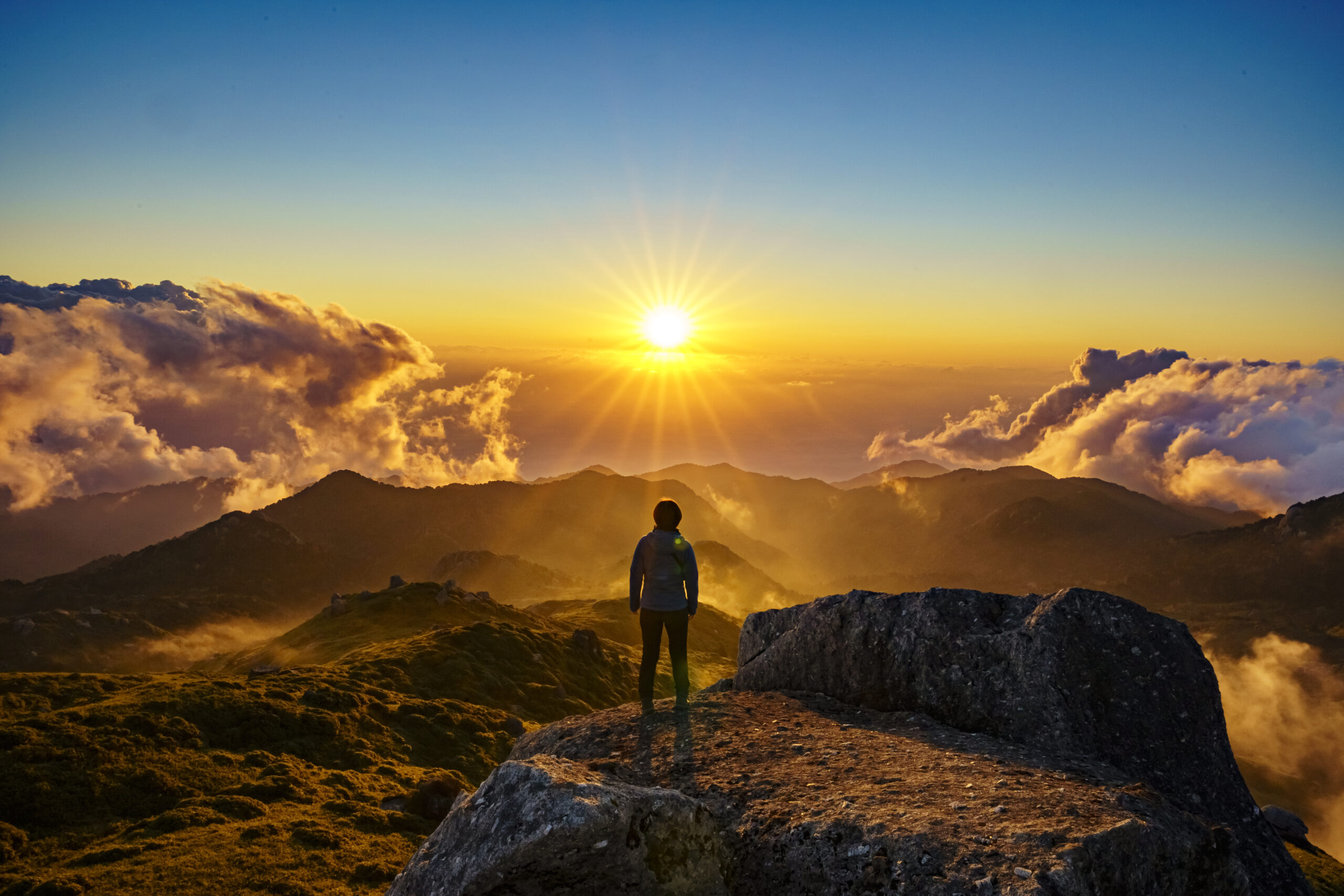
In a country where the harmony between nature and culture is part of the collective DNA, few geographies encapsulate that relationship with as much intensity as Yakushima. Just 60 kilometers off the coast of Kagoshima, this island in southern Japan emerges as an ecological sanctuary where travelers do not merely observe the landscape but traverse it as if crossing different latitudes in a matter of hours.
In just 20 kilometers, Yakushima showcases extraordinary natural diversity: subtropical beaches, dense and humid forests, and mountains that rise abruptly until they vanish into the mist. All of this is crisscrossed by a network of rivers that descend forcefully toward the sea, nourishing waterfalls and natural pools that appear sculpted with millenary patience. Among them stands Ōko-no-taki, an 88-meter waterfall that encapsulates the island’s wild energy.
However, if there is one element that defines the identity of Yakushima, it is its forest. On nutrient-poor granite soil—seemingly hostile to life—grow the legendary yakusugi, slow-growing Japanese cedars whose resilience defies the passage of time. Their wood, rich in resin, has endured for centuries in a climate where rain is the norm, not the exception.
Some of these trees exceed a millennium in age. The most famous, the Jōmon Sugi, is estimated to be between 2,000 and 7,200 years old, making it one of the oldest trees on the planet. Its discovery in 1966 marked a significant turning point in the island’s history.
Walking among these giants is to enter a space where time loses its human scale. Twisted trunks, roots clinging to the rock, and a dense layer of moss covering every surface create an almost unreal, silent, suspended atmosphere.
This was not always the case. During the Edo period, Yakushima was a major center for timber exploitation. The quality of yakusugi wood made it a strategic resource for construction. Centuries later, in the 1960s, the exploitative pressure intensified again to supply modern Japan.
The discovery of the Jōmon Sugi and the mobilization of the local population prompted a paradigm shift. In 1980, the island was declared a Biosphere Reserve by UNESCO, and in 1993 it was inscribed as a Natural Heritage Site. Logging ceased definitively in 2001.
Today, the forest tells its own story of resilience: new cedars sprout from fallen trunks and ancient remnants of human activity, integrating past and present into a single landscape.
Yakushima has established itself as one of Japan’s top hiking destinations. The route to Jōmon Sugi, demanding and taking about ten hours round trip, passes through old railway sections used during the timber exploitation era, now reclaimed by nature.
Another must-visit enclave is the Shiratani Unsuikyō valley, covered by a thick layer of moss that displays an infinite palette of greens. Its enveloping atmosphere inspired Studio Ghibli’s film Princess Mononoke and has made it one of the most visited spots on the island.
The natural experience is complemented along the coast between May and July when Nagata Inaka beach transforms into the primary nesting site for sea turtles in Japan. This phenomenon can be observed through nocturnal visits organized by certified guides, designed to protect the life cycle of the species and minimize human impact.
Far from the mass tourism that characterizes other destinations, Yakushima has found in conservation its main differential value. Here, tourism does not compete with nature; it adapts to it.
The island today represents a model of balance where the traveler’s enjoyment is built upon respect. A place where every step on the moss, every raindrop, and every ancient tree remind us that the true experience lies not in conquering the territory but in understanding it.
In Yakushima, the journey is not just geographical; it is, above all, an immersion in the deep time of the Earth.