


Vietnam has built much of its economic growth over the last few decades on industry and exports. The influx of foreign investment, its integration into Asian production chains, and an extensive network of trade agreements have turned the country into an important manufacturing platform. However, another component is beginning to gain greater significance: the consumption of its more than 100 million inhabitants.
Retail sales of goods and services reached 4.268 trillion dongs, approximately $162.4 billion, during the first seven months of 2026, representing a year-on-year increase of 9.3%. Discounting the effects of inflation, real growth was 6.7%, according to data published by VietnamPlus.
The behavior of the domestic market is particularly relevant at a time of uncertainty for international trade. Vietnam maintains a high exposure to external demand, so strengthening domestic consumption provides an additional source of activity in the face of possible disruptions in its main export markets.
This evolution is not solely due to the sale of products. Services related to tourism, dining, and leisure are growing at a rapid pace and are beginning to have a significant effect on the activities of businesses and shops.
Tourism surpasses pre-pandemic levels
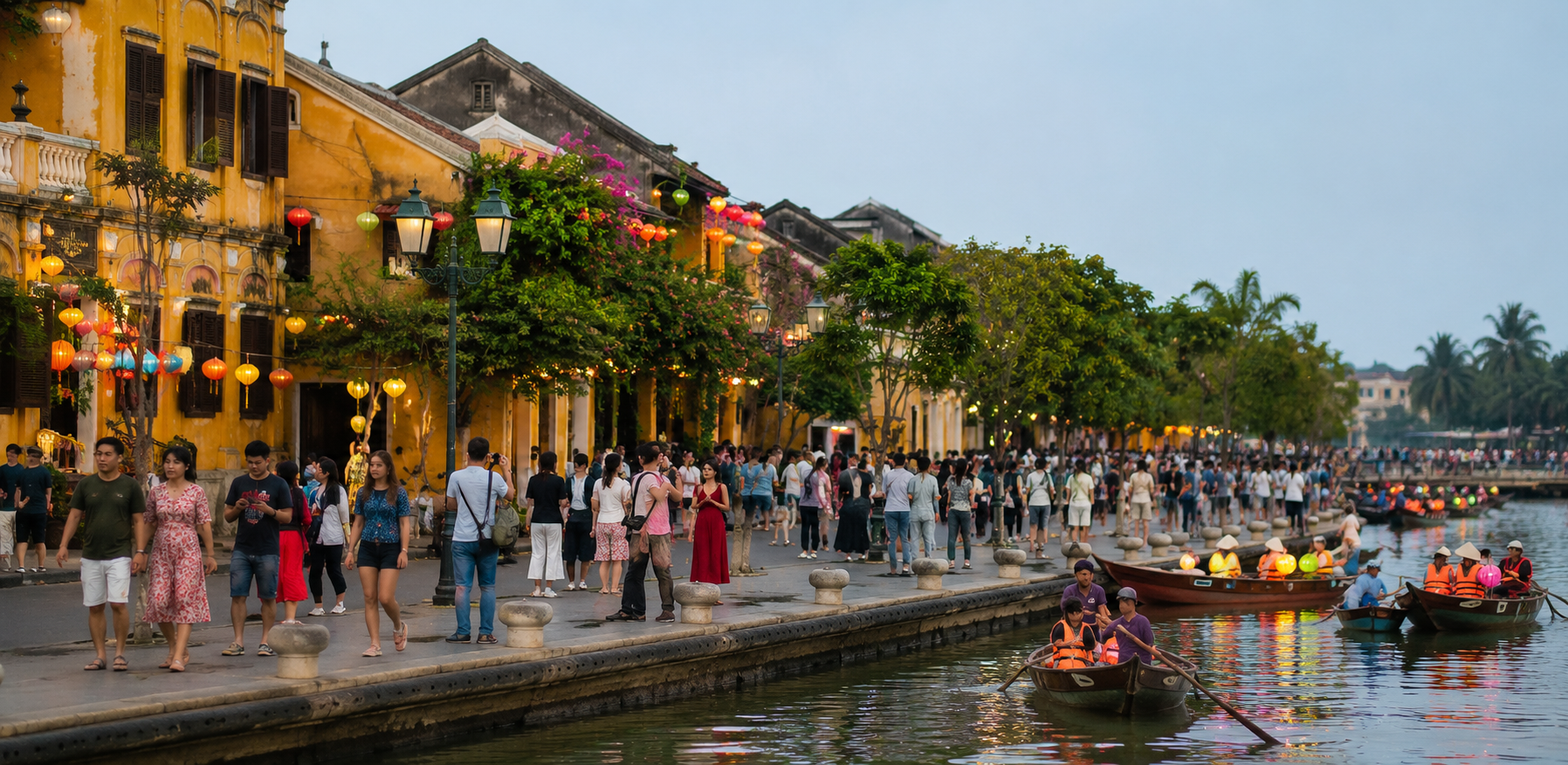
Vietnam welcomed nearly 13.8 million international visitors between January and July, a 23% increase compared to the same period the previous year. This figure also exceeds pre-pandemic levels by approximately 25%, confirming the recovery of a sector that the country considers strategic.
The increase in travelers is directly impacting the economy. Revenue from tourism services grew by 19.9% during the first seven months of the year, while earnings from accommodation and dining rose by 14.8%.
The combination of more international visitors and higher domestic consumption is benefiting hotels, restaurants, travel agencies, retail businesses, transportation, and leisure activities. It also supports investment in new infrastructure and tourism services, especially in the country’s main urban and coastal destinations.
Vietnam has several factors that help explain this growth. An offering that combines major cities, cultural heritage, nature, and beach destinations has recently been enhanced by improvements in international connections and measures aimed at facilitating visitor entry.
However, regional competition is intense. Thailand, Malaysia, Indonesia, and other Southeast Asian destinations are also seeking to increase the arrival of travelers and the spending during their stays. For Vietnam, growing in tourist numbers will be important, but it will also be crucial to ensure that they stay longer and consume more services within the country.
A market of over 100 million consumers
Tourism only accounts for part of the advance in services. The demographic and urban transformation of Vietnam is also changing the consumption habits of its population.
The country surpassed 100 million inhabitants in 2023 and has a relatively young population. Rising incomes, urbanization, and the expansion of e-commerce are driving the growth of new categories of products and services.
This process is particularly visible in Hanoi and Ho Chi Minh City, but it is also spreading to other cities. Major retail chains, tech companies, and international brands are competing to position themselves in a market that for years was primarily viewed for its productive capacity and is now also becoming attractive for its consumption capacity.
For foreign companies, this shift in perspective is significant. Vietnam is no longer interesting solely as a place to manufacture products intended for the United States, Europe, or the rest of Asia. Its domestic market is beginning to be large enough to justify specific commercial strategies.
The growth of e-commerce reinforces this evolution. The widespread use of mobile phones and the rapid digitalization of payments and services are facilitating access for consumers and businesses to new forms of purchasing, especially among the urban population.
Hanoi aims to stimulate domestic demand
The Vietnamese government seeks to leverage this behavior to strengthen the weight of consumption within the economy. Vietnam has set a GDP growth target of at least 10% for 2026, a goal that requires maintaining a strong pace of activity across various fronts.
Measures used to stimulate demand include promotional programs, marketing campaigns, and large events aimed at boosting sales. Initiatives such as Vietnam Grand Sale 2026 or the Autumn Fair are part of a policy designed to mobilize consumption and better connect producers, distributors, and buyers.
Tourism plays a complementary role. The arrival of international visitors generates demand spread across numerous activities and allows for the introduction of income from abroad without relying on traditional merchandise exports.
The strategy also has its limits. Sustainable growth in consumption will depend on developments in wages, employment, and household confidence, while tourism will need to accompany the increase in visitors with improvements in services, infrastructure, and quality of offerings.
Vietnam broadens the basis of its growth
The evolution of consumption coincides with other changes taking place in the Vietnamese economy. The country continues to attract industrial investments but is trying to shift a growing portion towards higher value-added activities.
The recent investment by Japan’s Tokuyama in a high-purity polysilicon processing plant for semiconductors in Ho Chi Minh City demonstrates this evolution. At the same time, authorities are preparing new policies to attract skilled professionals and international specialists in fields such as science, technology, and artificial intelligence.
Advanced industry, talent, consumption, and tourism are part of different processes but help explain how the Vietnamese economy is changing. The country continues to rely significantly on its export capacity and foreign investment, although the growth of its domestic market introduces an element that had much less weight a few years ago.
For international companies, this transformation opens a dual perspective. Vietnam continues to provide an integrated industrial platform within Asian production chains but is also a market of over 100 million inhabitants with growing consumption and a tourism sector that has already surpassed pre-pandemic levels.
The data from the first seven months of 2026 shows that this second dimension is gaining greater importance. The challenge will be to convert the growth in consumption and the recovery of tourism into a stable base of activity that reduces, at least partially, the country’s high exposure to cycles of international trade.